



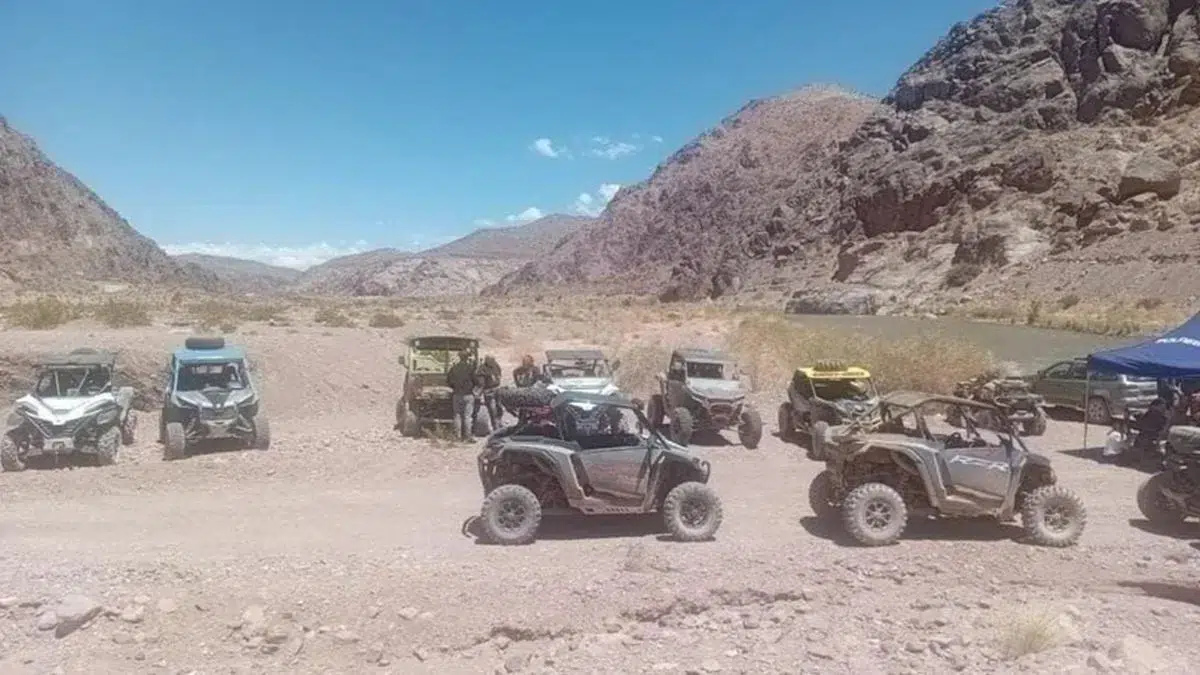
The Pampa del Leoncito, one of the most valuable natural landscapes in San Juan, suffered severe damage after the unauthorized entry of 16 all-terrain vehicles (UTV). The incident raised the environmental alarm and mobilized provincial and municipal authorities.
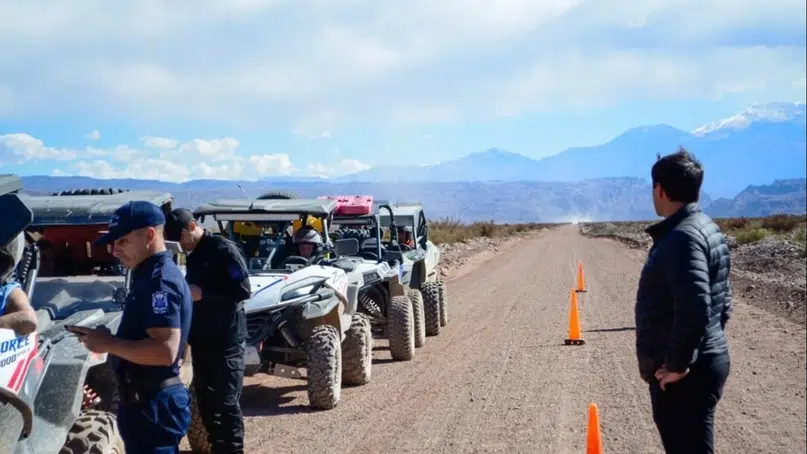
The operation was carried out immediately, with the intervention of the Municipality of Calingasta, National Gendarmerie, and the San Juan Police. The vehicles were intercepted at the intersection of routes 40 and 149, where their passage through the protected area without authorization was confirmed.
The action was considered a serious violation of the environmental regulations, as the vehicles traveled over a surface that requires decades to regenerate. The tracks, noise, and soil alteration impacted an ecosystem where life develops in extreme balance.
What happened in Pampa del Leoncito
The Pampa del Leoncito is a natural area of high ecological and scientific value, located within the El Leoncito National Park, in the Calingasta department. Its arid and compact appearance hosts a unique ecosystem, with species adapted to extreme conditions and soils that preserve millennial geological traces.
The entry of vehicles off the authorized paths destroys microhabitats, alters the soil composition, and leaves visible marks that can last more than 20 years. Moreover, the vibration and motorized transit scare away the local fauna and affect the behavior of endangered species.
In this case, the damage was caused by an organized group that entered without tourist authorization or environmental permits. The organizer, identified as being from Córdoba, allegedly guided the excursion ignoring the signage and the prohibition of driving vehicles at high speeds or with aggressive maneuvers.
The response of the authorities and the judicial investigation
The security forces acted jointly to stop the caravan and identify those responsible. Records were made, and the corresponding complaint was filed with the provincial Justice, which must now evaluate the penalties for violating conservation regulations.
Investigators are analyzing the documentation of the drivers, the insurance, and the tourist authorizations of the vehicles. In parallel, environmental technicians are conducting expert assessments to determine the magnitude of the damage and the necessary remediation actions.
The municipality emphasized that this type of infraction compromises years of work in ecological restoration. The preservation of Pampa del Leoncito is key for scientific research, astronomical observation, and the natural balance of a region considered a San Juan environmental heritage.
The importance of protecting natural heritage
Natural heritage like Pampa del Leoncito represents a biodiversity reserve, geological history, and ecological balance. These spaces function as indicators of climate change, species refuges, and sources of scientific knowledge.
Protecting them means more than preventing damage: it is ensuring the continuity of the natural processes that sustain life and regulate the environment. Each trace, each species, and each terrain formation has a value that transcends the touristic or recreational.
Active conservation requires environmental education, permanent controls, and a real commitment from visitors and communities. Respecting protected areas is a concrete way to care for the common heritage, preserve the natural memory of the territory, and ensure that future generations can know it in its purest state.



