



Between 9 PM and 11 PM on Sunday, February 1st, the area of the Tupungatito volcano recorded 230 seismic movements in a short period. This phenomenon, known as a seismic swarm, activated the binational monitoring systems.
Although not unusual in the region, the event drew attention due to its concentrated intensity. Therefore, the authorities are maintaining a permanent monitoring of its evolution.
Additionally, this is the first significant record since March of last year, reinforcing the need for continuous observation in this Andean sector.
Constant monitoring without immediate impact
The increase in seismicity prompted special reports from the volcanic agencies of Argentina and Chile. The affected area includes the Chilean commune of San José de Maipo, near the border with Mendoza.
However, no changes were detected in the surface activity of the volcano nor alterations in other monitored parameters. No effects were reported on Argentine populations either.
Therefore, the technical alert level remains green, indicating activity considered normal for an active volcano.

An active volcano in a sensitive region
The Tupungatito is part of the Southern Andes Mountain Range, shared by Argentina and Chile. Within the national ranking, it is listed as the sixth high-risk volcano.
Although it occupies the last place on that list, its behavior is closely watched due to its glacial environment and its proximity to other active volcanic systems.
In this context, seismic swarms serve as signals that allow for anticipating possible changes, even when they do not imply an imminent eruption.
Characteristics of the Tupungatito volcano
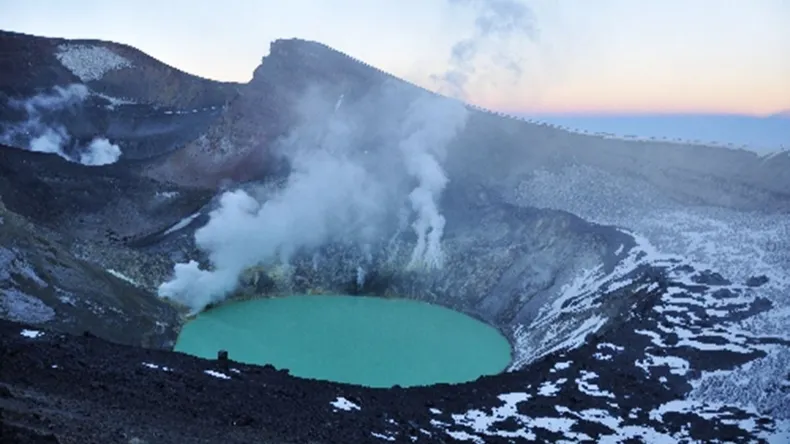
The Tupungatito is an active stratovolcano with a short geological lifespan, standing at 5,603 meters above sea level. It is located just eight kilometers southwest of the Tupungato volcano.
Additionally, it is part of a volcanic complex with significant historical background. Its structure is surrounded by glaciers, which increases certain potential risks.
Among the associated hazards are lava flows of short to medium reach, ballistic pyroclast ejection, and possible lahars if the activity interacts with the ice.
Background explaining the surveillance
The last significant eruption of the Tupungatito occurred between 1958 and 1961. During that period, a lava flow extended nearly two kilometers, and there was ashfall in Argentine territory.
Later, in 1986, a weak emission of dark ash was recorded, affecting nearby glaciers, without major consequences for the population.
More recently, in March of last year, a similar increase in seismic activity to the current one was detected, reinforcing the intermittent behavior pattern.
Ecosystems and prevention in a changing scenario
From an ecological perspective, volcanic monitoring is key to protecting high mountain ecosystems. Glaciers, water basins, and biodiversity depend on preventive management.
Therefore, coordination between Argentina and Chile is central to anticipating environmental impacts and reducing risks.
Thus, the Tupungatito remains under observation, not as an immediate threat, but as a reminder of the natural dynamics of the Andes and the need to coexist with it responsibly.


