



The discussion about the use of agrochemicals returned to the forefront in Entre Ríos following a judicial resolution that imposed new limitations on spraying near rural homes. The measure affects Colonia Ensayo and Aldea Brasilera, in the Diamante department, where residents and environmental organizations had been demanding greater controls.
The decision was made by the Sala II of the Second Chamber of Appeals of Paraná and establishes broader restrictions for terrestrial and aerial applications of phytosanitary products. Additionally, the resolution generated strong repercussions in productive and political sectors of the province.
Meanwhile, lawyers linked to the Federación Agraria Argentina and representatives of the Entre Ríos government announced that they will appeal the ruling before the Superior Court of Justice. Thus, the conflict adds a new chapter to a controversy that has been ongoing in the province for years.
The new distances and the scope of the measure
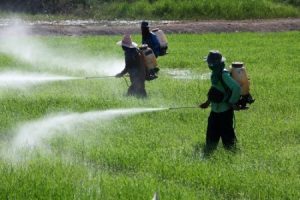
Judge María Fernanda Miotti ordered the immediate cessation of spraying near the areas protected by environmental injunctions. Consequently, terrestrial applications must respect a minimum distance of 1,095 meters, while aerial spraying cannot be conducted less than 3,000 meters away.
The ruling was based on scientific studies related to possible health and environmental impacts of agrochemicals. Among them were investigations by specialist Rafael Lajmanovich, used to analyze risks associated with the exposure of nearby populations.
Furthermore, the magistrate based the resolution on the preventive and precautionary principles of environmental law. According to the judicial criteria, when there are doubts about possible damage to the environment or human health, protective measures should be prioritized.
Rural residents and concern about environmental impact
One of the injunctions benefited by the measure has a collective nature and protects inhabitants of the Tierra Alta I, II, and III subdivisions in Colonia Ensayo. There, families in the area had long been denouncing applications near residential sectors.
On the other hand, the second injunction corresponds to a family home located in Aldea Brasilera. Although both cases began independently, they were later unified to issue a single ruling.
In parallel, environmental organizations argue that such resolutions aim to prevent soil, water, and air contamination in rural areas where agricultural activities and permanent populations coexist.

The risks of spraying near populated areas
Environmental health specialists warn that spraying near homes can have consequences on ecosystems and human communities. Among the main risks are contamination of watercourses, soil degradation, and the impact on wildlife species.
Moreover, the particles released during spraying can travel through the air and reach rural schools, neighborhoods, and neighboring productive areas. This chemical drift increases the involuntary exposure of people and domestic animals.
In turn, various scientific studies analyze possible health effects, such as respiratory irritations, hormonal alterations, and dermatological conditions. Although there are debates about the levels of impact, social demand for stricter controls and agricultural models with less dependence on chemical substances is growing.
A debate that crosses all of Entre Ríos
The judicial resolution once again highlights the tensions between agricultural production and environmental protection in Entre Ríos. While rural sectors argue that the restrictions affect economic activity, residents and environmentalists demand greater health guarantees.
In this context, the province continues to be one of the most sensitive scenarios in the country regarding the use of phytosanitary products. The complaints from rural communities, teachers, and social organizations have set the environmental agenda in recent years.
For now, the ruling will remain under judicial review. However, the discussion has already reactivated a broader debate about how to produce food without compromising people’s health or the balance of ecosystems.



