



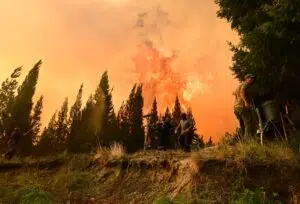
In recent years, forest fires have become an increasingly worrying issue in Argentina. The events recorded in Patagonia, the Gran Chaco, and other regions have highlighted the fragility of numerous ecosystems in the face of prolonged droughts, extreme temperatures, and environmental changes that favor the spread of fire.
However, behind each fire lies a broader reality. The affected forests are part of territories where productive activities, environmental regulations, and political decisions converge, directly influencing prevention strategies and emergency response.
In this context, specialists point out that understanding the evolution of fires also requires analyzing the functioning of the institutions responsible for protecting natural resources and ensuring the conservation of forest environments.
The role of laws and conservation mechanisms
Since the mid-2000s, Argentina has promoted various tools aimed at strengthening the protection of native forests. Among them are the Native Forests Law, enacted in 2007, the Fire Management Law, and various programs aimed at funding conservation actions.
These initiatives sought to set limits on the advance of activities that put pressure on ecosystems and promote a more sustainable use of the land. Additionally, they allowed for the development of monitoring systems and strengthened provincial capacities to control deforestation.
However, in recent years, modifications have begun to emerge that have raised concerns among sectors linked to environmental management. Various debates on regulatory changes and the reduction of resources allocated to conservation have raised questions about the future of these policies.
Deregulation and reduction of resources
One of the most discussed aspects relates to proposals aimed at loosening regulations related to land use, burning activities, and the management of areas affected by fires.
At the same time, various measures have impacted the financing of agencies and environmental programs. The reduction of funds allocated to fire management and forest conservation has limited the availability of resources for monitoring, control, and restoration tasks.
Furthermore, the weakening of economic instruments that incentivized conservation has reduced the tools available to promote practices compatible with the protection of ecosystems.

The environmental consequences of forest deterioration
The loss of forest cover generates impacts that go far beyond the disappearance of trees. Forests perform essential functions for climate regulation, biodiversity conservation, and the protection of water resources.
When these environments degrade, soil erosion increases, water retention capacity decreases, and available habitats for numerous native fauna and flora species are reduced. As a result, ecosystems become more vulnerable to extreme events.
Additionally, fires release large amounts of carbon stored in vegetation, contributing to global warming. In turn, the fragmentation of forests hinders natural recovery processes and affects the ecological connectivity between different natural areas.
A scenario that demands sustained policies
Records from recent decades show that the loss of tree cover continues to be a significant challenge in Argentina. In regions such as the Dry Chaco, the Yungas, and the Andean Patagonian Forests, fire has become an increasingly significant cause of environmental degradation.
In light of this situation, fire prevention and forest conservation require not only solid legal frameworks but also economic resources, technical capacities, and long-term planning.
Recent experience shows that the effective protection of forests depends as much on existing regulations as on the strength of the institutions responsible for enforcing them. In a context marked by the effects of climate change, strengthening these capacities appears to be one of the keys to preserving the ecosystems that sustain biodiversity and the well-being of communities.


