



Every day, tons of food scraps and organic waste end up in the bin, a destination that marks the difference between waste and regeneration. These materials, when properly treated, become compost, a natural fertilizer that improves soils and nourishes the land in a sustainable way.
The composting process mimics the natural process that occurs in forests, when leaves fall and decompose forming fertile humus. However, unlike the spontaneous process, domestic or industrial composting is carried out in a controlled manner, with the aim of accelerating decomposition and avoiding negative impacts.
Through the action of microorganisms —such as bacteria and fungi—, composting transforms organic waste into a stable material, rich in nutrients and free of pathogens. The final result is a product with the smell of damp earth, a symbol of environmental balance.

How the composting process works
Composting requires three essential factors: oxygen, moisture, and controlled temperature. In aerobic conditions, microorganisms break down the waste in a process that lasts between two and three months.
During the first stage, known as fermentation, the waste heats up due to intense biological activity, reaching temperatures of up to 70 °C. This heat eliminates seeds and pathogens, ensuring safe and healthy compost.
Then comes the maturation phase, when the temperature drops and the organic matter stabilizes. The material acquires its final structure, is periodically aerated, and subjected to moisture and texture controls until it becomes ready-to-use fertilizer.
Environmental benefits of compost
Compost is not just a natural fertilizer: it is a powerful tool to tackle the environmental crisis. Firstly, it reduces the amount of waste sent to landfills, which decreases methane emissions, a greenhouse gas 25 times more potent than CO₂.
Additionally, it improves soil structure, increasing its capacity to retain water and nutrients, benefiting both agriculture and natural ecosystems. It also promotes microbial biodiversity, regenerating degraded soils and helping to mitigate the effects of erosion.
Its continuous use drives a circular economy cycle, where waste is turned back into resources, closing the organic matter cycle in a sustainable way.
Materials that can be composted
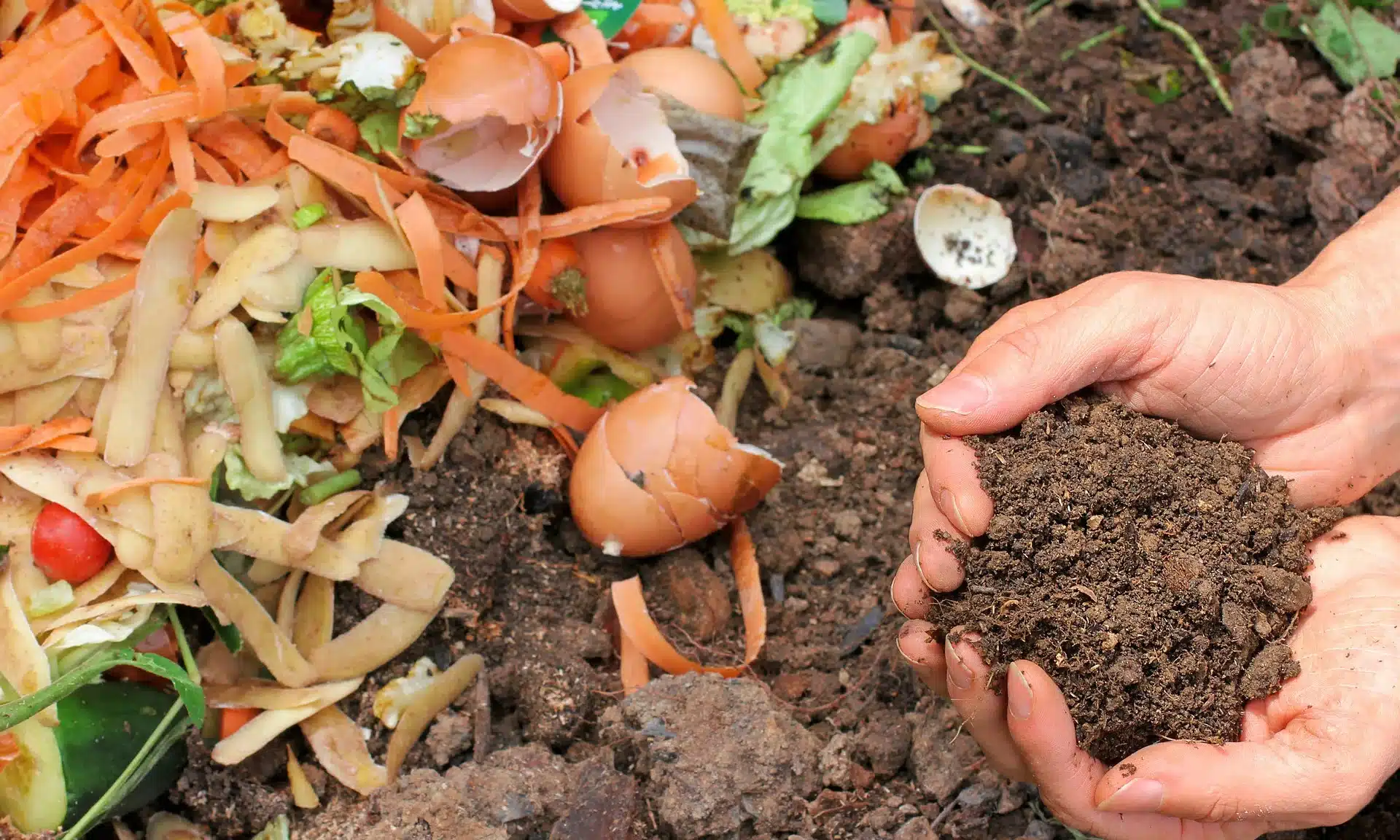
The success of composting depends on the correct separation of waste. Only biodegradable and contaminant-free materials should be included.
Among the suitable materials are:
- Fruit and vegetable scraps.
- Eggshells, coffee grounds, and tea bags without staples.
- Dry leaves, thin branches, and grass clippings.
- Napkins and kitchen paper without inks or plastics.
On the other hand, avoid:
- Meat, fish, and bones.
- Dairy, oils, or cooked foods.
- Plastics, metals, and glass.
- Pet excrement or diapers.
Correctly separating waste ensures clean, odor-free, and high-quality compost for the soil.
How to make compost at home: step-by-step guide
Composting at home is easier than it seems and can be done even on balconies or small patios. You only need a ventilated container, organic waste, and a bit of consistency.
Step 1: Choose the container. It can be a commercial composter or a wooden or plastic box with holes for air to enter.
Step 2: Create the base. Place branches or dry remains at the bottom to facilitate aeration and avoid excess moisture.
Step 3: Add the waste. Alternate wet layers (kitchen scraps) with dry layers (leaves or cardboard). Keep the mix balanced so it doesn’t compact.
Step 4: Aerate and control. Stir the mix every 7–10 days and check that it’s moist but not soaked. If it smells bad, add more dry material.
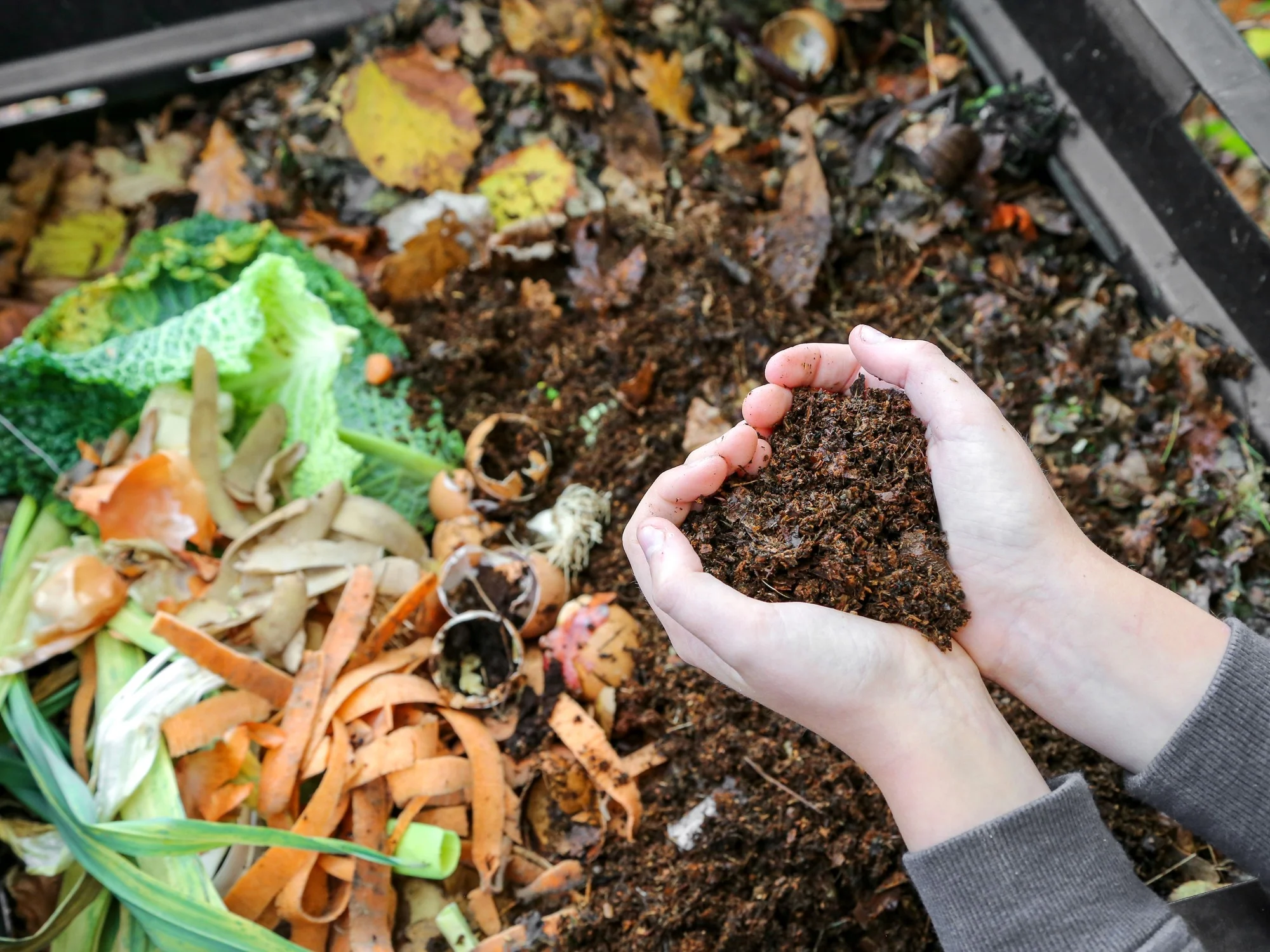
Step 5: Wait and harvest. In two or three months, the compost will be ready: it will have a dark color, spongy texture, and earthy smell.
This natural fertilizer can be applied in pots, gardens, or urban orchards, closing the ecological cycle of waste.
Composting and ecological transition
Composting represents an everyday environmental action with global effects. Every home that separates and transforms its waste contributes to reducing pollution, regenerating soils, and decreasing dependence on chemical fertilizers.
Faced with the increase in urban waste and the loss of soil fertility, compost emerges as an ecological, economic, and social solution, capable of bringing life back to what we once considered trash.
Turning food scraps into fertile soil is more than an environmental practice: it is a commitment to the future of the planet and to the generations that will inhabit its soils.



