



The Traffic Judge of Villa La Angostura, Soledad Aldea, presented a draft ordinance to establish an environmental and urban clean record. This measure aims to prevent legal entities or individuals – with a history of environmental infractions – from accessing urban planning exceptions.
The initiative, which seeks to promote local environmental responsibility, will be discussed in the City Council of the city to evaluate its implementation.
“Ultimately, it is about prioritizing respect for the natural environment, ensuring that those involved in urban or commercial development do so with clean environmental records,” said Aldea to NoticiasAmbientales.
A necessary environmental clean record
The judge mentioned that the project arises from noticing that in Villa La Angostura, urban planning exceptions have allowed real estate projects that alter environmental harmony, territorial balance, and urban planning.
“The result was an increase in socio-environmental conflicts, service overload, and, in some sectors, a weakening of public trust in the institutions responsible for control,” stated the magistrate of the Municipal Traffic Court.
In this Patagonian town, fines have not reduced environmental infractions. The judge mentioned that a practice has been identified in several projects where infractions are committed despite regulations.
“Certain developers include the cost of sanctions as an additional component of the work budget, prioritizing profitability over compliance with the law. This type of behavior affects the effectiveness of environmental regulations,” said Aldea.
The ordinance project, which is supported by the local Environmental Department, also seeks to modify fine calculations. Based on technical criteria, such as the extent of the affected area and remediation costs, it will be sought that the amounts correspond to the magnitude of the damages.
With the imminent debate in the Council, the judge believes that it is necessary for the actors linked to real estate development to also participate in the discussion. “The idea is not to stop development, but to channel it under parameters of sustainability, equity, and legality. The clean record does not punish, but it does distinguish and hold accountable,” Aldea stated.
The environmental Clean Record project indicates that any request for urban planning exception must be accompanied by certificates of free environmental infringement. These must have been issued by the Environmental Department, Directorate of Private Works, or the Traffic Court.

Recent cases of infractions
At the beginning of the month, the Traffic Court, led by Soledad Aldea, imposed a fine exceeding 10 million pesos on those responsible for various environmental infractions along the coastal strip of the Cumelén country.
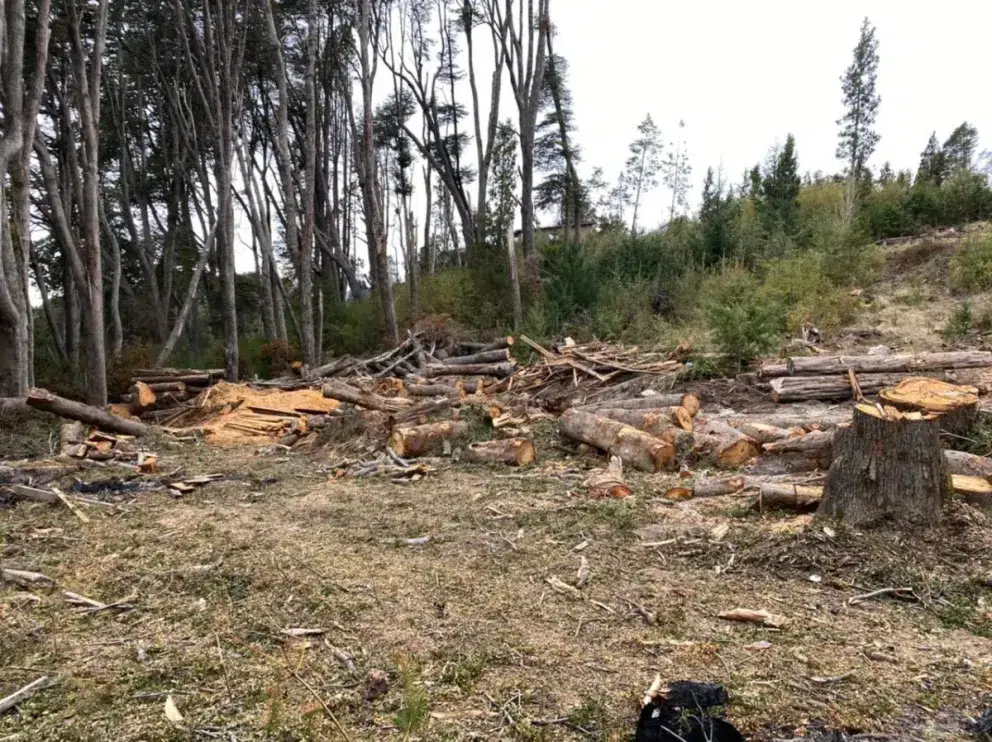
Tree felling, earth movements, opening of vehicular roads, and the construction of containment structures using material from the coastal area were detected. The affected plot had an urban planning exception approved by the City Council. This provision allowed construction while respecting the preservation of the native forest.



