



The Covid-19 pandemic forced the world to come to a halt. In Argentina, the mandatory lockdown began on March 20, 2020, abruptly altering urban routines. With streets deserted, old social and environmental issues emerged.
The lockdown exposed the housing precarity of low-income sectors and the unsustainability of large cities. What was the point of living in a metropolis if work, education, and even relationships could be sustained from home?
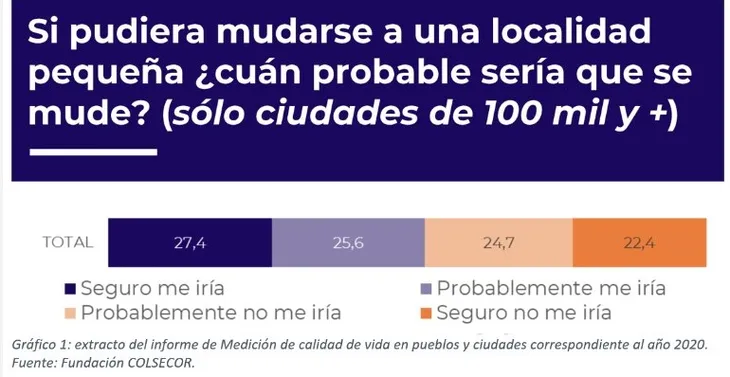
Millions began to question their way of life. Online searches to move to small towns or cities surged. Many dreamed of a quieter, greener, and less expensive life, far from concrete and stress.
The phenomenon was not just a perception: surveys and real estate platforms confirmed the growing interest in the country’s interior. It seemed like an opportunity to rethink the relationship between the environment, housing, and territorial development was opening up.
 As a result of the pandemic, more and more people are deciding to stay in large cities, unlike the data collected in 2020. Photo: Facundo López Binaghi for the Urban Fabric Foundation.
A Window to Transform Habitat
The pandemic exposed the limits of the concentrated urban model. Unequal connectivity, inadequate access to basic services, and lack of space were some of the deficiencies revealed in large cities.
In that context, the idea of deconcentrating population and revitalizing small towns gained momentum. Experiences like that of the Es Vicis Foundation or the studies by geographer Marcelo Sili demonstrated that another way of living was possible.
In localities like Colonia Belgrano (Santa Fe), the program “Welcome to my town” succeeded in repopulating with urban families seeking a different life. These were planned proposals, focusing on rootedness and sustainability.
At the same time, telecommuting became the norm, digital platforms expanded, and local production networks strengthened. Everything indicated that a structural change could be consolidated.
However, the necessary political support did not materialize. The lack of a state plan to facilitate land access, promote rural credits, and improve connectivity left these initiatives isolated. The opportunity began to fade away.
What the Pandemic Showed to the Environment
During the months of strict isolation, the planet experienced an unusual respite. The drastic reduction in land, air, and sea transport led to a historic drop in greenhouse gas emissions.
In major cities like Buenos Aires, improvements in air quality were recorded. The concentration of nitrogen dioxide, one of the most common urban pollutants, decreased, and environmental noise was reduced.
Ecosystems altered by human presence began to show signs of recovery. Birds, insects, and mammals reappeared in areas where they had been displaced. In suburban areas, outbreaks of vegetation and fewer visible waste were observed.
The lockdown showed that many of the most severe environmental impacts are a direct result of the urban-industrial way of life. The sudden halt allowed glimpsing how a more decentralized and environmentally respectful model could have positive long-term effects.
But this respite was brief. As economic activity resumed without structural changes, emissions and pollution returned to previous levels. Without sustained public policies, the environment was once again relegated.
 As a result of the pandemic, more and more people are deciding to stay in large cities, unlike the data collected in 2020. Photo: Facundo López Binaghi for the Urban Fabric Foundation.
From Expectation to Disappointment
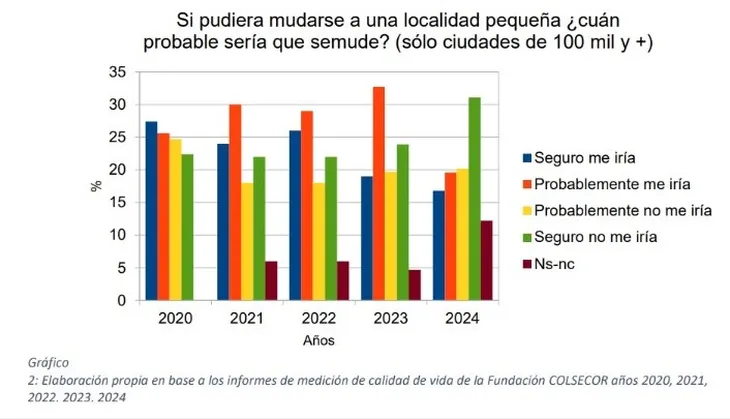
In the following years, the urge to leave the city began to wane. Economic crisis, lack of credit, and structural difficulties in many small towns began to weigh in.
Searches related to rural relocations declined. Issues like poor connectivity, lack of healthcare and education services, or scarce employment pushed some families to return to the cities.
Meanwhile, other countries like Spain created agencies to promote rural repopulation through investments in infrastructure, connectivity, and employment. Argentina, on the other hand, failed to articulate a comprehensive strategy.
Despite this, some experiences continue. The Es Vicis Foundation expanded its network, and the Union of Land Workers promotes agroecological settlements in several provinces. The 2022 Census showed a slight population growth in certain municipalities.
The desire for a life change has not disappeared. However, without a state policy that articulates housing, employment, and land access, deconcentration continues to depend on individual decisions, lacking scale and long-term environmental projection.


