



With the arrival of October, Buenos Aires transforms. The streets, parks, and avenues are filled with a bluish-violet and yellow color, thanks to the blooming of two emblematic species: the jacaranda (Jacaranda mimosifolia) and the tipa (Tipuana tipu).
This natural spectacle, which repeats every year, is admired by residents and tourists, and is part of the city’s landscape and cultural heritage.
The jacaranda: a symbol of Buenos Aires and a legacy of Carlos Thays
Introduced in the late 19th century, today it is the distinctive tree of the City of Buenos Aires.
The landscape architect Carlos Thays, of French origin, incorporated the jacaranda into the urban landscape for its adaptation to the Buenos Aires climate and its low impact on sidewalks. In 2015, the Buenos Aires Legislature declared it as “distinctive tree”, recognizing its cultural and aesthetic value.
- Current distribution: 18,922 specimens (13,872 on sidewalks and 5,050 in green spaces)
- Highlighted avenues: Cabildo, Del Libertador, Córdoba, Corrientes, San Juan, and Pierina Dealessi
- Blooming period: November, forming a “violet carpet” on streets and sidewalks
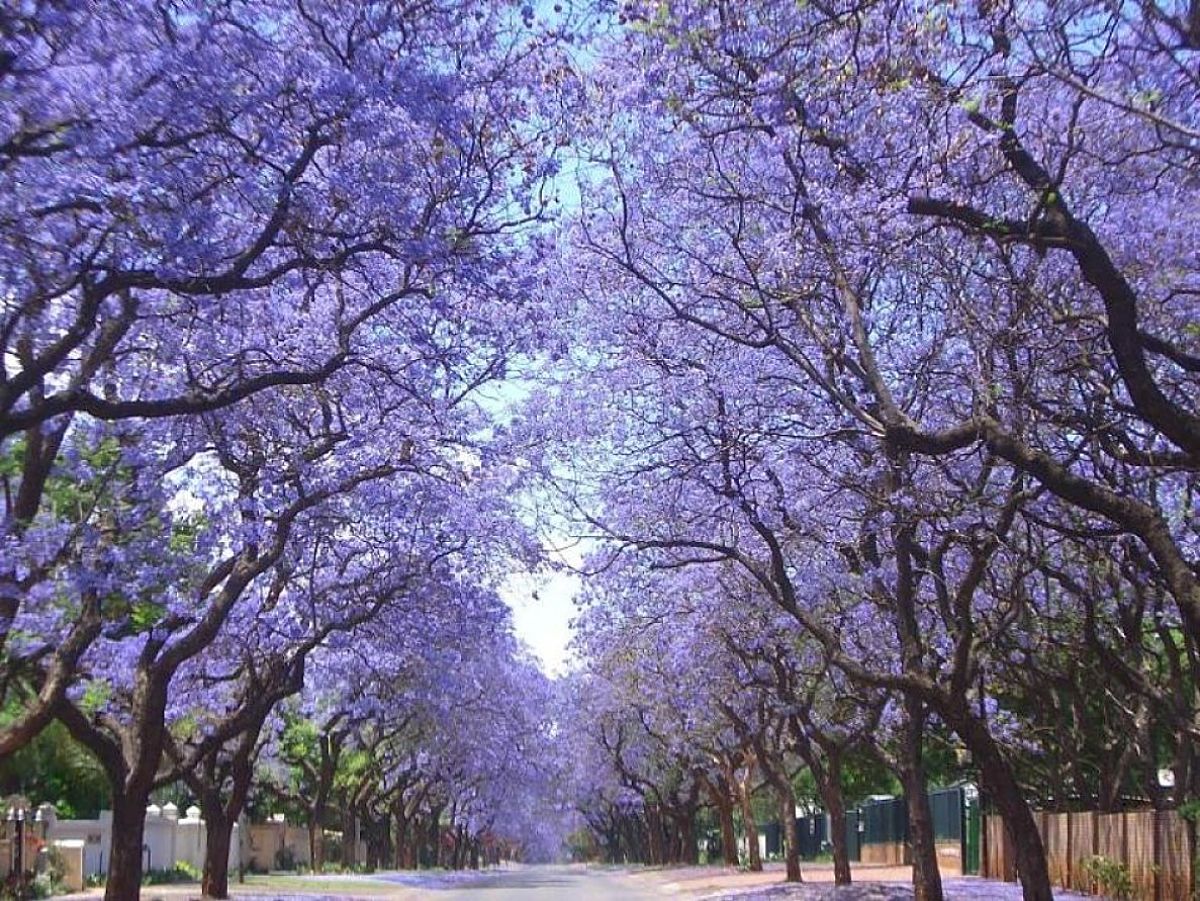
2024 Tree Planting Plan: jacaranda expansion in the city
More than 3,700 new specimens were planted on Buenos Aires streets and parks.
The jacaranda was the most planted species in 2024, representing 20% of the total trees incorporated by the City Government.
Communes 9, 12, 4, and 10 led the incorporation, with more than 300 specimens each, while in commune 1, the jacaranda represented 31% of the new trees.
The tipa: yellow corridors and the “weeping” phenomenon
With more than 14,800 specimens, its yellow flowering and synchronized falling beautify the city.
The tipa is the seventh most common species in urban tree planting. Its yellow flowers bloom in late November, creating unique visual corridors.
- Current presence: 14,847 specimens (9,330 on sidewalks and 5,517 in green spaces)
- Highlighted avenues: Elcano, Dorrego, Brasil, Alcorta, Melián, and Pedro Goyena (132 specimens in 18 blocks)
- “Tipa weeping”: phenomenon caused by the Foam Cicada, a bug that excretes non-toxic droplets from the foliage
Urban tree planting as a State policy
The city’s plant heritage is key for environmental quality and cultural identity.
“Trees are one of the richest treasures cities have,” expressed the Minister of Public Space and Urban Hygiene. Public tree planting is part of Buenos Aires’ natural and cultural heritage, and its preservation is a State policy.


