



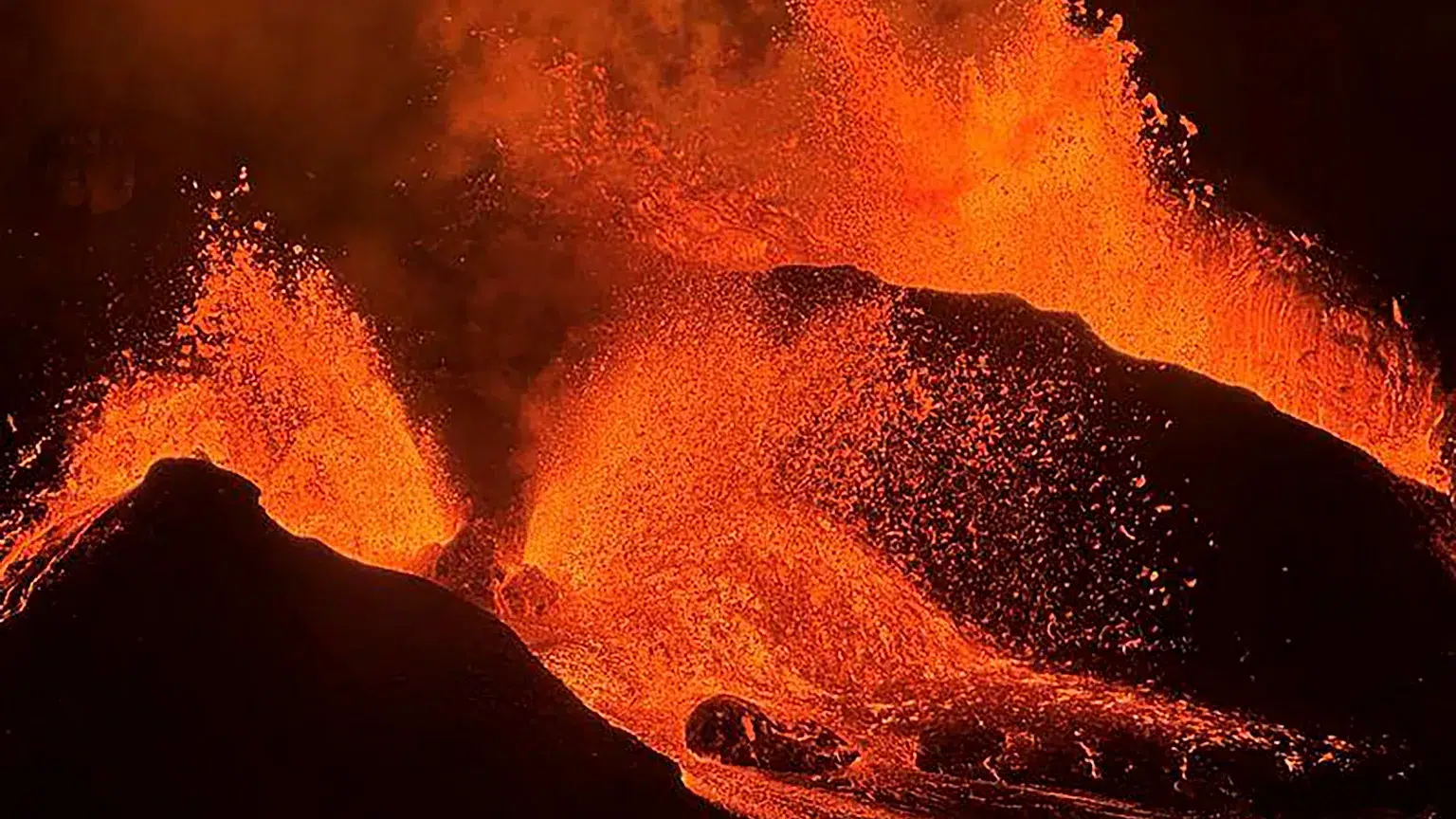
The **Kilauea volcano**, located on the **Big Island of Hawaii**, reactivated its [eruptive activity](https://noticiasambientales.com/medio-ambiente/un-enorme-volcan-submarino-del-pacifico-alerta-a-los-cientificos-por-su-reciente-actividad-y-posible-erupcion/) with a spectacular emission of **lava** that reached **30 meters in height**.
The phenomenon occurred at the **Halemaʻumaʻu crater**, where a **north vent** began to continuously expel **molten rock**, generating an incandescent arc visible from various points in the park.
This new episode corresponds to **number 31 since December**, confirming the **high frequency of activity** in one of the most dynamic [volcanic systems](https://noticiasambientales.com/ciencia/el-volcan-etna-sigue-en-erupcion-y-desarrolla-un-nuevo-crater-alerta-naranja-para-los-aeropuertos-de-la-zona-en-italia/) on the planet.
## Magma in motion: how an eruption originates
According to the **Hawaiian Volcano Observatory**, the Halemaʻumaʻu crater receives **magma** from the Earth’s interior at a rate of approximately **4 m³ per second**. This constant flow **inflates the lower chamber**, forcing the magma to rise through cracks until it reaches the surface.
The conduit has been active since December, so all episodes are considered part of the **same prolonged eruption**. The **sources of lava**, sometimes exceeding **300 meters**, are generated when pressurized magma—still loaded with **volcanic gases**—passes through narrow vents, causing an **explosive release** similar to uncorking a champagne bottle.
## A natural spectacle without risk to the population
Despite its intensity, the eruption remains **confined** within the crater, posing no direct threat to **homes or nearby communities**. Visitors and residents can observe the event from safe areas in the park, while thousands more follow it in real-time thanks to the **cameras of the U.S. Geological Survey**.
Park volunteer **Janice Wei**, speaking to CNN, describes the experience as being “**in the front row of nature’s most extraordinary show**.” The sound of the lava resembles the **roar of a jet engine**, and the heat can be felt from over **1.5 kilometers away**.
## Eruptive history of the Kilauea volcano: patterns and precedents
This type of repeated eruptions has occurred only **three times in the last 200 years**: in **1959**, **1969**, and during the prolonged activity that began in **1983**, which included **44 episodes** spread over three years.
That eruption led to the opening of a **lower-altitude vent**, from which lava flowed continuously for more than **three decades**, until it ended in **2018**.
Scientists do not rule out that the current pattern may **evolve similarly**, although there is also a possibility that the activity may **cease if the magma supply decreases**.
## Technology and monitoring: anticipating eruptions
Thanks to a network of **seismic and geodetic sensors**, specialists can anticipate with several days’ notice when lava is likely to emerge. These instruments detect **millimeter-scale changes** in the terrain angle and internal movements that indicate magma behavior.
“It’s like we’re ants trying to understand how an elephant moves,” illustrated **Ken Hon**, the observatory’s director.
## What to expect in the coming days?
According to **Steve Lundblad**, a geologist at the [University of Hawaii at Hilo](https://hilo.hawaii.edu/), the lava sources have **decreased in height**, possibly because the vent has **widened**, reducing internal pressure. Nevertheless, eruptions are expected to continue, albeit with **broader and less vertical characteristics**.
“We will continue to witness impressive volcanic displays,” Lundblad assured. “They will just be wider and not as tall.”



