



The Laguna La Felipa Fauna Natural Reserve has reopened its doors after a comprehensive recovery process. This emblematic space of wetlands and grasslands, located in the province of Córdoba, stands out as a key point for environmental education, conservation, and scientific research.
The reopening coincides with the 39th anniversary of the creation of the protected area and marked the beginning of a new stage for this natural environment. Hiking, flora and fauna observation, ecotourism, and environmental studies will be some of the activities available to visitors.
The refurbishment included improvements to facilities, renovation of trails, signage, and historical spaces, as well as new infrastructure aimed at enhancing the public experience. All of this seeks to promote responsible recreational use without neglecting the protection of the ecosystem.
The reopening was made possible thanks to a joint effort between the Ministry of Environment and Circular Economy, the Municipality of Ucacha, and various institutions, reinforcing the vision of shared and sustained management over time.
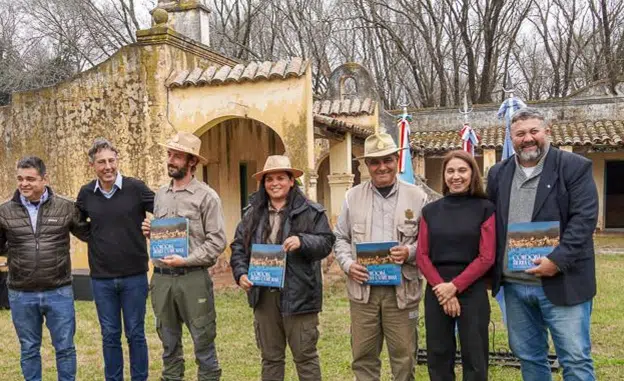 Reopening of the Laguna La Felipa Fauna Natural Reserve. Photo: El Diario CBA.
An environmental management model for the region
The relaunch of La Felipa is part of the Provincial Plan for Strengthening Protected Natural Areas, a program that promotes the conservation of the province’s natural and cultural heritage. This model encourages coordination between public agencies and local communities.
During the official event, tools and supplies were provided to improve maintenance and conservation tasks within the protected area. With these actions, the aim is to consolidate the reserve as an example of efficient and sustainable management.
The strategy aims for reserves to not only safeguard biodiversity but also function as spaces for education, sustainable tourism, and raising environmental awareness. In this context, La Felipa reinforces its role as one of the most important green lungs in the southern province.
The commitment undertaken by authorities and neighboring communities demonstrates the transformative potential of these natural spaces when managed with criteria of responsibility and respect for the environment.
 Laguna La Felipa. Photo: Reservas Naturales de Córdoba.
The ecological value of natural reserves
Natural reserves play a vital role in the conservation of biodiversity and ecosystems. They serve as a refuge for native species, many of them at risk, and protect essential habitats for local fauna and flora.
Furthermore, they act as natural regulators of climate and water, helping to prevent erosion and maintain the quality of soils and aquifers. In wetlands, like La Felipa, this function becomes key for water balance and flood mitigation.
Another fundamental role of reserves is their contribution to scientific research. These spaces allow the study of ecosystem dynamics, assessment of climate change impacts, and development of conservation strategies adapted to each region.
Finally, they promote environmental education and responsible ecotourism, fostering respect for nature and appreciation of the environment. Reserves, more than restricted areas, are living scenarios for building a more conscious and sustainable society.



