



On April 8 and 9, the third Meeting of Macroalgae Mappers will take place, a scientific event aimed at strengthening international collaboration around the study of underwater forests.
The event will be held in a hybrid format, with in-person activities at the Coastal Marine Research Station (ECIM) in Las Cruces, Chile, and virtual participation for researchers from different countries.
The call brings together scientists, professionals, and students from Ibero-America and Latin America interested in the monitoring, mapping, and conservation of these marine ecosystems.
Furthermore, the meeting aims to consolidate a scientific community dedicated to understanding the dynamics of macroalgae forests, considered essential for biodiversity and the health of the oceans. In this context, the exchange of experiences and methodologies will be one of the main focuses of the meeting.
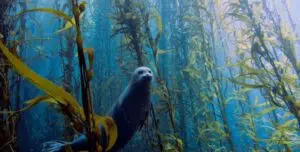
Spaces for exchange and collaborative work
The program includes two days of complementary activities aimed at knowledge exchange. The first day will be dedicated to oral presentations where researchers will present scientific advances and results of recent studies.
During these presentations, monitoring methodologies, data analysis, and work experiences in different marine ecosystems of the continent will be shared.
Subsequently, the second day will focus on collaborative work through round tables and specialized workshops. These spaces will allow for the identification of common challenges and the generation of joint research proposals. Additionally, the meeting seeks to strengthen cooperation networks between academic institutions and organizations dedicated to marine conservation.
Among the entities supporting the initiative are Stanford University, the Millennium Institute of Coastal Socio-Ecology (SECOS), Blue Alert, Por el Mar, Más Kelp, and WWF. These organizations promote scientific projects and conservation strategies in coastal ecosystems.
Ecological importance of macroalgae forests
Macroalgae forests are among the most productive ecosystems on the planet. These underwater formations serve as refuge, food, and breeding grounds for numerous marine species.
Additionally, they help maintain the ecological balance in coastal areas by regulating key biological processes. Among them are oxygen production, carbon capture, and the protection of biodiversity.
In many Latin American countries, they also play an important role in sustainable productive activities. The harvesting and cultivation of algae are used for the production of food, fertilizers, and industrial compounds.
However, there are still significant information gaps regarding the distribution and dynamics of these ecosystems in the southern hemisphere. For this reason, the scientific meeting seeks to expand knowledge about these marine environments and promote new regional research.
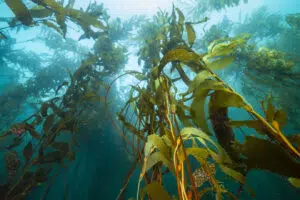
Environmental implications of macroalgae in marine ecosystems
Macroalgae play fundamental ecological roles in the oceans. One of the most important is their ability to absorb carbon dioxide, which helps mitigate the effects of climate change.
Additionally, these organisms create complex underwater structures that serve as habitats for fish, mollusks, crustaceans, and numerous invertebrate species. This makes macroalgae forests true biodiversity refuges.
They also act as natural barriers against coastal erosion. By cushioning the force of the waves, they help protect coastal ecosystems and nearby human communities. Another key environmental implication is their role in marine nutrient cycles. As they grow and decompose, they release compounds that feed entire food chains.
Therefore, understanding their distribution and evolution is essential for designing marine conservation strategies and ensuring the sustainability of coastal ecosystems in Latin America.



