



En a vast corner of South America, nature manifests itself in its fullest expression through an immense tropical forest that produces a quarter of the world’s oxygen and amazes with its unparalleled biodiversity.
The grandeur of nature is revealed somewhere on planet Earth through an extensive area of tropical forest, a home to imposing trees, winding rivers and a biological diversity that surprises all its visitors.
This ecosystem not only harbors thousands of unique species, but also plays a fundamental role in the global balance. Below, we tell you where this place is located in South America.
The largest forest on Earth and generates about 20% of the world’s oxygen
Among the most impressive sites in the world is the Amazon rainforest, recognized as the largest forest on the planet. This gigantic ecosystem, which extends across nine countries in South America, is responsible for producing approximately 20% of the world’s oxygen, earning it the nickname “lungs of the Earth“.

It is the habitat of millions of plant species, animals, and insects, many of which are exclusive to this region, and it also supports numerous communities that depend on its resources for their subsistence.
The importance of the Amazon transcends its impressive size and its natural wealth; its role is fundamental. This ecosystem regulates the global climate, absorbs carbon dioxide, and maintains the balance of other ecosystems whose impact is felt across the planet.
Additionally, it is the ancestral home of indigenous peoples who have lived for centuries in complete harmony with its rivers, forests, and fertile soils.
Why is the Amazon considered a forest?
According to the Spanish Language Dictionary of the Royal Spanish Academy (RAE), the word “forest” is defined as a “site populated with trees and shrubs”. Meanwhile, “jungle” is described as a “vast, uncultivated land densely populated with trees”.
From these definitions, it can be understood that the jungle is a particular type of forest, characterized by a high density of vegetation, a high degree of humidity, and abundant growth of tree species.
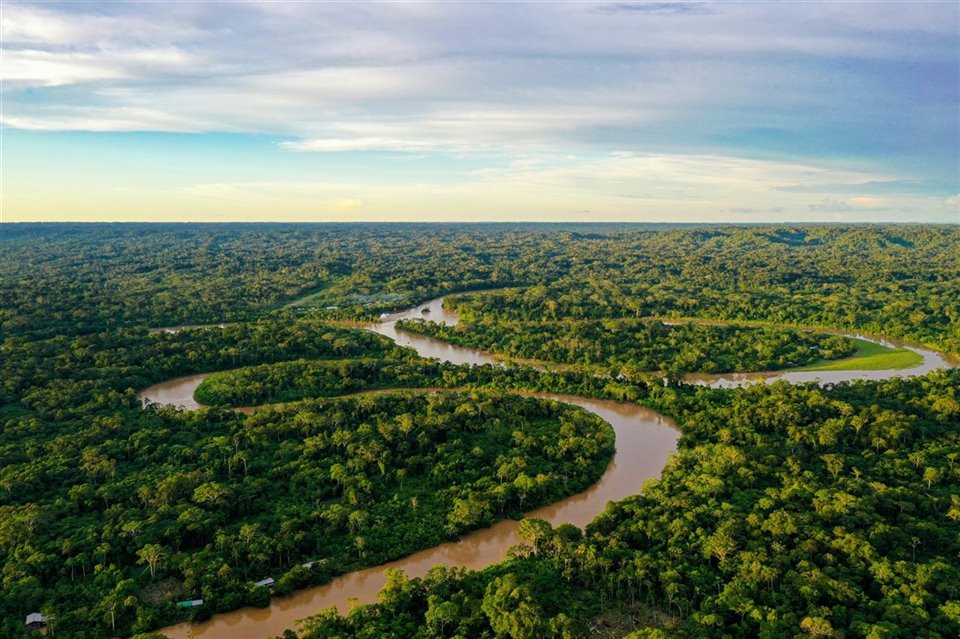
For this reason, both terms are correctly used to describe the Amazon: “forest” is used to refer to the wooded ecosystem in a general sense, and “jungle” is used when emphasizing its tropical nature, lushness, and biodiversity, producing an important percentage of the world’s oxygen. Thanks to these clarifications, it is understood why both words are appropriate.



