



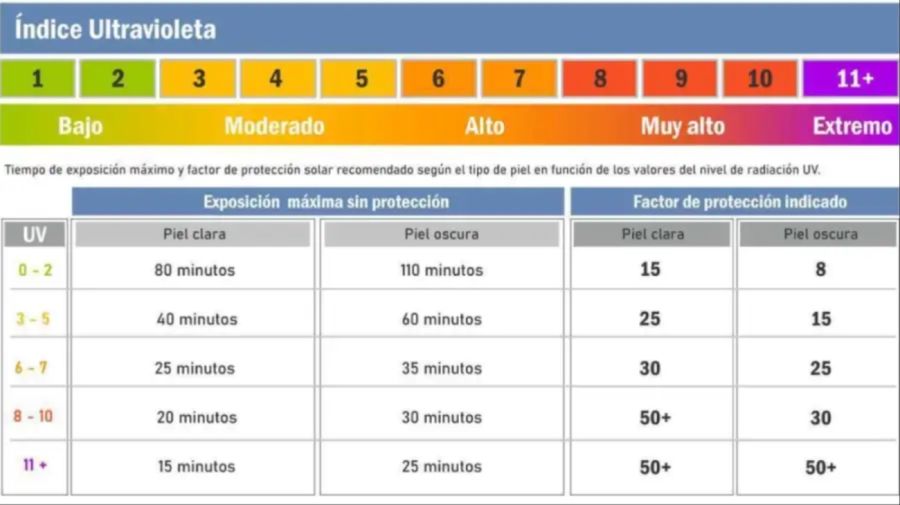
Este sábado, el UV index in the City of Buenos Aires and the Greater Buenos Aires area will remain at a low level of 2, providing a safe environment without the need for extreme protection. This level of ultraviolet radiation offers a respite for the health of the inhabitants without compromising their well-being.
In the rest of the country, the National Meteorological Service reports that the central and southern regions will maintain indices between 1 and 2, while the north of Argentina will reach moderate levels of up to 4.
Understanding the UV index for a safe winter in Argentina
The solar ultraviolet radiation index (UVI) is a global tool that measures the intensity of UV rays on the earth’s surface, crucial for identifying the potential risk of skin injuries. According to the World Health Organization (WHO), the index is classified from “low” to “extreme,” with values starting at zero and potentially exceeding 11.
Daily, understanding this index is vital for public health. The Pan American Health Organization (PAHO) emphasizes its importance as an early warning system, essential for indicating when it is imperative to protect oneself from the sun.
The effects of ultraviolet rays on health
Excessive exposure to ultraviolet rays without adequate protection can lead to serious health problems. The WHO highlights that solar radiation is a primary risk factor for skin cancer, including melanomas and carcinomas. It also accelerates skin aging and promotes spots.
The eyes and the immune system are also vulnerable. According to the PAHO, UV radiation can cause eye conditions such as cataracts and reduce the effectiveness of the immune system, increasing susceptibility to infections.
To mitigate these risks, the WHO suggests limiting sun exposure between 10 a.m. and 4 p.m., wearing clothing that covers the skin, hats, and sunglasses with UV protection. Additionally, the correct use of broad-spectrum sunscreens is vital.
Renewing sunscreen every two hours and seeking natural shade complements these measures, ensuring comprehensive care against radiation.


