



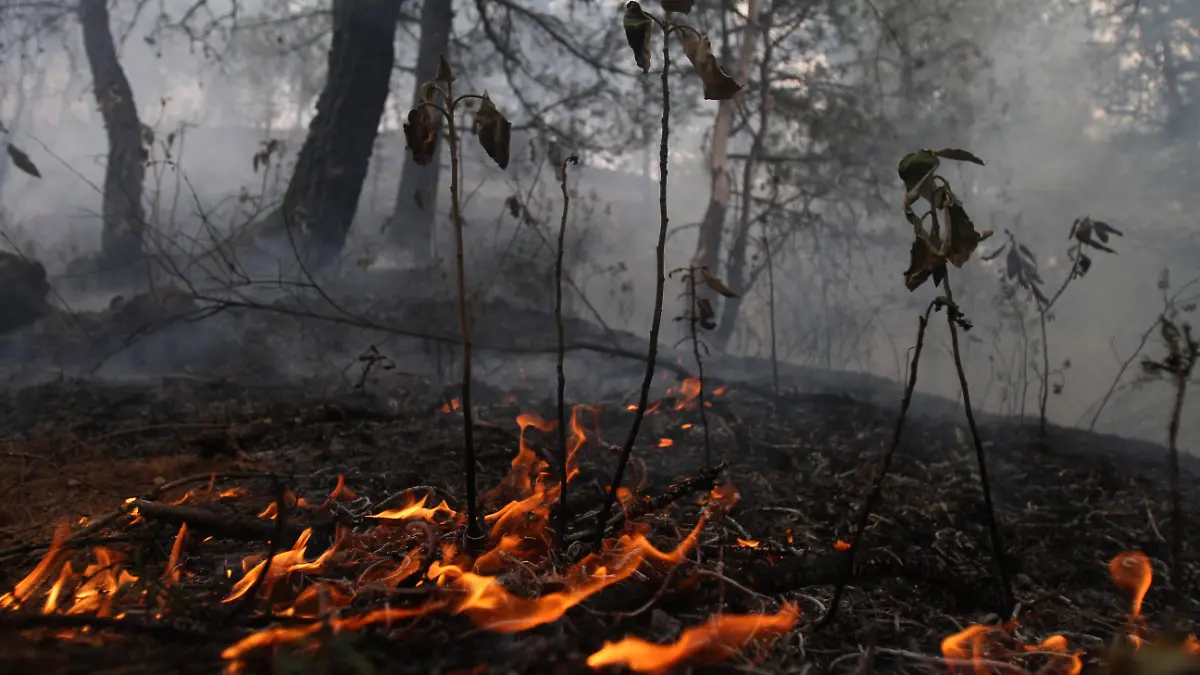
Mexico experienced one of its most critical years in terms of forest fires in 2024, with the loss of over 93,000 hectares of primary forests.
The data, revealed in May by the global report from GLAD Lab (University of Maryland) and Global Forest Watch (World Resources Institute), placed the country on the list of the top ten nations with the greatest loss of vegetative cover in the world.
Fires and prolonged droughts: pressure factors
The report attributes 60% of the total loss to forest fires, with over 8,000 registered hotspots throughout the country. The National Forestry Commission (Conafor) reported an impact on 1,672,215 hectares, one of the highest records of burned surface area in decades.
The causes of the fires include:
- 29.8% of unknown origin
- 23.4% were intentional
- 17.8% due to agricultural activities
- 13% due to livestock practices
- Only 1.3% due to natural phenomena
Additionally, a prolonged seven-year drought contributed to the vulnerability of forest ecosystems, especially in the central-northern region of the country.
Lost forests or adaptive ecosystems?
Jose Ivan Zuniga, Forest Manager at WRI Mexico, highlighted in conversation with Mongabay that many Mexican temperate forests are adapted to fire, so a burned area does not necessarily imply forest loss or deforestation.
- 66% of the impacted areas in 2024 correspond to fire-adapted ecosystems
- 58% had minimal impact, mainly affecting surface litter
- 95% of fires between 2019 and 2024 were surface fires, without deep structural damage
“What burns is not always lost; many forests even need fire to regenerate,” Zuniga pointed out.
Deforestation in the peninsula and agricultural land use
Despite the adaptability of certain ecosystems, the report shows a critical trend in tropical regions. In the Yucatan Peninsula, the expansion of monocultures and intensive livestock farming is causing a rapid loss of humid forests.
- 45% of national deforestation between 2001 and 2023 affected this type of jungle
- Campeche and Quintana Roo account for half of the primary forest loss in 2024
- Livestock activity predominates as a productive model, with no incentives for conservation
“Changing land use in jungles should only be allowed under legal exception, but this principle is not being respected,” Zuniga warned.
Territorial strategies: restoration and forest economy
Given this scenario, specialists like Zuniga and Enrique Jardel agree that human activities and climate change are transforming the forest landscape, emphasizing the need for greater institutional attention to prevent ecosystem collapse.
Some prominent proposals include:
- Payment for environmental services to forest owners, such as wood or sustainable tourism
- Agroforestry systems to restore pastures and promote sustainable agroforestry practices
- Community projects, like those led by the cooperative AMBIO in Chiapas, working with fire mapping, restoration protocols, and comprehensive land management
“These communities know where fires can impact, how to prevent them, and what to do afterward. This approach should be replicated throughout the country,” Zuniga emphasized.


