



The Faculty of Forestry Sciences of the National University of Misiones (UNAM) and the Tecas de San Pedro Foundation signed an agreement that paves the way for an innovative project: the creation of an arboretum. This space will become a center dedicated to the conservation of tree species, scientific research, and environmental education, with a strong community focus.
The arboretum will be developed on the foundation’s property in San Pedro, where the first step has already been taken with the planting of native species such as araucarias, anchicó, caroba, cedar, guatambú, ceibo, rosewood, and lapacho, among others. These specimens form the basis of a space that aims to protect the forest heritage and promote the connection between society and nature.
The initiative also aims to become a meeting point for scientists, students, and the local community, to strengthen environmental education and raise awareness about the value of forests. The project not only highlights the importance of the region’s biodiversity, but also seeks to establish a key tool to address the climate crisis and habitat loss.
One of the main objectives is to ensure that the arboretum is sustainable over time. To achieve this, mechanisms for active conservation, educational programs, and extension projects involving the population in the protection of their natural environment will be established. In this way, the goal is for the residents of San Pedro to become protagonists in caring for the Yabotí biosphere, a vital area for the province’s ecological balance.
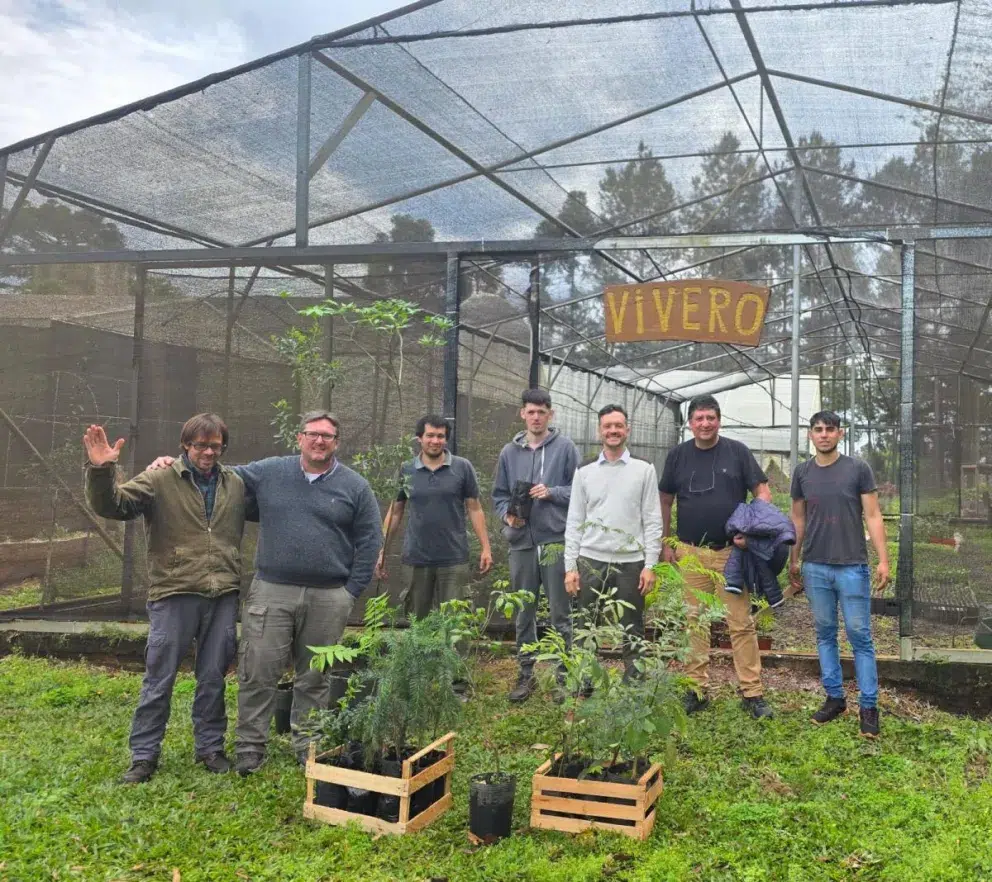 Misiones advances on the path of environmental awareness with the creation of an arboretum. Photo: El Territorio.
An Initiative of Great Environmental Contribution
The launch of the arboretum in San Pedro marks a milestone for the region, not only for its environmental contribution but also for its cultural and educational value. The inclusion of native species such as the araucaria —a symbol of the Misiones jungle— strengthens the community’s connection with its natural roots and reinforces the commitment to its preservation.
This project represents an opportunity to transform the way the environment is cared for and understood. In a global context of accelerated biodiversity loss, the San Pedro arboretum emerges as a concrete response, integrating science and society in building a more sustainable future.
With the active participation of educational institutions, social organizations, and residents, the space is expected to consolidate as a hub of environmental, scientific, and cultural attraction. The initiative not only protects species but also sows awareness, creating a green legacy that will endure over time.
 Arboretum.
What is an Arboretum and Why is it Essential
An arboretum is a specialized botanical garden focused on trees and shrubs, designed as a living space for scientific research, species conservation, and public education. Unlike other gardens, its main function is to house collections of woody plants that can be studied, preserved, and exhibited to generate knowledge.
These spaces allow researchers to analyze the growth, adaptation, and reproduction of species, both native and introduced, under controlled and secure conditions. At the same time, they play a key role in conservation, as many of the species planted in these places come from regions where they are threatened by deforestation, urbanization, or climate change.
But the importance of an arboretum is not limited to science. It is also an educational tool that brings the population closer to the forest world. Through tours, workshops, and activities, children, young people, and adults learn about the importance of trees in climate regulation, oxygen production, soil retention, and wildlife habitat. Its role is, therefore, comprehensive: combining knowledge, conservation, and awareness.


