



Talking about sustainable housing today involves referring to Net Zero homes, a system that proposes a total energy balance. These constructions generate, over the course of a year, the same energy they consume.
Thus, the electric bill ceases to be a central concern. This approach is gaining strength driven by the climate crisis, rising rates, and the urgency to reduce pollutant emissions.
In this context, specialists in sustainable construction agree that design, efficiency, and renewable energies must work in an integrated manner to achieve an annual energy balance equal to or greater than zero.
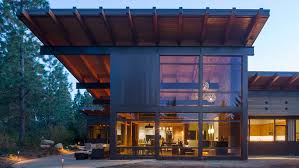
Less consumption before generating energy
The principle guiding Net Zero homes is clear: first, reduce energy demand to the maximum. For this, comprehensive thermal insulation and the airtightness of the envelope are prioritized.
Additionally, thermal bridges are eliminated, and high-efficiency openings are installed. As a result, the need for heating and cooling, the areas of highest consumption in a home, is significantly reduced.
In many cases, these criteria are inspired by the Passivhaus standard, which adds mechanical ventilation with heat recovery, triple glazing, and an orientation designed to take advantage of the sun.
They were sharing a family barbecue, and a detail in the kitchen revealed the secret hidden behind the walls. This everyday scene reflects how efficiency often goes unnoticed, although it defines the functioning of the home.
Renewable energies and residential autonomy
Once consumption is optimized, the remaining demand is covered with clean sources. Photovoltaic solar energy is the most used, although domestic wind systems or geothermal energy are also incorporated.
The electricity generated is stored in batteries that ensure autonomy during the night or on cloudy days. In more advanced projects, smart grids are integrated to manage energy use.
A plot of almost a block is for sale in a historic neighborhood of the city. This type of development shows how urban design is also beginning to adapt to new ways of living.
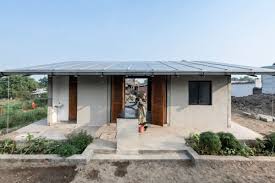
Economic, environmental, and social benefits
The positive impact of Net Zero homes goes beyond economic savings. By reducing or eliminating conventional energy consumption, the carbon footprint is directly decreased.
They also improve thermal comfort and indoor air quality, creating healthier environments. Added to this is greater stability in the face of power outages or energy crises.
In Argentina, interest grows as home automation, solar capture, and water recovery advance. Even in variable climates like Buenos Aires, some homes reduce energy for climate control by up to 93%.
Goodbye to renting: the legal trick to qualify for a mortgage loan with low income. In this context, energy efficiency also becomes a tool for access to housing.
A cultural change underway
More people are looking for environmentally responsible homes and less dependent on finite resources. Traditional construction is beginning to give way to more durable and efficient models.
Although the initial investment may be higher, the return is clear in a few years. Net Zero homes anticipate a future where each home functions as a small sustainable energy center.



