



Un derrame de crudo ocurrido en las costas de Tabasco a mediados de marzo se ha convertido en uno de los desastres ambientales más graves de los últimos años en el Golfo de México.
Según Greenpeace, la mancha de hidrocarburo se ha extendido a lo largo de 630 kilómetros de litoral, alcanzando el norte de Veracruz y afectando casi la totalidad del Corredor Arrecifal del Suroeste, desde la laguna de Tamiahua hasta Paraíso, Tabasco.
Impact on communities and ecosystems
The spill especially affects fishing, indigenous, and Afro-descendant communities, who have collaborated in cleaning efforts without the proper equipment or training. In addition to environmental damage, the presence of crude oil has hit the local economy, affecting fishing and tourism.
Greenpeace warned that the situation is critical for marine and reef ecosystems, which play a vital role in biodiversity and coastal protection.
Official response
The company Pemex reported having recovered 549 cubic meters of hydrocarbon between March 20 and 22, deploying 450 specialists in containment and cleaning tasks. Additionally, as of March 15, 90 tons of crude-impregnated waste had been collected on beaches in Tabasco and Veracruz.
The Semarnat reported an 85% progress in cleaning tasks, with the participation of 200 people in the affected area.
President Claudia Sheinbaum confirmed on March 23 that the first spill was due to a private vessel, while a second incident was linked to the Dos Bocas refinery. The president requested a criminal investigation from the prosecutor’s office, stating that the case constitutes an environmental crime.
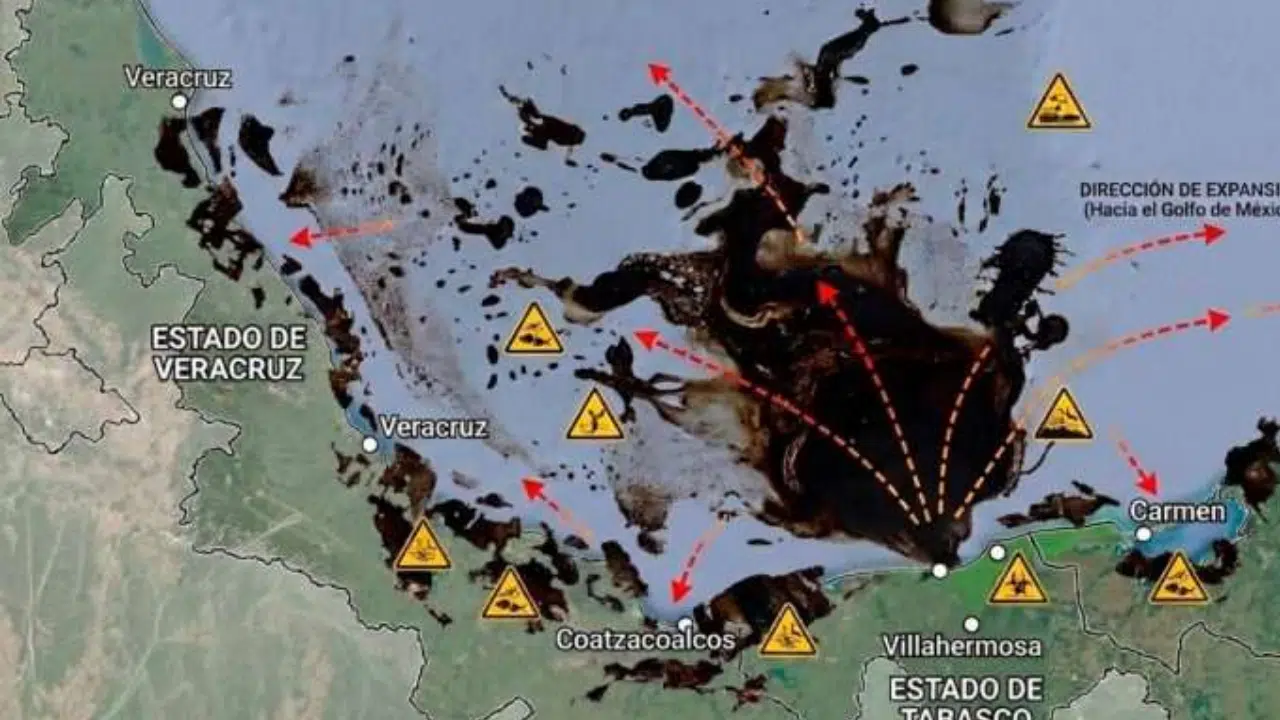
Extent of the disaster
Satellite images from NOAA show the extent of the affected area, from Tabasco to Tuxpan (Veracruz). Although the spill is not directly visible from space, the records allow for gauging the magnitude of the impact.
The oil slick has reached locations such as Tamiahua and Cazones, affecting areas of high ecological and fishing wealth.
Environmental and social consequences
The spill puts at risk:
- Reefs and marine ecosystems of the Gulf of Mexico.
- Fishing communities that depend on the sea for their livelihood.
- Coastal tourism, affected by the contamination of beaches and waters.
- Public health, due to the exposure of residents to hydrocarbons without adequate protection.
The environmental disaster in the Gulf of Mexico highlights the fragility of ecosystems in the face of oil activity and the need to strengthen prevention and response mechanisms. The criminal investigation announced by the government will be key to determining responsibilities and preventing similar events from recurring.



