



The biodiversity in the Napo River basin was unveiled after a study documenting an unprecedented faunal richness in the Ecuadorian Amazon. The survey confirmed the presence of more than 180 species of amphibians and reptiles.
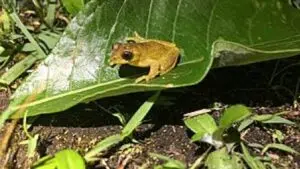
The research was conducted by the San Francisco de Quito University (USFQ) and the National Institute of Biodiversity (Inabio). They recorded 131 species of amphibians and 52 of reptiles in the upper Napo River basin.
The work was carried out in five locations in the Ecuadorian east, including the Sumaco and Llanganates national parks. It also covered municipal, private, and indigenous reserves along a broad environmental gradient.
The characteristics of the Napo River and its diverse basin
The Napo River is one of the main Amazonian tributaries in Ecuador and traverses a mosaic of ecosystems with great ecological complexity. Its basin connects lowland rainforests with high Andean páramo ecosystems.
Additionally, it presents marked altitudinal variations that influence the species composition and water dynamics. These differences create contrasting habitats over relatively short distances.
Moreover, the Napo plays a key role in water regulation, sediment transport, and regional biological connectivity. Its river network supports human and indigenous communities that directly depend on its resources.
Endemic species and increasing vulnerability
The study showed that the greatest species richness is concentrated in lower altitude areas. There, the warm and humid conditions favor a higher diversity.
However, the mountainous areas host more restricted and endemic species. Many of them show high sensitivity to changes in temperature and humidity.
Consequently, amphibians and reptiles emerge as key ecological indicators. Their vulnerability to deforestation, mining, and water pollution raises warning signs.

Environmental pressures and urgent decisions
The Napo River basin faces increasing threats from extractive activities and changes in land use. Mining and deforestation directly impact the water quality and riparian habitats.
In this context, the Ministry of Environment and Energy announced the suspension of mining activity in the province of Napo. The measure responds to pollution episodes recorded in the basin.
Researchers emphasize that these findings are fundamental for guiding public policies. Constant monitoring will allow for impact mitigation and strengthening of territorial planning.
Thus, the Napo River basin consolidates as a strategic enclave for Amazonian conservation. Protecting its diversity implies safeguarding not only unique species but also the ecological stability of the entire region.



