



The issue of agrochemicals has once again taken a central place in Argentina’s environmental agenda following the progress of a judicial case investigating alleged contamination incidents in areas near urban zones of Pergamino. The process involves agricultural producers, professionals linked to the activity, and public officials.
In this context, the federal prosecutor’s office requested sentences ranging from two years to four years and three months in prison for nine defendants, in addition to requesting disqualifications, compensations for those affected, and the confiscation of fields and machinery allegedly used in the investigated fumigations.
Furthermore, the case has become one of the country’s most significant environmental cases, as it analyzes the relationship between agricultural production, public health, and ecosystem conservation.

Neighborhood complaints and an investigation that extended over more than a decade
The origin of the judicial proceedings dates back to 2014, when residents and environmental organizations began to report the application of chemical substances in areas close to inhabited areas of Pergamino.
From these submissions, four cases were developed that are currently being evaluated by the Federal Oral Court No. 2 of Rosario. Two of the affected neighbors also participate as plaintiffs in the process.
On the other hand, the prosecutor’s office argued that the investigated fumigations were allegedly carried out over several years in various rural establishments located in Pergamino, Villa Alicia, Ayersa, and Juan Andrés de la Peña, allegedly violating current environmental and health regulations.
Officials and producers under judicial scrutiny
Among the accused are agricultural producers identified for carrying out applications of substances considered dangerous to the environment and human health in sensitive areas.
Similarly, the investigation reached an agronomist and an applicator of phytosanitary products for incidents related to fumigations conducted near educational establishments.
Additionally, two officials from the Rural Environment Directorate of Pergamino were accused of breach of public duties for alleged omissions in control and oversight tasks established by municipal ordinances aimed at protecting the population.
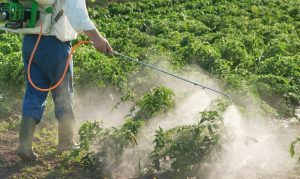
How do agrochemicals harm the environment?
Agrochemicals can generate significant impacts when used improperly or without sufficient controls. These substances have the ability to contaminate soils, watercourses, and underground aquifers, affecting the natural balance of ecosystems.
Moreover, numerous studies have shown that constant exposure to certain compounds can reduce biodiversity, affect pollinating insects like bees, and alter entire food chains.
On the other hand, the airborne dispersion of chemical products can transport contaminants over long distances, reaching urban areas, wetlands, forests, and neighboring productive zones. As a result, the risks to wildlife and to human communities living near fumigated areas increase.
A case that transcends the judicial sphere
Fires, the loss of native forests, and chemical contamination are part of the main environmental challenges facing Argentina. In this scenario, the Pergamino case acquires a dimension that surpasses the criminal level.
While arguments continue and new judicial definitions are awaited, specialists emphasize the importance of strengthening control, monitoring, and prevention systems to reduce the environmental impacts associated with certain productive practices.
Finally, the process reintroduces a fundamental discussion: how to reconcile agricultural production with the conservation of natural resources and the protection of health of communities, a challenge increasingly relevant in the face of growing sustainability demands throughout the country.



