



Researchers from the Marine Crop Research Laboratory (LICMA) at the Universidad Científica del Sur, in collaboration with the NGO BlueMood, are developing a pioneering underwater reforestation project in Pucusana, in southern Peru, covering 2,500 m².
The initiative, called “Ocean Reforestation”, involves the planting of brown macroalgae from laboratory-cultivated seeds, aiming to restore marine ecosystems critical for biodiversity and the local economy.
The planting of Macrocystis pyrifera
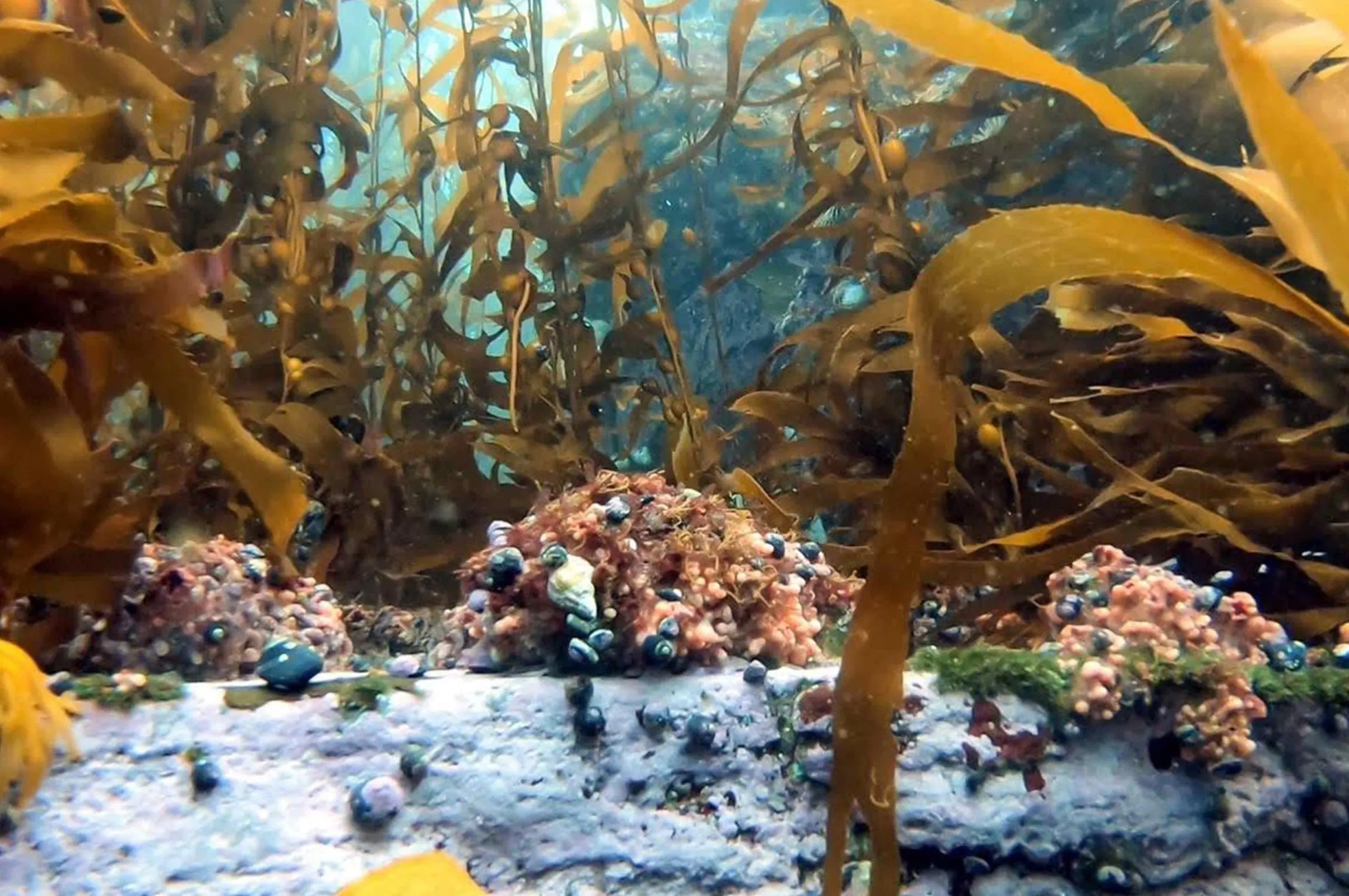
The project began with the planting of Macrocystis pyrifera, a species of brown macroalgae, at El Carbón Beach, a key area for artisanal fishing.
- In 2024, the team led by Paul Baltazar Guerrero, along with Max Castañeda Franco and Arturo Mires Reyes, conducted an underwater survey to identify suitable areas.
- Reproductive fronds of Macrocystis pyrifera were collected to obtain spores in the laboratory.
- Subsequently, seedlings between 3 and 5 cm were cultivated and transplanted to the seabed using surrounding rocks.
After a year of monitoring, the algae reached up to 4 meters in height, demonstrating the success of the procedure.
Innovation and scientific knowledge
The project also generated technological advances. A container for macroalgae seedlings was developed, presented at the International Inventions and Innovation Competition of Canada (iCAN 2024), where it won a gold medal.
Additionally, four theses from the Marine Biology Program are underway, addressing topics such as:
- Growth rate of the macroalgae.
- Carbon capture.
- Metabolite analysis.
- Activity of marine fauna associated with reforestation.
Ecological and economic benefits
The restoration of macroalgae meadows offers multiple benefits:
- Recovery of critical habitats: refuge and food for various marine species.
- Increase in fishery production: regeneration of commercially valuable species.
- Carbon sequestration: contribution to climate change mitigation.
- Coastal protection: reduction of erosion through natural barriers.
- Improvement of water quality: regulation of nutrients and heavy metals.
The project also opens a new economic alternative for fishermen and seaweed harvesters, who could incorporate the planting and harvesting of algae into their activities. The seaweed market is growing: in 2023, more than 50,000 tons of extraction were recorded in Peru.
A model for sustainable fishing
The “Ocean Reforestation” project marks a before and after in marine ecological restoration in Peru. More than an isolated initiative, it has become an example of how science, local communities, and organizations can come together to restore marine ecosystems and protect the fishing economy.
“These underwater forests are home to diverse hydrobiological communities: fish that feed on polychaetes, amphipods, crabs, and mollusks, which boosts artisanal fishing,” explains Arturo Mires, a researcher at Científica.
Importance of underwater reforestation
With these efforts, Pucusana is not only bringing life back to its macroalgae meadows, but it could also become a reference model for sustainable fishing and marine biodiversity conservation in Peru.



