



A recent study published in npj Climate and Atmospheric Science analyzed the direct physical effects of reforestation, beyond the well-known carbon sequestration.
The results show that planting trees does not always reduce local temperature, and that the impact strongly depends on geographical location and climatic conditions.
Evapotranspiration: the natural mechanism that cools the tropics
In areas like the Amazon, Congo, or Southeast Asia, where trees grow all year round and water is abundant, the process of evapotranspiration—a kind of “vegetal sweat”—allows trees to release water vapor, which cools the surrounding air. This phenomenon works similarly to human sweat, dissipating heat and regulating temperature.
Moreover, the generated vapor promotes cloud formation, which blocks part of direct solar radiation, enhancing the cooling effect. In tropical regions, this mechanism can lead to temperature decreases of up to 0.45°C, as observed in central Africa.
Strategic reforestation: modest but significant climate benefits
Although the overall direct effect of evapotranspiration is limited (around 0.005°C), combined with carbon storage, it can help reduce the global average temperature between 0.1°C and 0.2°C.
These figures, although small, are relevant in the context of climate mitigation, especially if integrated with other strategies such as emission reduction and protection of key ecosystems.
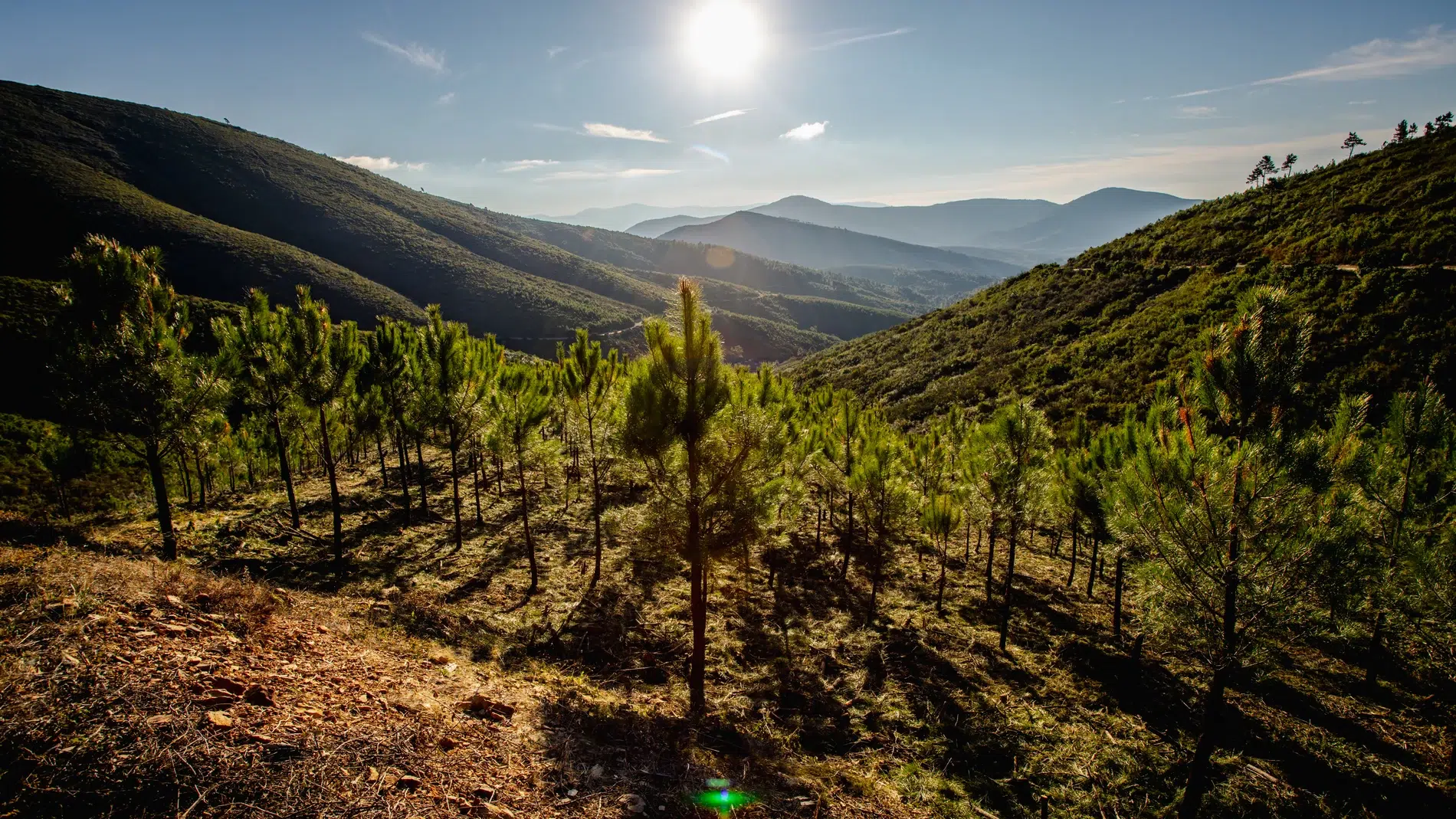 Reforestation in key points for the health of the planet[/caption>
Trees as firebreaks: an ally against tropical fires
Tree densification can reduce fire spread in savannas and dry grasslands.
In ecosystems like tropical savannas, trees not only cool the environment but also act as natural fire barriers.
By reducing the presence of dry grasslands, they limit fire spread, a common threat in countries like Brazil, Zambia, or Indonesia, where agricultural burns are common practices.
Risks in high latitudes: when tree planting can lead to more warming
In regions of the northern hemisphere, such as the northeastern United States or southern Canada, reforestation can have adverse effects.
The absorption of solar radiation by trees and the accumulation of dry biomass can increase local temperature and favor forest fires, especially if ecosystem dynamics are not taken into account.
Reforestation with criteria: avoiding negative impacts and maximizing benefits
The study proposes a selective strategy based on climate models and land use.
Instead of promoting indiscriminate massive planting, researchers suggest strategic reforestation, focusing on recently deforested areas and avoiding agricultural or inhabited areas.
Using data from 12 international climate models, regions were identified where reforestation can optimize climate benefits without compromising food security or land access.



