



The marine temperature record reached in 2025 marks a worrying milestone for the Mediterranean.
This year, the surface waters recorded unprecedented anomalies.
However, scientists warn that the warming is even more intense in the deep layers of the ocean.
Researchers from the Coastal Prediction and Observation System (Socib) of the Balearic Islands detected that the heat in intermediate waters exceeds all historical records.
Thus, the average marine temperature was between 2 and 4 degrees above normal, with peaks of up to 5 degrees in early July, considered a record.
Marine temperature record: the hottest June in four decades
“This has been the hottest June ever recorded since 1982, which is when we have satellite data,” highlights Mélanie Juza, a Socib researcher and head of the center’s satellite remote sensing installation.
On July 7, 28.5°C was recorded on the surface, an absolute record for that date.
But the most alarming data came on July 1, when a buoy reached 31°C, setting a total record for a July month.
Underwater observation platforms, including gliders and profiling buoys, allowed measuring the temperature up to 700 meters deep.
“The summer of 2025 has reached a record of marine temperature in the deepest layers,” warns Juza.

Marine heatwaves of maximum severity
When ocean temperatures remain at extreme values for more than five days, the so-called marine heatwaves occur.
In June and July 2025, a category 3 severity was reached for the first time, the highest possible.
“In June and July 2025, for the first time both in the Balearic Sea and in Alborán, a category 3 severity marine heatwave was reached, the highest,” says the researcher.
This year accumulates 210 days of marine heatwaves, compared to the reference period 1982-2015.
After three consecutive years of ocean temperature records, “2025 is already positioned as another record year and the fourth very anomalous in a row,” Juza summarizes.
The problem of heat trapped in the depths
The warming trend is more intense around 500 meters deep.
“While the anomaly is more significant on the surface, we now see that in the intermediate layer, around 500 meters deep, the increasing trend is more intense,” explains the scientist.
The problem worsens because that accumulated heat in depth does not connect with the surface.
“Once the warm water is in depth, where it does not connect with the surface, it is very difficult to cool it,” warns Juza.
The specialist recalls that the increase in ocean temperatures is a consequence of global warming.
“The ocean acts as a natural heat reservoir and has already absorbed more than 90% of the excess heat associated with human activities,” she states.
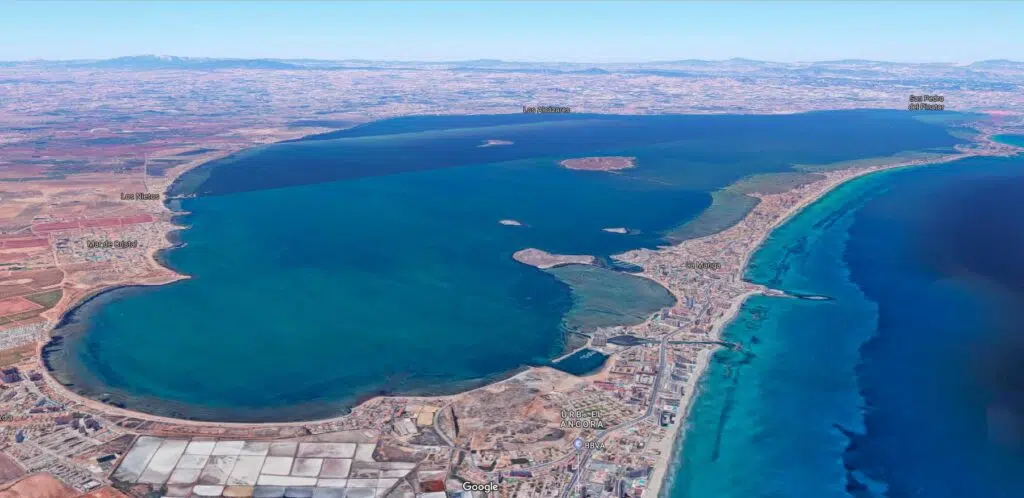
The consequences of the marine temperature record for ocean ecosystems
The rising temperatures and extreme heat events threaten ecosystems with “devastating consequences for marine species and habitats.
Moreover, this occurs “both on the surface and in deeper waters,” notes the researcher.
Among the documented effects are:
- Deterioration of ocean meadows
- Mortality of corals and gorgonians
- Blooms of harmful algae
- Mass mortality of marine organisms
- Alteration of the reproduction and growth cycle of fish
- Tropicalization of the ocean with invasive species
Sea warming also contributes to the reduction of oxygen. “And half of the oxygen we breathe comes from the ocean,” warns Juza.
Therefore, the elevated ocean temperatures provide more heat and moisture to the atmosphere.
This, consequently, intensifies extreme weather events such as storms with torrential rains.
Therefore, the researcher emphasizes the need to act.
“The international community has been clear: we must reduce greenhouse gas emissions immediately, sustainably, and on a large scale,” she concludes.
She also emphasizes the need to “preserve natural spaces like ocean meadows and protect the oceans.”
This is key because they also suffer from both global warming and degradation due to overfishing, maritime traffic, pollution, and coastal urbanization.


