



Punta Bermeja, in Viedma, faces the challenge of balancing growing tourism with the conservation of the largest sea lion colony in Río Negro.
Therefore, with up to 9,000 specimens resting on its beaches, the protected area intensifies its monitoring and awareness efforts.
Currently, the Protected Natural Area (ANP) Punta Bermeja hosts the largest one-hair sea lion colony in the province.
According to Neri Maidana, the area coordinator, the population ranges between 6,000 and 9,000 specimens depending on the season.
“It is the main reason for conservation for which the area was created”, Maidana explained in an interview with Radio Noticias.
Thus, the large fauna associated with this sea lion colony in Punta Bermeja makes the site an essential refuge for coastal mammals.
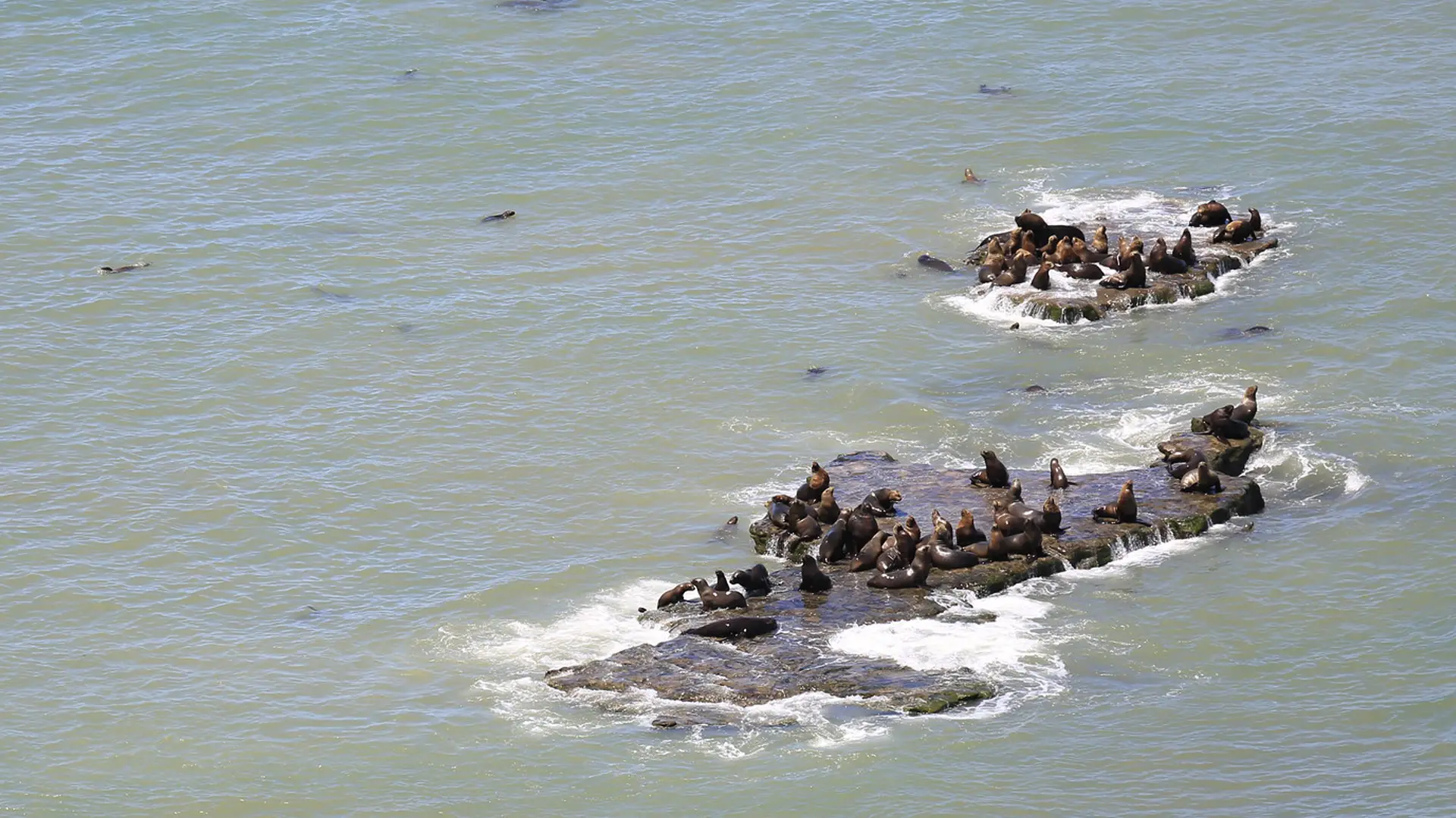
The daily work of rescuing and monitoring the sea lions of Río Negro
The environmental guards daily patrol the extensive area to assist animals in risky situations.
The task includes immobilizing sea lions to remove ropes or fishing nets in which they become trapped, allowing them to be released afterward.
In addition to fauna rescue, the team conducts critical environmental monitoring.
Currently, they are working on controlling mussels due to red tide, a phenomenon that has banned extraction.
“In previous weeks, toxin levels were found,” the coordinator indicated about this role in preserving the marine environment.
The challenge of sustainable tourism in Río Negro
Another issue is the annual increase in tourism, especially during the summer, which poses challenges for coexistence between humans and fauna.
After the territorial and reproductive disputes in January, injured males seek rest on the coasts, where more and more visitors are approaching.
“The sea lions will go to rest on the same beach area, so we have to be fencing them off, preventing people from accessing,” Maidana noted.
The team works on educating tourists about the importance of observing from a distance.

An interrupted rest can worsen these animals’ conditions. Therefore, awareness has become key in the conservation strategy of the protected area.
In response, to welcome the public, trails, viewpoints, and the interpretation center are maintained and improved.
The latter operates from 11 a.m. to 5 p.m., providing information on available activities and tours.
Among the planned improvements is the refurbishment of the gas system in the housing and the interpretation center, as well as the structures of the viewpoints.
These works aim to enhance the visitor experience without affecting the natural environment.
On the other hand, Maidana also warned about another challenge for regional conservation: urban development.
Although the problem is more pressing in the El Cóndor burrowing parrots colony, the situation underscores the need for strategies to protect these endemic species.
The preservation of these protected areas represents a fundamental natural, cultural, and socioeconomic value for the region, highlighting the importance of balancing development and conservation.



