



The Krasheninnikov volcano, located in the Kamchatka Peninsula (Russia), erupted last Saturday for the first time in over five centuries, as confirmed by Olga Girina, head of the Kamchatka Volcanic Eruption Response Team (KVERT).
The eruption occurred a few days after an 8.8 magnitude earthquake recorded in the region, which triggered tsunami alerts in Japan, Philippines, and parts of the United States.
A 6,000-meter ash column moving towards the Pacific
Following the eruption, the Russian Ministry of Emergency Situations reported that an ash column up to 6,000 meters high was generated, moving towards the Pacific Ocean.
According to the official statement, there are no human settlements in the path of the ash cloud, reducing the immediate risk to the population.
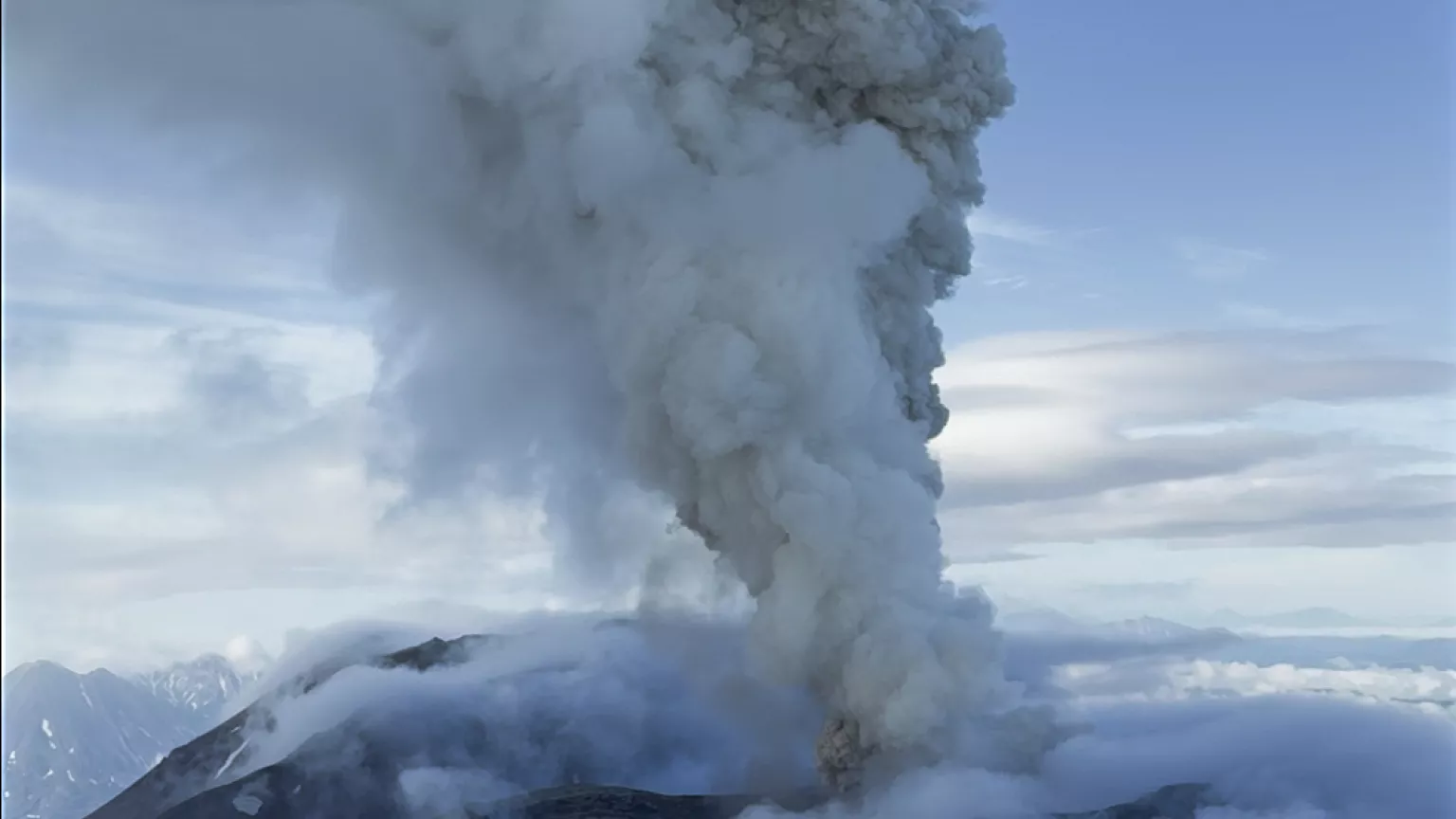 The Krasheninnikov volcano erupted.
Are earthquake and eruption connected?
The eruption of Krasheninnikov could be related to the recent mega-earthquake, as indicated by Girina in statements to the state news agency RIA Novosti.
The last record of volcanic activity in Krasheninnikov dates 40 years after 1463, and since then, no new eruptions had been documented.
New seismic activity in the Kuril Islands
The German Research Center for Geosciences reported a 6.7 magnitude earthquake in the Kuril Islands, while the United States Geological Survey (USGS) and the Pacific Tsunami Warning System (PTWS) estimated it at magnitude 7.
Although no tsunami alert was issued, the Russian Ministry of Emergency Situations recommended moving away from the coast as a preventive measure.
“The expected wave height is low, but it is still necessary to move away from the shore,” they stated on Telegram.
Kamchatka: a region of high geological activity
The Kamchatka Peninsula is part of the Pacific Ring of Fire, an area of intense seismic and volcanic activity where several tectonic plates converge.
The region is known for its active volcanic landscape, but the case of Krasheninnikov stands out for its long historical inactivity and its sudden reactivation.


