



The Chilean capital woke up under environmental alert due to the critical air quality. Santiago reached third place among the most polluted cities in the world, according to the global monitoring by IQAir. The cause: the high concentration of fine particulate matter in suspension, known as PM2.5, a latent danger to health and the environment.
Faced with this scenario, the Presidential Delegation of the Metropolitan Region implemented emergency measures. The use of wood stoves and agricultural burning, common practices between March and October, was prohibited. Also, outdoor physical activities were restricted in schools and controls on the automotive fleet were intensified.
Vehicles manufactured before 2011, or without the corresponding environmental permit, have restricted circulation. In addition, cargo trucks are not allowed to enter the central perimeter of Santiago, a city with over eight million inhabitants.
The Ministry of Education recommended reducing the intensity of physical education classes, favoring indoor activities to minimize children and young people’s exposure to atmospheric pollution.
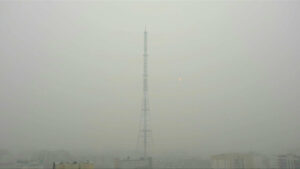 Air pollution is the greatest risk to human health, according to a study
© Gavril STAROSTIN[/caption>
The Invisible Dangers of Air Pollution
PM2.5 particles are so small that they can penetrate the respiratory tract and reach the bloodstream. This exposure, especially if prolonged, increases the risk of respiratory diseases, cardiovascular diseases, and various types of cancer. The World Health Organization indicates that these pollutants are responsible for millions of premature deaths worldwide each year.
In addition to affecting human health, atmospheric pollution has severe environmental consequences. It contributes to global warming, deteriorates soils, and damages vegetation when deposited on surfaces. Suspended particles also alter water quality and affect urban fauna, often invisible to everyday observation.
In cities like Santiago, geography worsens the situation. Surrounded by the Andes mountain range, the city faces an autumn and winter phenomenon of thermal inversion that prevents the dispersion of pollutants, leading to the accumulation of pollution over the urban area.
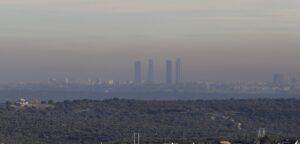 Air pollution in Asia.
The Environmental Challenge in Big Cities
The situation in Santiago reflects a global issue: the impact of uncontrolled urban growth and the lack of sustained environmental policies. The intensive use of vehicles, dependence on firewood as a heating source, and poorly regulated agricultural practices are factors that demand a thorough review.
Alerts like the one declared in the Chilean capital are temporary responses, not structural solutions. The adoption of clean energies, the strengthening of sustainable public transport, and urban planning with environmental criteria are key to reversing this trend.
At the same time, environmental education plays a fundamental role. Raising awareness among the population about the risks of pollution and promoting responsible practices can make a difference in collective health and the quality of the natural environment.
Today, Santiago faces a mirror in which many cities around the world could see themselves reflected. The urgency to act is not only a matter of public policies but a vital necessity to guarantee the right to clean air.



