



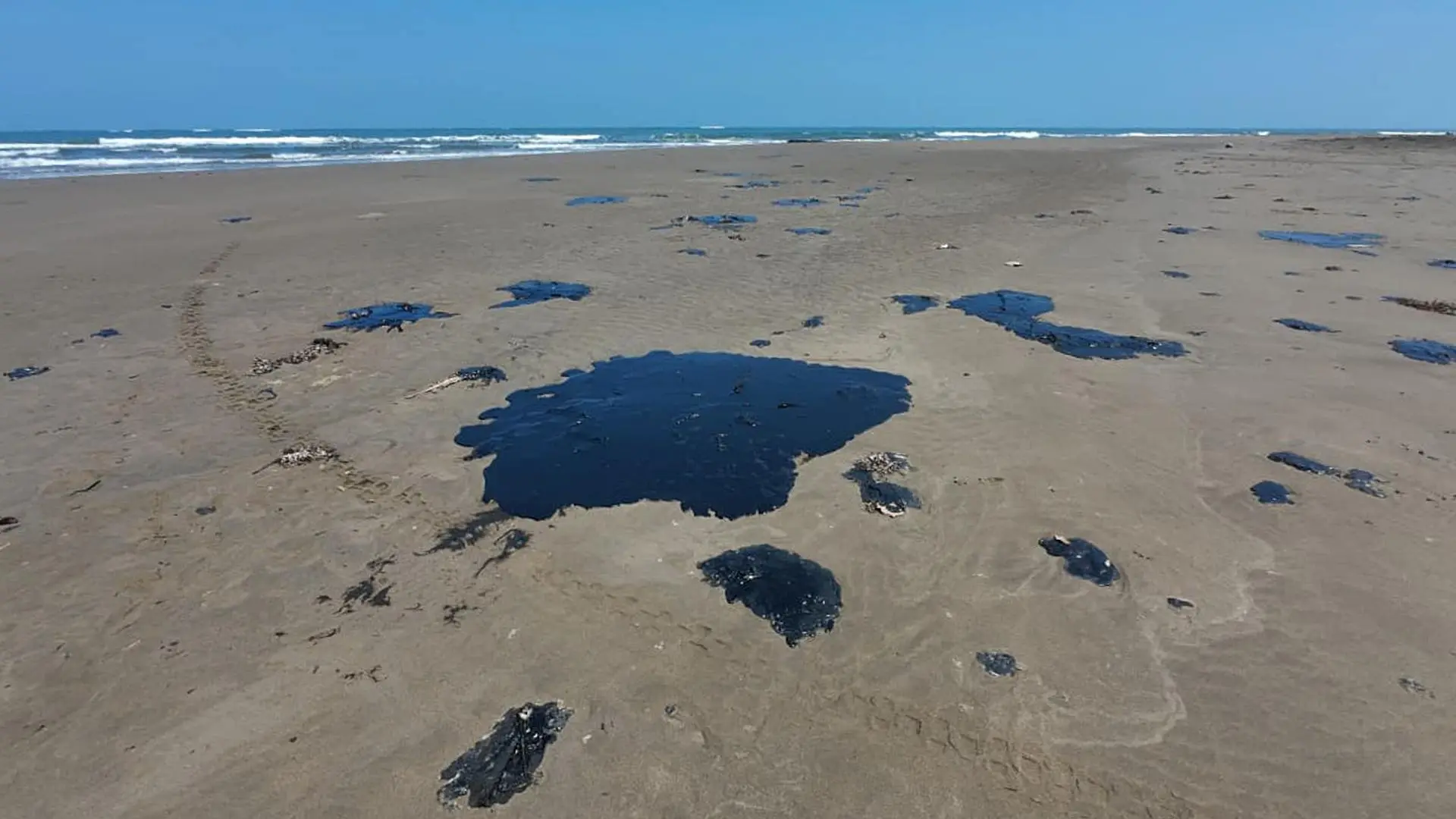
An oil spill in the Gulf of Mexico mobilizes authorities and coastal communities. Consequently, 889.4 tons of pollutants have already been collected on 48 beaches.
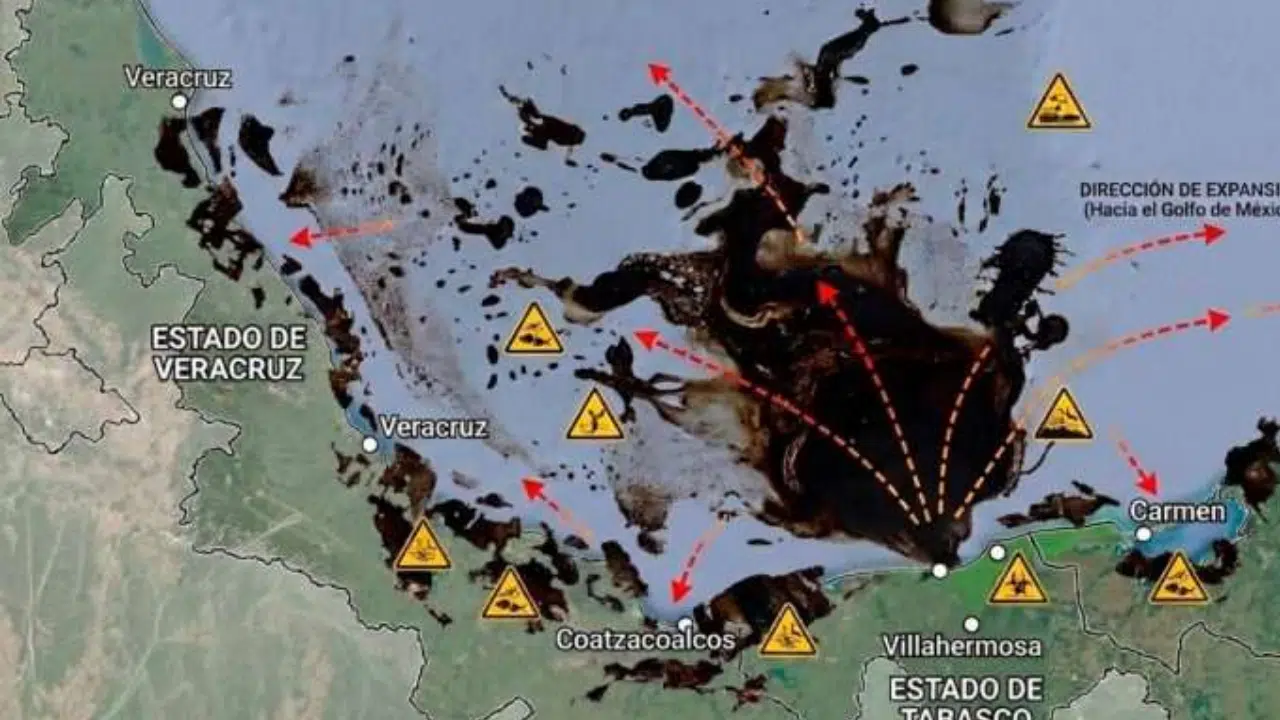
The affected areas include Veracruz, Tabasco, and Campeche. However, some areas continue to have a presence of hydrocarbons.
The operation involves multiple organizations, including Petróleos Mexicanos. Additionally, thousands of workers are participating in cleaning and monitoring tasks.
An unprecedented deployment to contain the contamination
More than 3,100 people are working on the containment of the spill. Therefore, land, maritime, and aerial resources have been deployed.
Furthermore, containment barriers have been installed, and more than 630 kilometers of coastline have been patrolled. In this way, the aim is to limit the expansion of the crude.
Additionally, the operation includes the use of drones, aircraft, and specialized vessels. Consequently, surveillance tasks are intensified.
The constant monitoring of currents and weather allows for strategy adjustments. Thus, the response to environmental changes is optimized.
Social impact: coastal communities in emergency
The spill directly affects fishing communities. Consequently, economic and labor assistance programs have been implemented.
Fishermen from localities such as Agua Dulce, Coatzacoalcos, and Paraíso are participating in the cleanup. Additionally, they receive support with supplies and fuel.
Moreover, productive initiatives are being promoted to mitigate losses. Therefore, the aim is to sustain activity amid the crisis.
However, the economic recovery will depend on the environmental evolution. Thus, uncertainty persists in the region.
Environmental consequences of the spill in the Gulf of Mexico
Oil spills generate severe impacts on ecosystems. Firstly, they affect the water quality and reduce the available oxygen.
Additionally, they harm marine fauna, including fish, birds, and turtles. Consequently, many species suffer intoxication or loss of habitat.
Furthermore, mangroves are especially vulnerable. Therefore, their degradation alters key functions such as coastal protection.
In the long term, these events can alter trophic chains. Thus, the regional ecological balance is compromised.
Environmental monitoring and protected areas at risk
Authorities maintain monitoring in protected natural areas. In this regard, several have registered a minimal presence of hydrocarbons.
Additionally, about 300,000 hectares of mangroves and nesting areas are being supervised. Therefore, the protection of sensitive species is prioritized.
Some areas no longer report new arrivals of pollutants. However, others remain under constant surveillance.
This monitoring is key to assessing damage. Thus, it allows for the design of environmental restoration strategies.
A challenge that demands sustainable responses
The spill highlights the fragility of the coastal ecosystems. Consequently, it reinforces the need for stricter controls.
Additionally, it raises questions about the exploitation of hydrocarbons. Therefore, it reopens the debate on energy models.
Furthermore, it highlights the importance of prevention. In this way, the aim is to avoid future environmental catastrophes.
Ultimately, the crisis in the Gulf of Mexico reflects a global problem. Thus, it underscores the urgency of balancing development and conservation.



