



The climate debate in Belém, during COP30, coincides with new analyses on the potential impact of the B Corporations model. Projections show that if the entire economy adopted their environmental management practices, global warming could be significantly curbed.
The results arise from the use of the En-ROADS simulator, which allows anticipating the effects of sustainable policies applied on a large scale. The current scenario is critical, with a trend towards a 3.3 °C increase in global temperature by the end of the century.
The massive adoption of standards like those followed by B Corporations would reduce that increase by 0.5 °C by 2100. This change would alter the global climate trajectory and alleviate some of the stress on ecosystems.
More than 10,300 certified companies already apply tangible policies of circularity, transparency, and emissions reduction. Global data shows that their progress far exceeds that of companies not adopting this type of management. Argentina plays a prominent role in the region, with a sustained growth of the sector and 278 certified organizations.
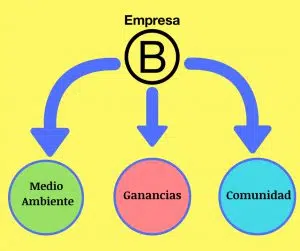
A management model based on real impact
The B Lab analysis compares thousands of companies of different sizes and sectors. The research confirms that certified organizations apply deeper and more comprehensive environmental measures.
The key lies in the combination of monitoring, transparency, and decisions aligned with impact objectives. Emissions tracking appears as a decisive point to improve results.
Companies that measure their climate footprint achieve constant reductions in greenhouse gases. This approach becomes essential in a scenario where planetary boundaries have already been widely exceeded.
The B model integrates purpose into its operational structure and the governance of each company. Decisions are made considering workers, communities, and ecosystems. This approach strengthens business resilience in a context of increasingly demanding climate regulations.
Innovations driving the ecological transition
The research also gathers global experiences showing how the B model activates concrete solutions. From biodegradable materials to regenerative agriculture, innovation spans multiple industries. The common goal is to reduce impacts and redesign entire value chains.
Among the highlighted cases are developments seeking to replace plastics through biotechnology. Circular fashion models also emerge, extending the lifespan of millions of garments. Textile recovery and industrial recycling are positioned as sectors with strong growth.
These projects represent a business vision that combines profitability with regeneration. In doing so, they show that traditional models are no longer sufficient. New economies require structures designed to protect increasingly threatened natural systems.
Benefits of this initiative for the climate and communities
The potential impact of bringing B Corporations’ practices to the rest of the economy is profound. A reduction of 0.5 °C in global warming would prevent hundreds of thousands of deaths from heatwaves.
It would also decrease the extinction risk for thousands of highly vulnerable species. Emission reductions would relieve pressure on already weakened ecosystems. This would favor the stability of soils, watercourses, and regional biodiversity. In turn, the economy would benefit by reducing costs associated with climate disasters.
Communities would also benefit from more inclusive business models. Governance with a social focus improves working conditions and promotes equity. This generates a more robust economic fabric less exposed to environmental or financial crises.
How B Corporations emerged and why they expanded globally
The origin of the movement dates back to the search for a new business paradigm. In the mid-2000s, a group of entrepreneurs designed a standard to measure real impact. The goal was to build companies that balanced profitability with environmental and social responsibility.
B Lab was born to certify and support these organizations. The idea quickly spread among companies seeking to differentiate themselves from traditional practices. The transparent, verifiable, and legally binding approach boosted its global recognition.
Over time, the B certification became synonymous with sustainable management. Presence in more than 100 countries consolidated an international network of innovation. This favored the exchange of metrics, tools, and common strategies to amplify their impact.
Concrete environmental contributions of B Corporations
B Corporations integrate environmental policies that cover their entire value chain. This includes emission cuts, rational use of resources, and circular economy programs. Sustainable management thus becomes a structural component rather than an isolated action.
The climate commitment is maintained through periodic measurements and science-based objectives. This ensures that greenhouse gas reductions are sustained over time. Transparency allows progress to be publicly verified.
The model also promotes regenerative practices in soils, seas, and forests. Innovation in materials, clean energy, and industrial recycling expands its ecological contribution. Each of these measures helps slow down environmental degradation and rebuild damaged ecosystems.



