



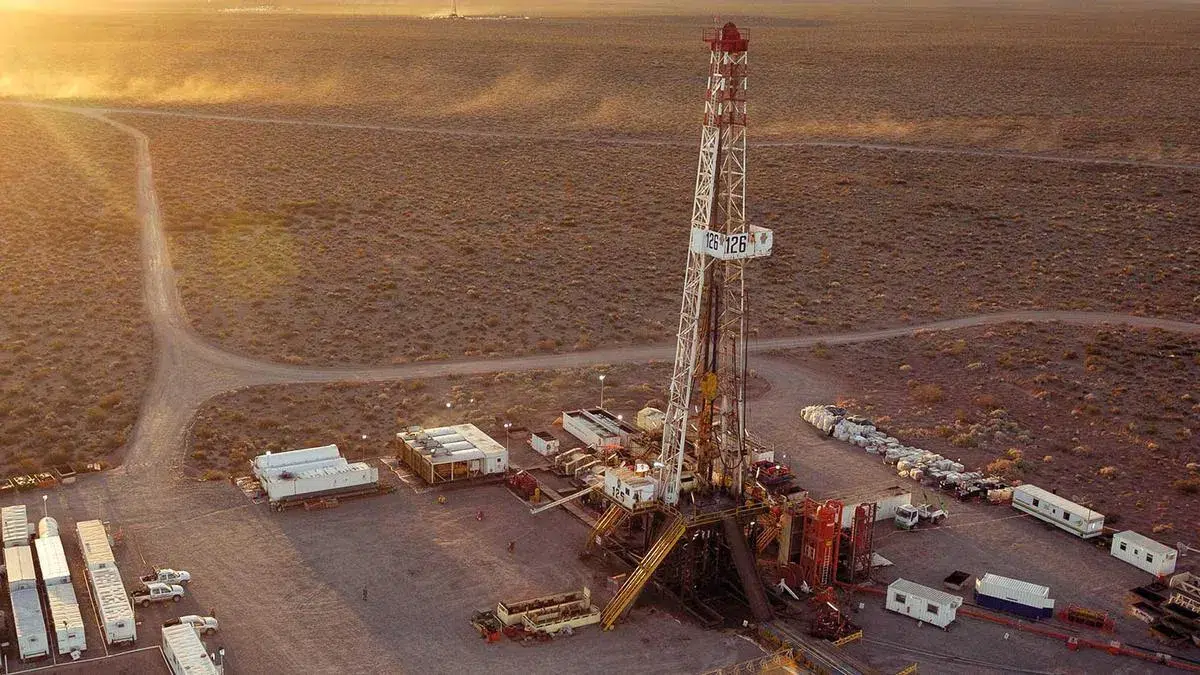
The Vaca Muerta deposit has turned Neuquén into the epicenter of hydrocarbon production in Argentina. More than 97% of the oil and 90% of the gas in the province are extracted through fracking, a technique that reached a historic production record in 2025. However, the energy boom brings with it a growing problem: the accumulation of pollutant waste.
Types of Fracking Waste
Fracking generates two major categories of waste:
- Wastewater: mixtures of contaminated water, brine, and chemicals that in Argentina are injected into underground wells (more than 95%), a practice linked to induced seismicity.
- Semi-solid waste (cuttings): sludge composed of drilled rock, sand, and chemicals. Instead of being treated in high-temperature furnaces, many plants accumulate them forming visible mountains near populations.
Impact on Local Communities
The quality of life in Neuquén literally depends on the direction of the wind. Residents report strong odors, eye irritation, and respiratory problems. In Añelo, the epicenter of the oil boom, neighborhoods are located less than two kilometers from landfills where solid waste is processed.
A notable case is the company Comarsa, accused of accumulating 350,000 m³ of open-air waste without waterproofing. In 2024, it lost its state license and was ordered to move the waste to a more distant site.
Companies and International Players
The Vaca Muerta boom attracts global investments:
- China has invested about 6 billion dollars in Argentine fossil fuels, a quarter of its total investment in the country.
- Pan American Energy, the fourth-largest oil producer in Vaca Muerta, is jointly owned by Bridas Corporation and BP; Bridas includes Argentine and Chinese capital (CNOOC).
- YPF aims to export liquefied natural gas (LNG) to China, Brazil, India, Japan, and Europe.
Environmental and Health Risks
A study by Concerned Health Professionals of New York (2019) detected more than 200 air pollutants near fracking operations in the U.S. and more than 1,000 chemical substances in fracturing fluids, including radioactivity in wastewater.
In Neuquén, pollutants such as benzene, lead, and arsenic have been identified in soils and air.
Official and Judicial Response
Minister Leticia Esteves acknowledged that the landfills are “sacrifice zones” and announced that no new ones will be authorized. Oil companies are required to invest in alternative treatment methods. YPF is already developing a waste plant 17 km from Añelo.
Meanwhile, the judiciary is advancing against companies like Comarsa, accused of exceeding their treatment capacity and causing pollution. Residents report recurring symptoms: irritation, headaches, and respiratory problems, especially in children.
Fracking in Argentina exposes the paradox of Vaca Muerta: an economic engine and a source of pollution. The waste mountains are the hidden side of the “energy salvation” promoted at the political level. Solving waste treatment is key for the country to move towards an energy model that does not sacrifice the health of its communities or the environment.


