



Access to freshwater has become one of the most relevant topics of the 21st century. Population growth and the impact of climate change on natural cycles make this resource increasingly valuable.
In this context, Latin America occupies a privileged position: it holds around 45% of the planet’s renewable freshwater reserves, making it a key region for global water security.
The Guarani Aquifer System
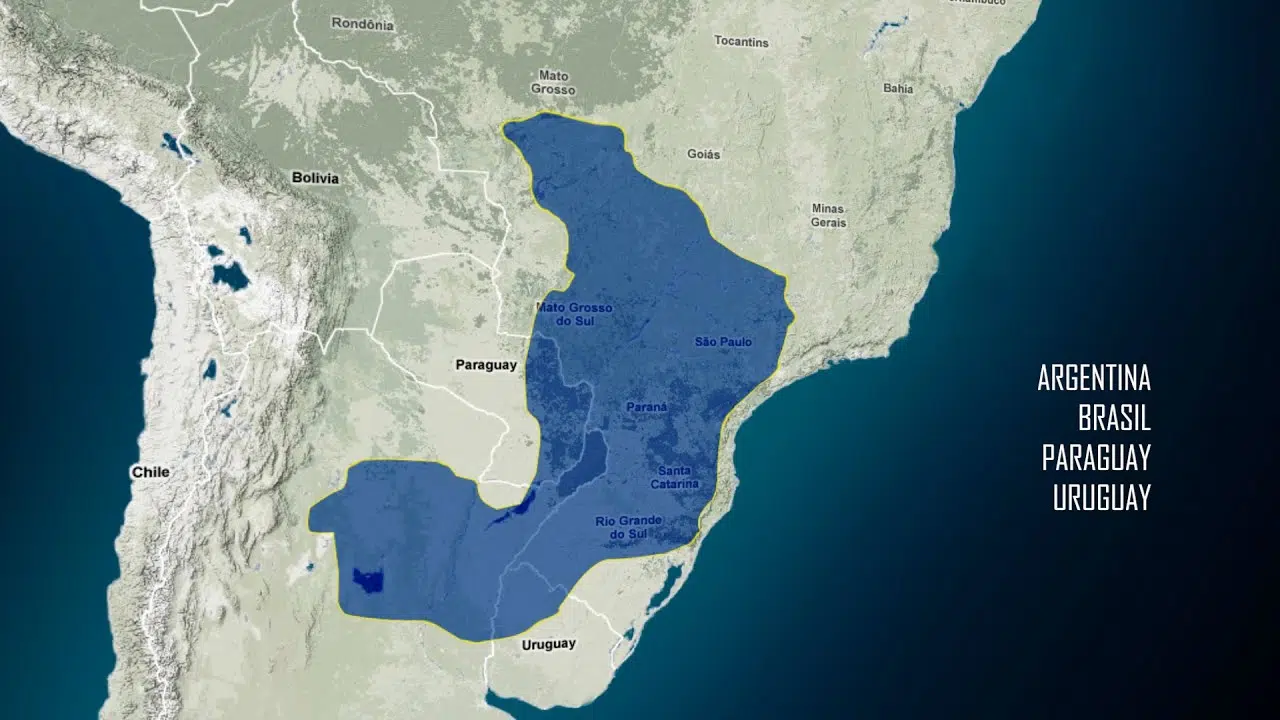
Within this scenario, the Guarani Aquifer System (GAS) stands out as one of the largest underground freshwater reserves in the world. It extends over 1.1 to 1.2 million km² beneath the territories of Argentina, Brazil, Paraguay, and Uruguay, storing water accumulated over thousands of years in permeable sandstone layers.
It is estimated to contain around 30,000 km³ of freshwater, making it the third-largest underground reserve on the planet. Its distribution is uneven:
- Brazil: 850,000 km²
- Argentina: 225,000 km²
- Paraguay: 70,000 km²
- Uruguay: 45,000 km²
Uses and Benefits
The aquifer supplies millions of people and has multiple applications:
- Human consumption: high-quality water with low salinity and few impurities.
- Agriculture and livestock: irrigation and supply for regional production.
- Industry: reliable source for production processes.
- Thermal tourism: especially in the Uruguayan coast and southern Brazil, where thermal water is an economic attraction.
Additionally, the GAS acts as an environmental regulator, maintaining ecosystems and ensuring water availability during drought periods.
Strategic and Environmental Importance
- Immense reserve: it is the second-largest aquifer in the world.
- High-quality water: safe for human consumption and consistent over time.
- Strategic resource: ensures water security in the face of climate change.
- Multiple uses: vital for cities, agriculture, and tourism.
Management and Conservation
Being shared by four countries, the GAS requires transboundary management. The main risks are overexploitation and contamination of recharge areas.
To address these challenges, an International Agreement was signed, leading to the creation of the Strategic Action Plan (SAP), aimed at the protection and sustainable use of the aquifer.
Economic and Touristic Benefits
The aquifer is not only vital for water security but also for economic development:
- Thermal energy: the basis of tourism in the Litoral region.
- Agricultural production: water for irrigation and livestock consumption.
- Strategic value: its sustainable utilization can boost regional economies and ensure long-term well-being.
The Guarani Aquifer System is one of the largest freshwater reserves on the planet and a shared heritage of Argentina, Brazil, Paraguay, and Uruguay. Responsible management is essential to ensure future water access, protect ecosystems, and promote economic development.
In a world where freshwater is increasingly scarce, this aquifer represents a strategic and environmental strength for the entire region.



