



A joint operation in Villa Pehuenia, Neuquén, detected the irregular circulation of snowmobiles in protected natural areas. The intervention took place this Thursday and brought together the Police, the Rural Brigade of Aluminé, park rangers, and personnel from Protected Natural Areas. The objective was to supervise compliance with environmental regulations in sensitive tourist areas.
The operation focused on the area of El Arco and on Provincial Route No. 12. There, the agents found seven parked snowmobiles and a dome-shaped tent under construction, all within an unauthorized area for motorized activities.
The intervention revealed a violation of Provincial Law 2539, which establishes the rules for use and conservation in the Protected Natural Areas of Neuquén. In addition to the environmental damage, the improper promotion of prohibited activities through digital media was also confirmed.
The authorities notified the representative of the responsible tourism company and issued the corresponding report. They also ordered the immediate removal of the snowmobiles and the dismantling of the structure assembled on site.
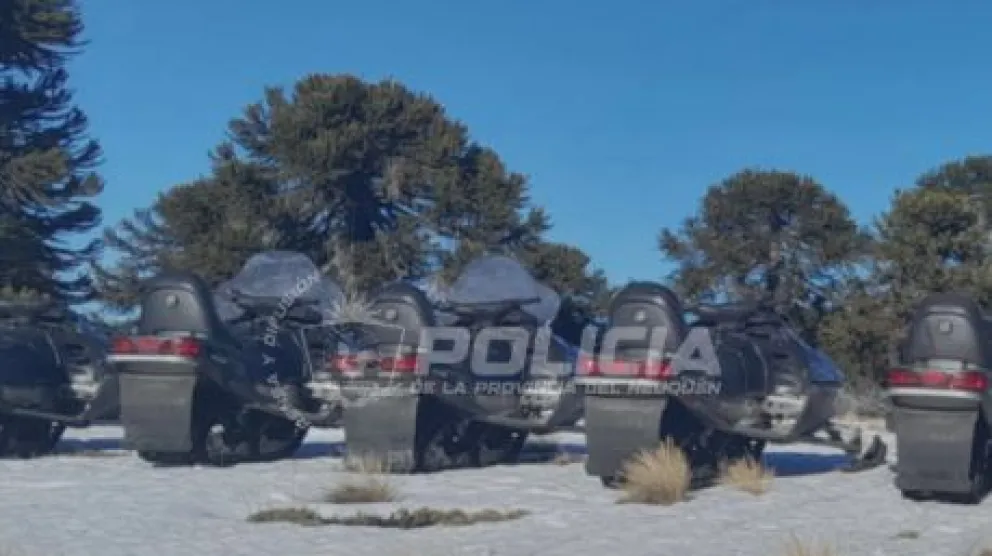 Snowmobile. Photo: Noticias NQN.
The environmental threat of non-compliant activities
The operation was part of the control actions aimed at protecting the delicate ecological balance of Villa Pehuenia and its surroundings. These areas, known for their natural value, require responsible and respectful use by visitors and tourism providers.
Unauthorized motorized activities have serious impacts on wildlife, especially during extreme cold periods when animals reduce their activity to conserve energy. The circulation of snowmobiles disrupts these behaviors and contributes to stress and displacement of species.
Sensitive vegetation and soils are also affected. The compaction caused by vehicle traffic can damage the growth of native plants and disrupt the natural cycles of the ecosystem. Therefore, provincial regulations expressly prohibit this type of practices outside of authorized areas.
The authorities’ message is clear: preserving nature involves complying with regulations, respecting biodiversity, and promoting responsible tourism that does not endanger the region’s natural resources.
The environmental impact of snowmobiles
Snowmobiles, while useful in certain emergency tasks, pose a serious threat when used without control in natural environments. Their transit in sensitive areas causes erosion, noise pollution, and habitat disruption.
The noise from the engines interferes with the routines of wildlife, disrupting their feeding, reproduction, or rest cycles. This constant stress can decrease local populations or force species to move to less favorable areas.
Additionally, the weight and traction of these vehicles damage the soil surface and vegetation. Even under snow, the pressure they exert compacts the terrain, preventing natural water filtration and affecting the regeneration of native plants.
The emission of polluting gases is another issue. Despite operating in snow, snowmobiles use fossil fuels and generate carbon dioxide and other residues that affect air quality and contribute to climate change.
 Villa Pehuenia and the illegal use of snowmobiles. Photo: Ser Argentino.
Protected areas: guardians of natural balance
Protected Natural Areas are essential spaces for biodiversity conservation and the maintenance of ecosystems. Their main function is to protect species, habitats, and essential ecological processes for environmental health.
These territories enable scientific research, environmental education, and the development of sustainable tourism. At the same time, they serve as a refuge for threatened species and guarantee the preservation of unique landscapes.
Respecting the regulations that govern them is vital to ensure their long-term integrity. Infractions, even when they seem minor, have a cumulative effect that jeopardizes the natural balance and compromises the future of future generations.
The care of protected areas depends on both official control and individual and collective commitment. Acting responsibly is key to enjoying nature without harming it.



