



The Ventina Glacier, one of the largest in northern Lombardy, Italy, has experienced such a level of accelerated melting that geologists can no longer apply the measurement methods used for over 130 years.
The reference stakes, used since 1895 to record the annual retreat of the glacier front, were buried under debris and rockslides, creating an unstable and inaccessible terrain for fieldwork.
Drones and remote sensing: new tools for an unprecedented crisis
Faced with the impossibility of continuing with on-site measurements, the Glaciological Service of Lombardy announced that it will resort to remote observation technologies, such as drones and satellite images, to continue documenting the constant retreat of the glacier.
This transition marks a paradigmatic change in the monitoring of European glaciers, increasingly affected by accelerated global warming.
Over 1.7 kilometers lost: a sign of climate collapse
The Ventina Glacier is shrinking at an alarming rate, with nearly half a kilometer lost since 2021.
Since measurements began in the 19th century, the glacier has lost 1.7 kilometers in length, and in the last decade alone, it retreated 431 meters, with almost half of that loss occurring since 2021.
This rate of melting represents a critical acceleration reflecting the direct impact of rising temperatures and decreased winter snowfall.
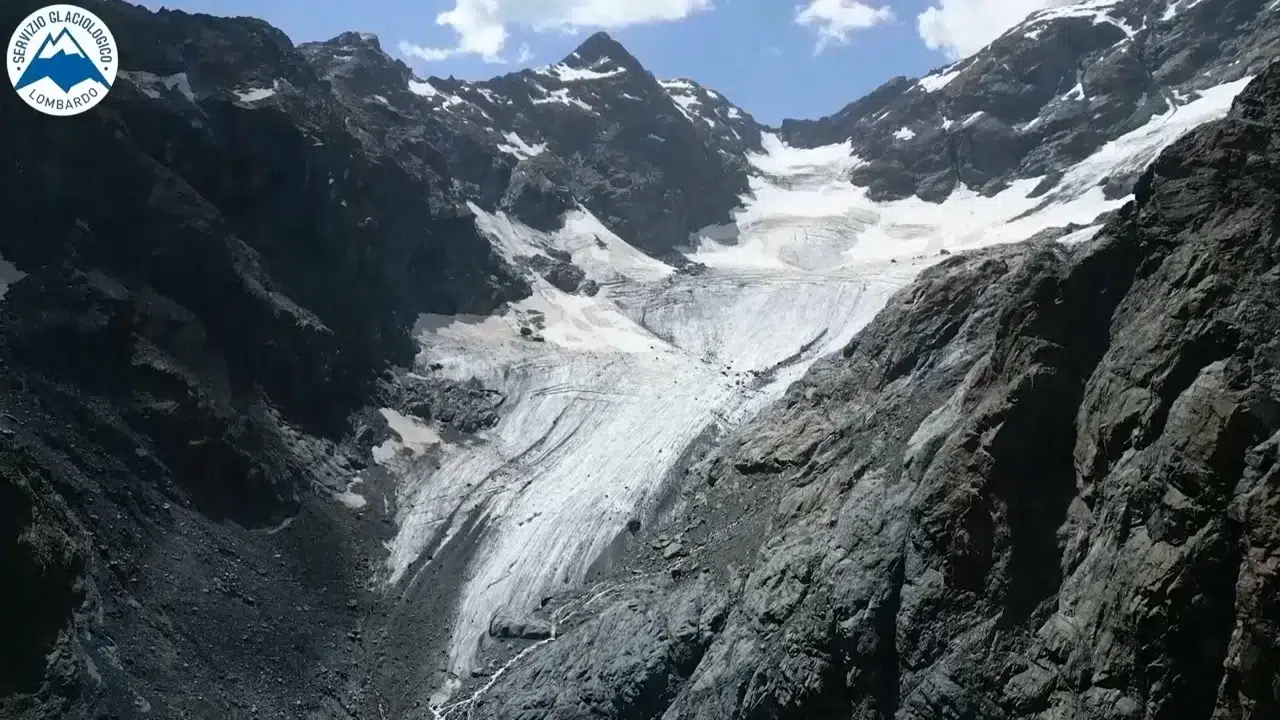 Concerns about the situation of the Ventina Glacier[/caption>
The Italian Alps: epicenter of warming in Europe
According to the Glaciological Service, the Alps are a climate hotspot, with a temperature increase that doubles the global average since the pre-industrial era.
This trend has led to the loss of more than 64% of alpine glacier volume, affecting not only the landscape but also the water balance and mountain biodiversity.
Extreme summers and insufficient snow: the new cycle of imbalance
Historically, glaciers partially melted in summer, feeding rivers and streams. However, increasingly hot summers no longer allow the winter snowpack to survive until the end of the season.
“To keep the glacier in balance, it must retain part of that snow. And that is happening with less frequency,” explained Andrea Toffaletti, a member of the Glaciological Service.
A global phenomenon: melting accelerates worldwide
A study published by the journal Nature in February revealed that world glaciers lost ice at a rate of 255,000 billion tons annually between 2000 and 2011.
In the following decade, that figure increased to 346,000 billion tons per year, showing a global trend of glacier collapse with increasingly serious environmental, social, and economic consequences.



