



A devastating 8.8 magnitude earthquake, the most powerful one recorded in the Kamchatka region, Russia, since 1952, triggered a series of tsunamis on Wednesday, July 30, 2025, hitting the Far East of Russia and northern Japan.
Warnings were activated across the entire Pacific basin, including several Latin American countries, due to the threat of destructive waves.
According to Russian state media, several people were injured by the earthquake, although none were serious.
Strong earthquake in Russia: waves up to 4 meters and Flooding
Russian emergency services reported waves 3 to 4 meters high hitting the coasts of southeastern Kamchatka peninsula. The island of Paramushir, in the northern Kuril Islands, was hit by four large waves that reached and flooded the coast.
The first of these waves advanced 200 meters inland, and the subsequent ones caused significant damage to the infrastructure of the port of Severo-Kurilsk.
The Russian Ministry of Emergencies reported that the tsunami flooded parts of the town of Severo-Kurilsk, leading to the evacuation of 2,000 of its residents. A video shared on social media showed buildings in the village submerged by sea water, highlighting the magnitude of the phenomenon.
Japan on alert: waves up to 1.3 meters and massive evacuations
In Japan, television images showed the population evacuating in cars or on foot to higher ground.
Especially on the northern island of Hokkaido, the first tsunami with a height of 30 centimeters was observed. Subsequently, another tsunami with 1.3 meters waves hit Miyagi, a port on the northern Pacific coast of Japan, at 13:52 local time (04:52 GMT), as reported by the Japan Meteorological Agency.
The earthquake, which was felt at 23:25 GMT on Tuesday, had its epicenter about 136 kilometers east of the city of Petropavlovsk-Kamchatsky, on the Kamchatka peninsula, at a depth of 19 kilometers, according to the United States Geological Survey (USGS). Initially, the USGS reported a magnitude of 8.0, but later updated it to 8.8.
This 8.8 magnitude earthquake has been classified as the most powerful in the Kamchatka region since 1952, according to the Geophysical Service of the Russian Academy of Sciences. In addition, the Geological Institute (IGEO) of Spain ranks it as the eighth largest earthquake recorded in the world, surpassed in this century only by the Tohoku earthquake in Japan in 2011, which reached a magnitude of 9.1.
USGS, on the other hand, stated that the 8.8 magnitude earthquake is among the top ten most powerful earthquakes in their historical records.
After the main earthquake, at least six aftershocks shook the eastern Russian region, including one of magnitude 6.9 and another of 6.3.
The earthquake triggered warnings of waves up to three meters high on the Pacific coasts, issued by the Japan Meteorological Agency and the Pacific Tsunami Warning Center based in Honolulu, Hawaii.

Widespread alert in the Pacific basin
The Pacific Tsunami Warning Center warned of waves over three meters along the coasts of Ecuador, northwest Hawaii, and Russia. Additionally, waves between one and three meters were anticipated on the coasts of Chile, Costa Rica, French Polynesia, Guam, Hawaii, Japan, and other Pacific islands.
Waves up to one meter could reach the shores of Colombia, Mexico, Australia, New Zealand, and Taiwan.
As a preventive measure, school classes were suspended in the Galapagos Islands, Ecuador, due to the tsunami warning issued by the Ecuadorian Navy’s National Tsunami Alerts Center.
The Mexican government, on the other hand, asked Civil Protection to move the population away from the coasts after the Navy warned of “strong currents at the ports” from Baja California (northwest) to Chiapas (south). The entire North American coast, from Alaska to California, including Hawaii, is under various levels of tsunami alert, according to the tsunami center.
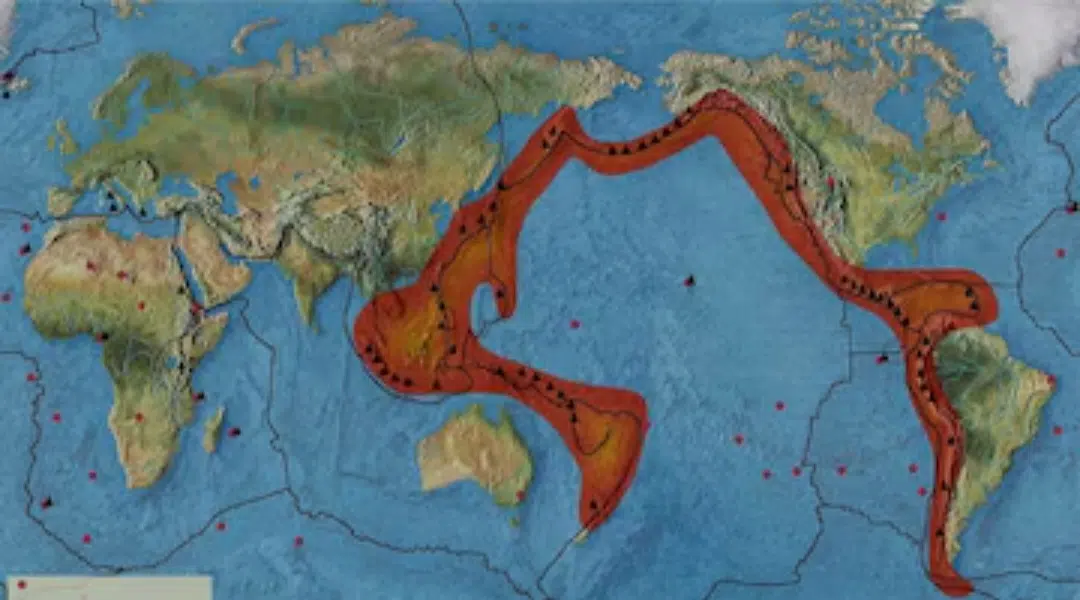 ring of fire[/caption>
Evacuation in Fukushima and precautionary measures in Japan after strong earthquake
Nearly two million people in Japan received orders to evacuate their homes or to leave the coastal areas due to the imminent risk of tsunamis. As a precaution, workers at the troubled nuclear plant in Fukushima, northeastern Japan –devastated by a tsunami in 2011– were evacuated, as reported by the site’s operator.
The Japan Meteorological Agency issued a warning via X (formerly Twitter), indicating that “tsunamis will repeatedly hit. Do not enter the sea or approach the coast until the alert is lifted.” Additionally, some train lines in Japan were suspended due to the alert.
It is important to remember that on July 20, a 7.4 magnitude earthquake, followed by numerous aftershocks, had already struck the same area without causing significant damage.
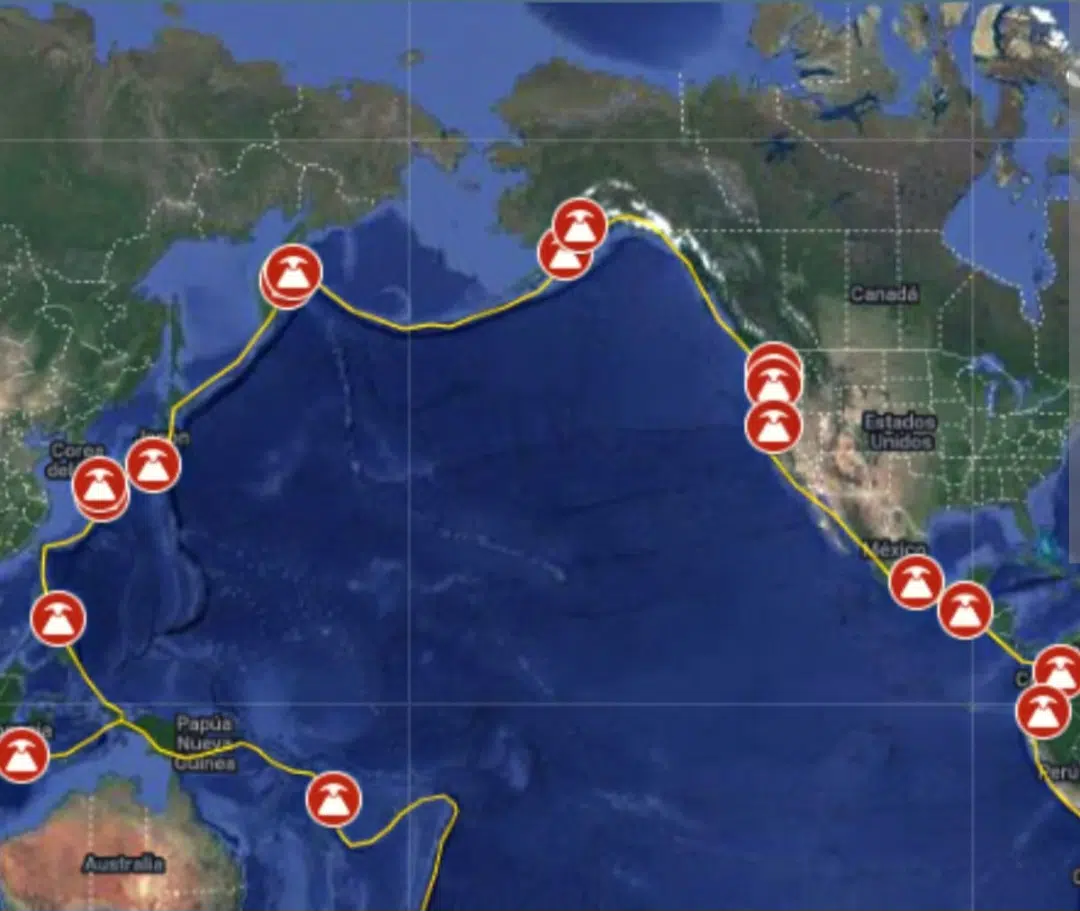
The Kamchatka peninsula is a meeting point of the Pacific and North American tectonic plates, making it one of the most active seismic zones on the planet.



