



The UN Climate Summit, held in New York, brought together global leaders who warned about the lack of ambition in the face of an increasingly evident climate crisis.
The speeches reflected a consensus: time is running out and the consequences are already being felt in the form of natural disasters, loss of biodiversity, and social inequality.
Spain: wildfires and European commitment
Pedro Sánchez proposes to reduce emissions by 90% by 2040 and combat climate misinformation.
The Spanish Prime Minister, Pedro Sánchez, denounced that the climate emergency is advancing while ambition is receding, after a summer marked by wildfires that devastated 400,000 hectares, in the warmest year on record.
Spain and the European Union are working on a 90% reduction in emissions by 2040, focusing on three key areas:
- Strengthening international financing
- Combating misinformation, by joining the Global Initiative for Information Integrity
- Improving prevention of extreme events
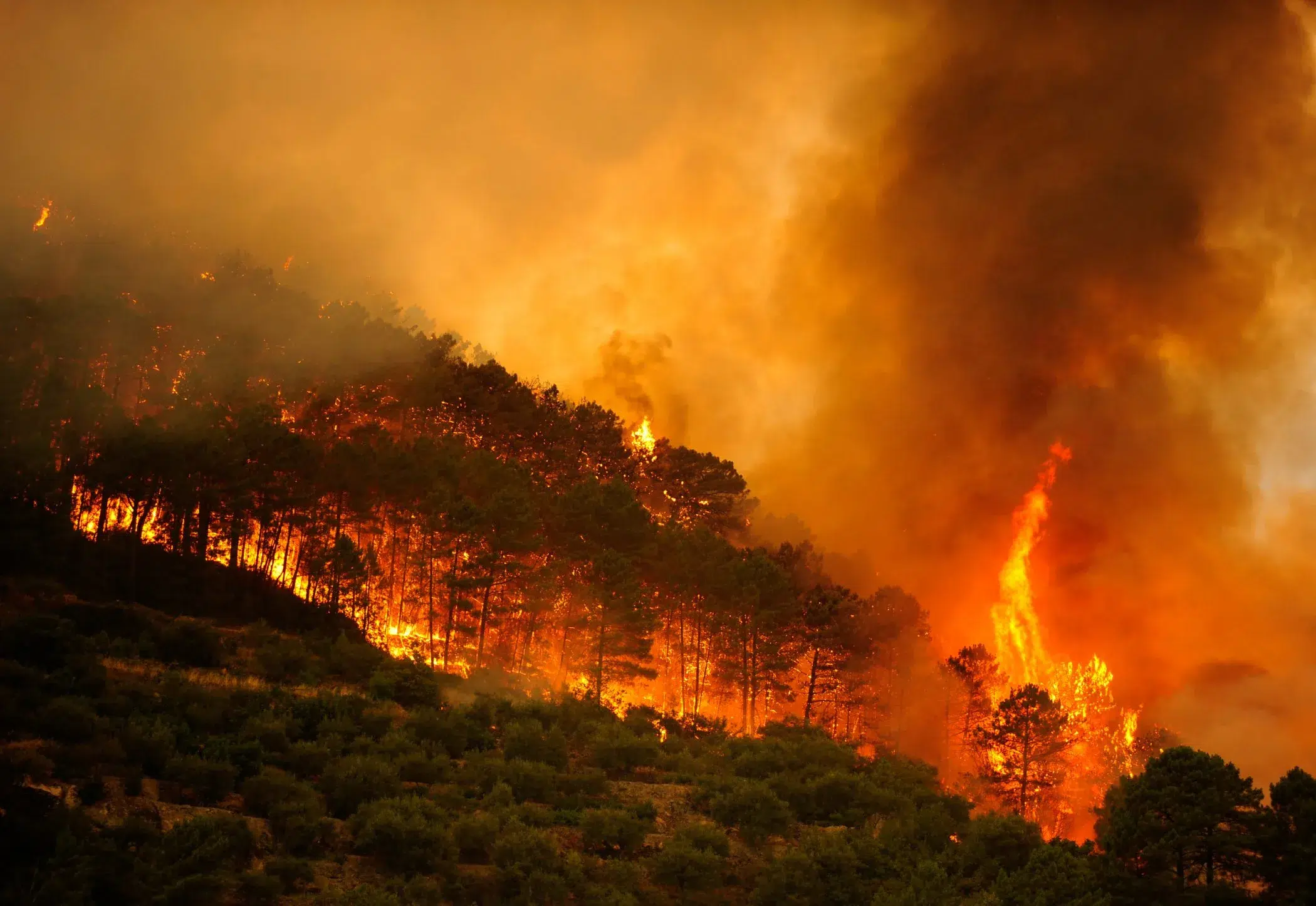 The wildfires in Spain were a topic addressed at the UN Climate Summit
Chile and Brazil: climate justice and concrete goals
Gabriel Boric and Lula da Silva call for a just transition and progress at COP30.
From Chile, Gabriel Boric called for updating climate goals and denounced the injustice of denialist discourses, which shift the cost of inaction to the poorest countries. Chile commits to shutting down coal plants by 2035 and achieving carbon neutrality by 2050.
Meanwhile, Luiz Inácio Lula da Silva, the president of Brazil, urged to present concrete progress at COP30, to be held in his country in 2025. “No one is safe from the effects of climate change. Borders will not stop the storms,” he stated.
Global Contrasts: Progress in China, Climate Denial in the US
Xi Jinping announces emissions reductions while Donald Trump rejects the climate crisis.
Chinese President, Xi Jinping, reaffirmed his commitment to climate action, announcing a 7 to 10% reduction in emissions by 2035. In contrast, U.S. President, Donald Trump, referred to climate change as “the greatest hoax ever perpetrated,” rejecting international efforts.
Why Act Now: Health, Equity, and Sustainability
The climate crisis threatens human life and the future of the planet.
- Impact on public health: diseases, water and food scarcity
- Natural disasters: more frequent hurricanes, droughts, and floods
- Ecosystem damage: loss of biodiversity and habitat alteration
- Social justice: the most vulnerable are the most affected
Urgent Solutions: From Individual to System
Personal actions, public policies, and technological innovation are key to addressing the crisis.
- Individual actions: energy saving, sustainable mobility, responsible consumption
- Collective actions: renewable energies, energy efficiency, community participation
- Innovation: clean technologies, bioclimatic construction, and sustainable design


