



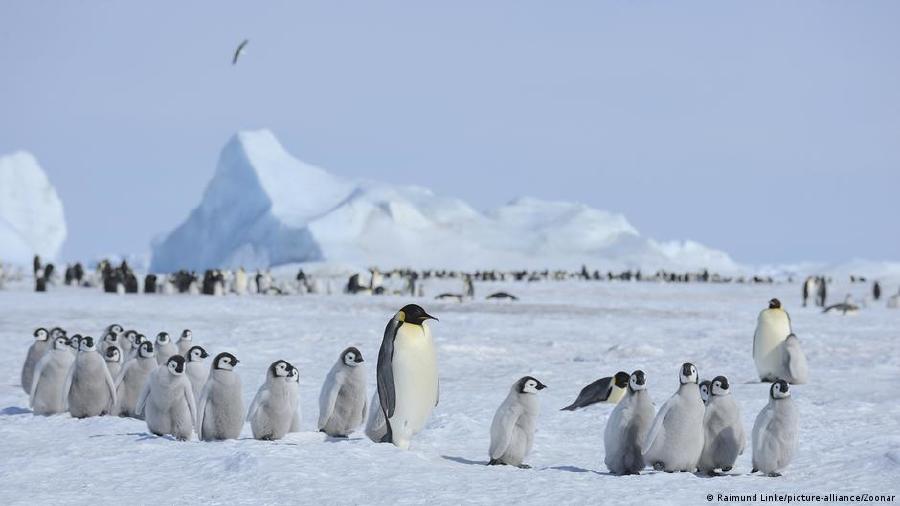
A recent study revealed a new problem with Antarctic penguins: it seems that these creatures disperse pollutants from the sea to terrestrial ecosystems.
This is because penguins act as biological vectors that transfer pollutants from the ocean to terrestrial soils when they move.
This is revealed by an analysis from the Spanish Institute of Oceanography (IEO-CSIC) published in the journal Geoderma.
Polluting penguins: why this phenomenon occurs
The research analyzed soils from penguin colonies on Livingston and Deception Islands, located northwest of the Antarctic Peninsula.
The results showed elevated levels of nutrients, metals such as copper and zinc, as well as polycyclic aromatic hydrocarbons (PAHs).

The scientific team from IEO-CSIC worked alongside researchers from the universities of Santiago de Compostela, Barcelona, and Oviedo.
In some areas, the concentrations of metals exceeded the international reference values.
The pollutants detected have three main origins:
- the biological activity of the birds
- the volcanic activity on Deception Island
- the human presence linked to scientific bases and tourism
“Penguins are essential for the balance of life in Antarctica, but they can also become a natural source of pollution in an extremely fragile environment,” says Professor X.L. Otero, a professor at the University of Santiago and coordinator of the study.
The PAHs found come from different sources, depending on the location.
On Deception Island, these compounds mainly originate from the intense volcanic activity of recent centuries.
In Livingston, on the other hand, they are more related to the bird guano.
“Although the concentrations found do not reach alarming levels and are between 50 and 1,000 times lower than those that generate toxic effects in marine organisms, the research breaks the idea that Antarctica is an unspoiled environment,” explains Begoña Pérez, the first author of the study and a researcher at the Oceanographic Center of Vigo.
The risk worsened by climate change
Climate change, moreover, represents an additional threat.
This is because the increase in precipitation and the thawing of permafrost could mobilize the pollutants accumulated in soils and guano, transferring them to lakes and coastal areas.
“If they filter into streams or coastal waters, they could affect extremely sensitive aquatic organisms, such as plankton, the base of the marine food chain,” warns Pérez.
Cristina García-Hernández and Jesús Ruiz Fernández, professors from the Department of Geography at the University of Oviedo, conducted the fieldwork to obtain the samples.
Both highlight “the extreme fragility of Antarctic ecosystems” in the face of global climate change.



