



Waste management has become one of the main environmental challenges for cities. In Concepción del Uruguay, the municipality is advancing in strengthening its treatment system to address the growing volume of waste generated by the population.
Mayor José Eduardo Lauritto highlighted that in recent years it was necessary to reverse a previous decision that involved renting a site for waste disposal. Consequently, the municipal administration decided to invest its own resources to develop a proprietary treatment center.
To this end, the municipality acquired 14 hectares intended for the operation of the Urban Solid Waste Treatment and Final Disposal Center. This site allows for the management of the almost 90 tons of waste collected daily throughout the city.

Investments to improve the waste treatment system
During the opening of ordinary sessions of the Deliberative Council, the mayor announced new investments planned for 2026 aimed at improving the environmental infrastructure of the site.
Among the projects is the construction of a concrete platform measuring 30 by 30 meters, a project that will require an estimated investment of 138 million pesos. Additionally, soil movement is planned for the so-called Module 2, with a budget of 131.5 million.
Moreover, the plan includes the automation of pumps and aerators of the system, the replacement of underground wiring, and the payment of technical services to the National Institute of Industrial Technology.
Funds will also be allocated for the transport and management of unused tires, a task that seeks to prevent the accumulation of special waste that can cause pollution.
How does the municipal landfill work?
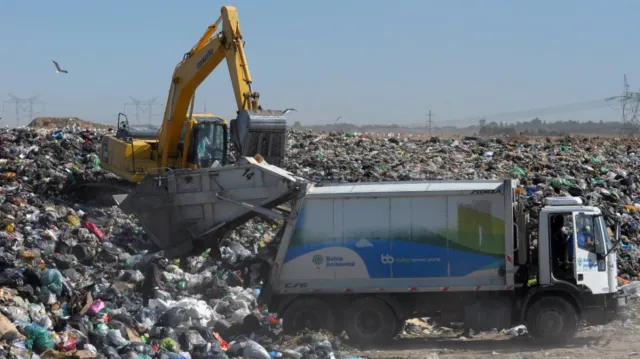
The final disposal system is based on the landfill technique, a method used to confine urban solid waste in a specially conditioned area.
In this process, the waste is distributed in layers within operational cells. It is then compacted and periodically covered with soil to reduce odors, prevent the proliferation of pests, and decrease the environmental impact.
The operation includes various technical tasks such as maintaining internal roads, redistributing and compacting waste, managing green waste, and leachate treatment.
The weight of the waste is also controlled using an electronic scale, which allows monitoring of the total volume of waste entering the site daily.
In total, the city generates about 33 thousand tons of urban solid waste per year, a volume that is transported from homes to the landfill through the municipal collection service.
The environmental risks of landfills for communities
Although landfills are one of the most used techniques for waste management, they can also pose environmental risks if not properly controlled.
One of the main dangers is associated with leachates, polluting liquids generated when water passes through decomposing waste. If not properly treated, they can infiltrate the soil and affect underground water tables.
Additionally, the decomposition of organic waste produces gases such as methane, a potent greenhouse gas that contributes to global warming. Furthermore, the accumulation of these gases can cause odor problems and affect air quality in nearby areas.
Moreover, the presence of landfills can attract rodents, insects, and birds, increasing health risks for neighboring communities.
For this reason, environmental specialists highlight the importance of complementing these systems with policies of waste reduction, recycling, and circular economy. These strategies help reduce the amount of waste reaching landfills and lessen their impact on the environment and public health.



