



In the valley of Traslasierra, in Córdoba, an Argentine technological development proposes a new way of building homes with less environmental impact. Through a large-scale 3D printer, a team of entrepreneurs manufactures structures using clay and other natural materials available in the region.
The initiative, called Barrobot, combines traditional knowledge of bioconstruction with automated digital manufacturing systems. The goal is to offer a more sustainable alternative to conventional methods, reducing resource consumption and leveraging local inputs.
In addition to representing a technological advancement, the project aims to help address the housing deficit through more efficient construction processes, with less waste generation and potentially lower costs.
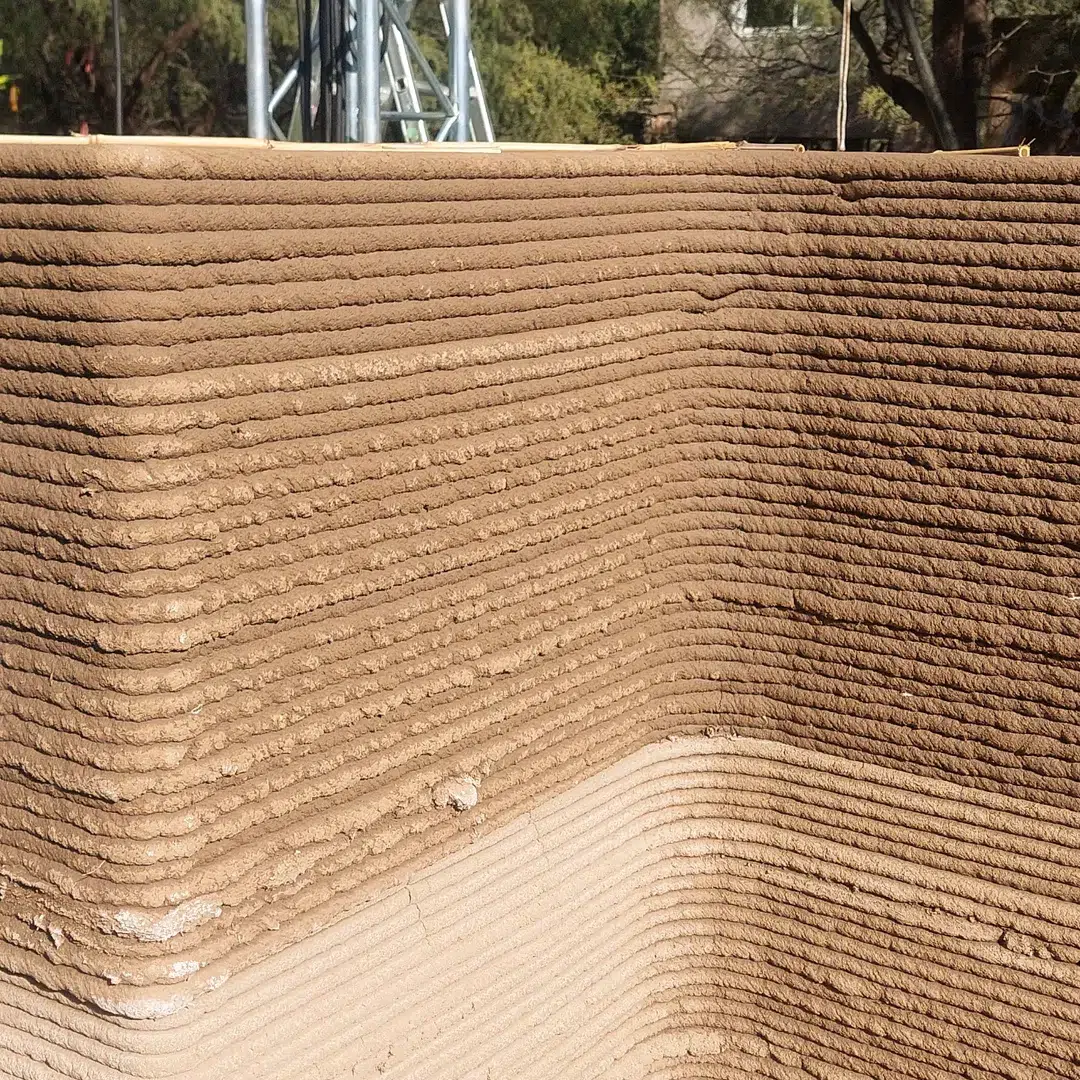
A system that prints homes using earth and plant fibers
The venture was driven by Agustín Gore and Gustavo Mutio, who began developing the printer shortly after the pandemic. For several years, they worked on prototypes until achieving a machine capable of building complete homes through successive layers of clay.
The system uses a mixture composed of clay, sand, water, straw, plant fibers, and other natural components that enhance the material’s properties. The metal structure, approximately four meters high, deposits the mixture following a digitally pre-programmed design.
Currently, the team is constructing an experimental dome in San Javier, within the valley of Traslasierra, where they continue to evaluate the structural resistance, climatic behavior, and durability of the system under real conditions.
Bioconstruction, precision, and comprehensive resource utilization
The printer operates using CNC technology, moving precisely over the work axes to place the material layer by layer. This procedure allows for manufacturing curved walls, incorporating installations during construction, and reducing subsequent tasks.
Additionally, the project applies biomimetic principles through internal structures inspired by forms found in nature, such as honeycombs. These configurations reduce material usage and create air chambers that improve the thermal insulation of the home.
Another highlighted aspect is the total utilization of the clay used. The cutouts made to open doors and windows are reincorporated into the mixture, practically minimizing the generation of waste during construction.
A technology with the potential to drive more sustainable housing
The team plans to perfect the system and manufacture new printers that can be used in different parts of the country. They also aim to train operators to expand the application of this technology in housing projects.
The construction of the current dome requires between 100 and 110 effective printing hours, although the total time depends on the climatic conditions and material preparation. Subsequently, coatings, finishes, and final installations are incorporated.
In the future, Barrobot also plans to print complementary elements such as chimneys, ventilation ducts, integrated furniture, planters, and other architectural solutions that expand the possibilities of digital manufacturing with natural materials.
What are the environmental and social benefits of this initiative?
3D printing with clay offers numerous advantages from an ecological and construction perspective. By using materials available in the immediate environment, it reduces the transportation of inputs and, therefore, decreases the emissions associated with the construction.
Additionally, clay has a high thermal inertia, which helps maintain more stable indoor temperatures throughout the year and reduces the need for heating or artificial cooling, promoting a lower energy consumption.
Moreover, automation allows for optimizing the use of materials, reducing construction waste, and accelerating execution times. If these technologies manage to expand, they could promote more accessible, resilient housing compatible with the principles of the circular economy, promoting urban development that combines technological innovation, resource efficiency, and environmental respect.



