



In disasters like earthquakes, landslides, fires, or industrial accidents, every minute counts. However, these environments are often too dangerous for human teams. This is where rescue robots come into play, designed to explore inaccessible areas, locate victims, and assist emergency teams, reducing risks and increasing survival chances.
What they are and why they are necessary
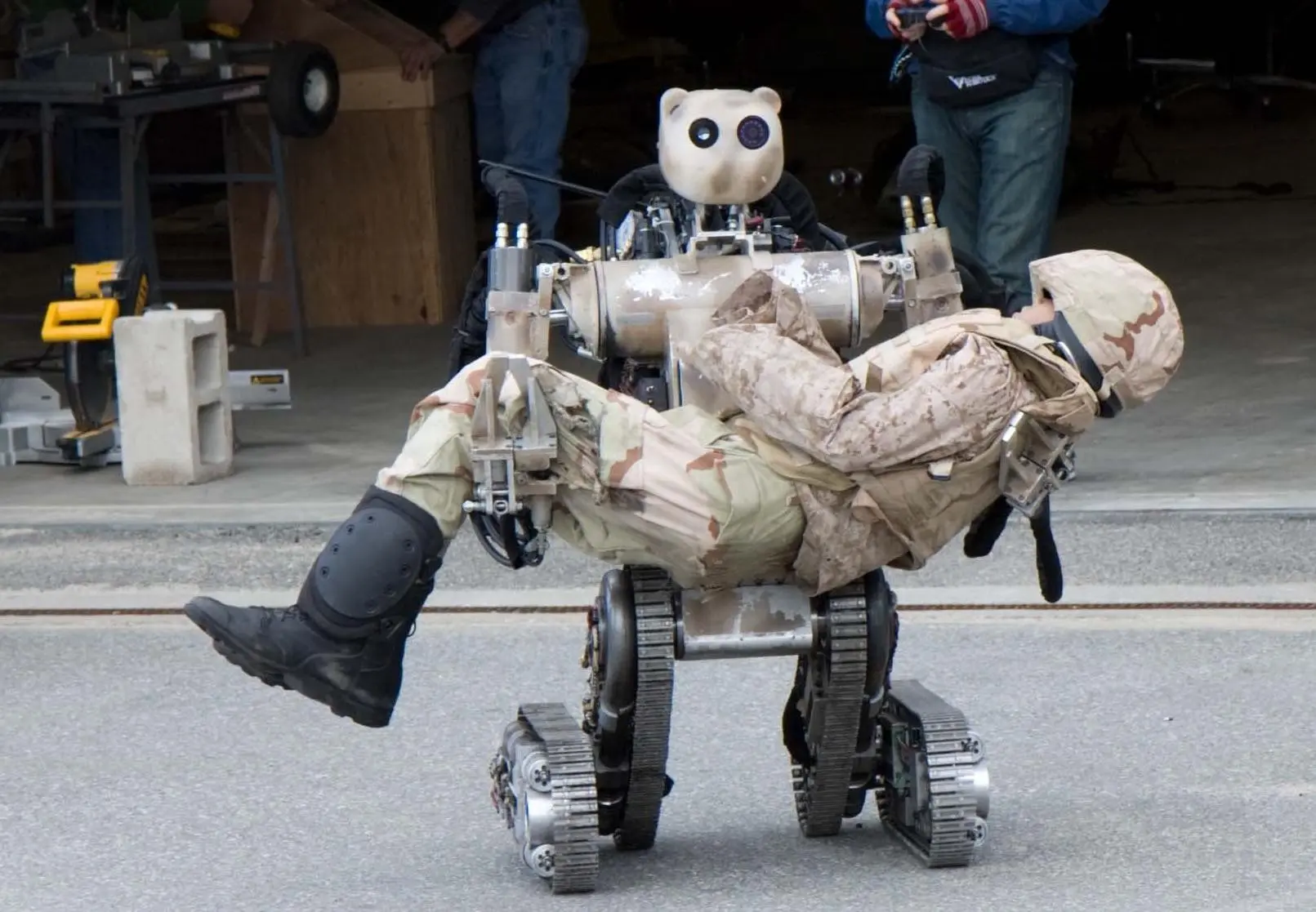
Rescue robots are machines created to operate in extreme conditions:
- Unstable structures.
- Presence of toxic gases.
- Active fires.
- Flooded or contaminated areas.
- Confined or collapsed spaces.
After the Fukushima earthquake in 2011, the need for robots capable of operating in radioactive environments spurred a new generation of autonomous and teleoperated systems.
Types of rescue robots
- Terrestrial search and exploration robots: equipped with thermal cameras, microphones, and motion sensors. They can enter narrow cracks and create 3D maps of the environment.
- Aerial drones: allow for locating missing persons in large areas, assessing structural damage, and identifying safe routes. They are key in forest fires and mountain rescues.
- Aquatic and underwater robots (ROV): used in maritime rescues or floods to inspect dangerous areas without exposing divers.
- Biomimetic robots: inspired by animals like snakes or insects, capable of moving through tight spaces and debris.
Artificial intelligence and sensors
The integration of AI has marked a qualitative leap:
- Recognition of human shapes through computer vision.
- Detection of distress sounds by filtering ambient noise.
- Prioritization of search areas based on survival probabilities.
- Chemical sensors to identify gas leaks or hazardous substances.
Advantages over traditional methods
Robots offer clear benefits:
- Reduction of risk for rescuers.
- Access to inaccessible areas.
- Continuous operations without fatigue.
- Accurate real-time data collection.
- Improvement in emergency team coordination.
They do not replace humans but act as capacity multipliers.
Current challenges
Despite advances, challenges remain:
- Limited energy autonomy.
- Communication difficulties in underground environments.
- High cost of some systems.
Research points to more autonomous robots capable of working in teams and making real-time decisions. In the future, it is expected that cooperative swarms will simultaneously explore disaster areas, drastically reducing rescue times.
Robotics applied to emergencies is transforming the way lives are saved. With AI, advanced sensors, and designs inspired by nature, rescue robots represent an essential tool for facing modern catastrophes. Although there are still challenges to overcome, their evolution promises a future where technology and humanity work together to protect life in the most critical moments.



