



The Digital Inclusion Center (CID) has achieved the Triple Impact Certification due to its commitment in the economic, social, and environmental spheres. This achievement supports its “Green Internet” model, which is consistent with the principles established in the recent Provincial Constitution, which has integrated environmental and digital rights.
The Digital Inclusion Center (CID) has set a precedent in Formosa by obtaining the Triple Impact Certification. This action validates a public-private connectivity scheme that stands out for its social and environmental commitment and, in turn, promotes economic development.
This model, known as “Green Internet“, is confirmed as an effective instrument of Formosa’s public policies, especially relevant now that the new Magna Carta has elevated environmental rights and fourth-generation rights to constitutional status.
The CID, located in the Salvador Gurrieri neighborhood, executes the Digital Inclusion program in collaboration with the Provincial Government, REFSA Telecommunications, and the Cooperativa de Trabajo Solidaridad Limitada. “The goal of the center is to reduce the digital divide. To achieve this foundational mission, we have deployed the necessary infrastructure and operational capacity that currently enables us to provide quality connectivity to more than 3,000 households in Formosa,” emphasized Daniel Castellini, CID coordinator.
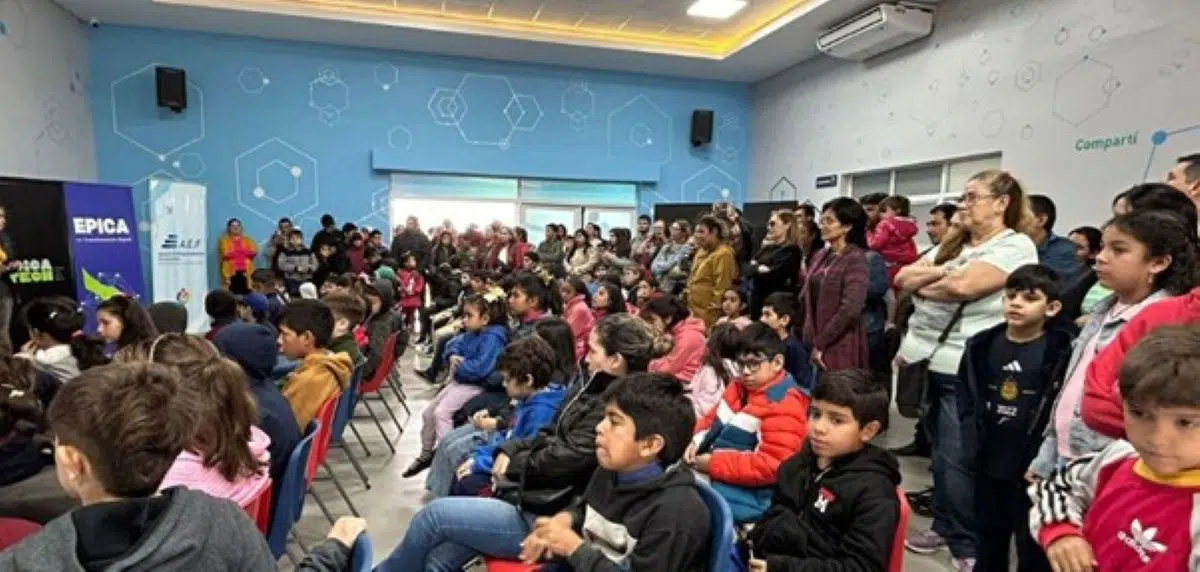
Simultaneously, the center hosts the Digital Radio and provides computer equipment and training spaces aimed at digital literacy. These activities include “Digital Clubs,” where children aged 6 to 10 acquire initial notions of robotics, as well as gamer events, employment training, and instruction in Artificial Intelligence, among other initiatives.
All this is materialized through a network of collaboration involving various entities of the Government of Formosa, with the purpose of fostering specific competencies of the digital age in the community, all under a principle of equal opportunities. Additionally, activities of a different nature have been carried out, such as advisory services for disability pensions and even operations to complete personal documentation procedures.
The report issued by the Certification Committee, following the audit conducted on August 27 by the certifying entity OIA, highlights that the cooperative meets the requirements of the “Triple Impact Certification” Protocol at its Level 1, applicable to the marketing of Internet services and IPTV. This report also recognizes its technical competence and deep social and environmental commitment.
Ecological Innovation and Leadership: the advance of Green Internet
The CID has adopted a proactive stance, in line with the provincial administration. This orientation aligns with the fundamental precepts of the new Provincial Constitution (enacted this year), which establishes the obligation to implement mechanisms for mitigation and adaptation to climate change, while granting constitutional status to rights such as access to knowledge, connectivity, and employment in the digital realm.
The Center aims to lead a process of implementing ecological policies in the province: it is the first public entity in Formosa to adopt a sustainable energy model, through the use of different systems for the comprehensive utilization of solar energy.

Among the technologies applied to reduce its carbon footprint, the center has:
- More than 160 solar panels, each capable of generating 370 W.
- A system that enables a 30% energy saving.
- Two solar charging stations designed for electric vehicles.
Infrastructure, connectivity, and rights
In summary, the Digital Inclusion Center constitutes a strategic instrument of the Provincial State. Its function is to develop the necessary infrastructure to ensure connection from the provincial fiber optic network to homes, thus covering what is known as the “last mile.”
Therefore, the Triple Impact Certification is framed within the provincial policy that prioritizes rights, promotes sustainability, technological and energy sovereignty, and collaboration with the private sector. The CID demonstrates that it is feasible to build a sustainable future operating from the territory itself, based on equity and social development.



