



A recent study revealed that green roofs not only provide ecological benefits to urban environments, but also play a key role against microplastics.
It demonstrated that they can capture over 97% of these particles present in the air during rainfall events.
The study was conducted by scientists from the University of Technology Sydney (UTS).
Green Roofs as Natural Microplastic Filters
Microplastics in the air are becoming an increasingly concerning source of pollution. These tiny particles, released by tires, textiles, and degraded plastics, are inhaled by humans and animals, and also deposit in soils and bodies of water.
During rainfall, many of them mobilize, affecting ecosystems and urban drainage systems.
 How green roofs block microplastics.
The team of Australian researchers observed that vegetation-covered roofs act as a natural sponge. Thus, they filter out the pollutant particles carried by the atmosphere, especially during rainfall.
Compared to conventional roofs, green systems retain a significantly higher volume of plastics, reducing their entry into the water system.
What Green Roofs Are and Their Benefits
Urban green roofs are already known for improving the energy efficiency of buildings, reducing the “heat island effect” in cities, and promoting local biodiversity.
Now, this new discovery reinforces their role as a key ecological infrastructure to mitigate emerging forms of environmental pollution.
“Green roofs offer a multifunctional solution: not only do they capture pollutant particles, but they also improve air quality, reduce runoff, and promote healthier urban environments,” explained the authors of the study published in the journal Science of the Total Environment.
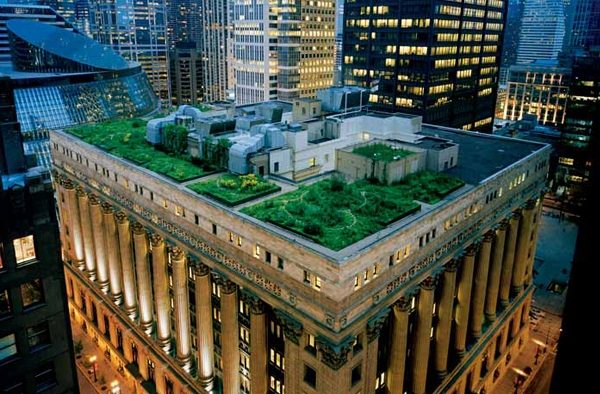 How they contribute to reducing pollution.
With the advancement of climate change and increasing urbanization, it is increasingly urgent to adopt strategies for sustainable infrastructure that address environmental challenges from multiple fronts.
Incorporating green roofs in new urban constructions and renovations can be a decisive step in reducing the toxic burden faced by ecosystems and urban populations exposed to invisible yet dangerous pollutants.



