



I will tell you what a whole-home inverter is, why you need it, and how much power capacity is required to run your entire household. What are the disadvantages of a power inverter? Can a 10,000W inverter power your whole house?
What Is a Whole-Home Inverter?
Simply put, an inverter converts the direct current (DC) from a battery into alternating current (AC) that your household appliances can use, supporting the electrical demands of your entire home and the continuous operation of your appliances. Inverters come in several types. Let me walk you through the types of inverters.
5 Types of Inverters
- Solar Inverter: Any inverter that converts DC power generated by solar panels into AC power is called a solar inverter.
- Off-Grid Solar Inverter: It does not rely on the grid. It powers your devices through solar panels and batteries—solar panels generate electricity during the day and charge the battery. At night, power is drawn from the battery.
- Hybrid Inverter: It can connect to solar panels, the grid, and batteries simultaneously, and supply power to household loads.
- Home Power Inverter: Any inverter that supplies power to a household can be called this.
- Whole-Home Power Inverter: It must be capable of supporting the electrical demands of your entire home and the operation of all appliances, not just a few devices. This requires absolutely large power capacity.
- A Comparison Table to Understand Their Differences
| Type | Connects to Solar | Connects to Grid | Connects to Battery | Supplies Power During Grid Outage | Main Purpose |
| Solar Inverter (Grid-Tied) | Yes | Yes | No | Shuts down | Pure power generation/selling |
| Off-Grid Solar Inverter | Yes | No | Required | Permanently off-grid | Independent power supply in areas without grid |
| Hybrid Inverter | Yes | Yes | Required | Automatic backup | Home energy storage, saving + backup power |
| Home Power Inverter (Broad) | Possibly | Possibly | Usually | Depends on specific type | Home power supply |
| Whole-Home Power Inverter | Usually | Usually | Yes | Yes | Outage protection for the entire home |
Why Do You Need to Buy an Inverter?
I believe many homeowners or experienced drivers are familiar with car power inverters, which can charge your laptop and computer. I believe every household has many appliances—you need a refrigerator to store food, air conditioning to regulate temperature, lights for illumination, and so on. But once the power goes out, all your appliances will become unusable. A whole-home inverter can power all your appliances, ensuring your household’s electricity needs are met.
There is actually another reason: Buddy, you can check out the recent reports on grid reliability from the U.S. Energy Information Administration (EIA). You will find official statistics showing a significant rise in the average outage duration for utility customers in recent years due to frequent extreme weather events.
Some homeowners may ask, how large of an inverter should I buy?
Based on my personal purchasing and usage experience: It depends on your household’s electricity consumption.
If you live in an ordinary 3-bedroom home, I would recommend the PIFORZ 10,000W inverter. It can cover basic electricity needs and high-power devices.
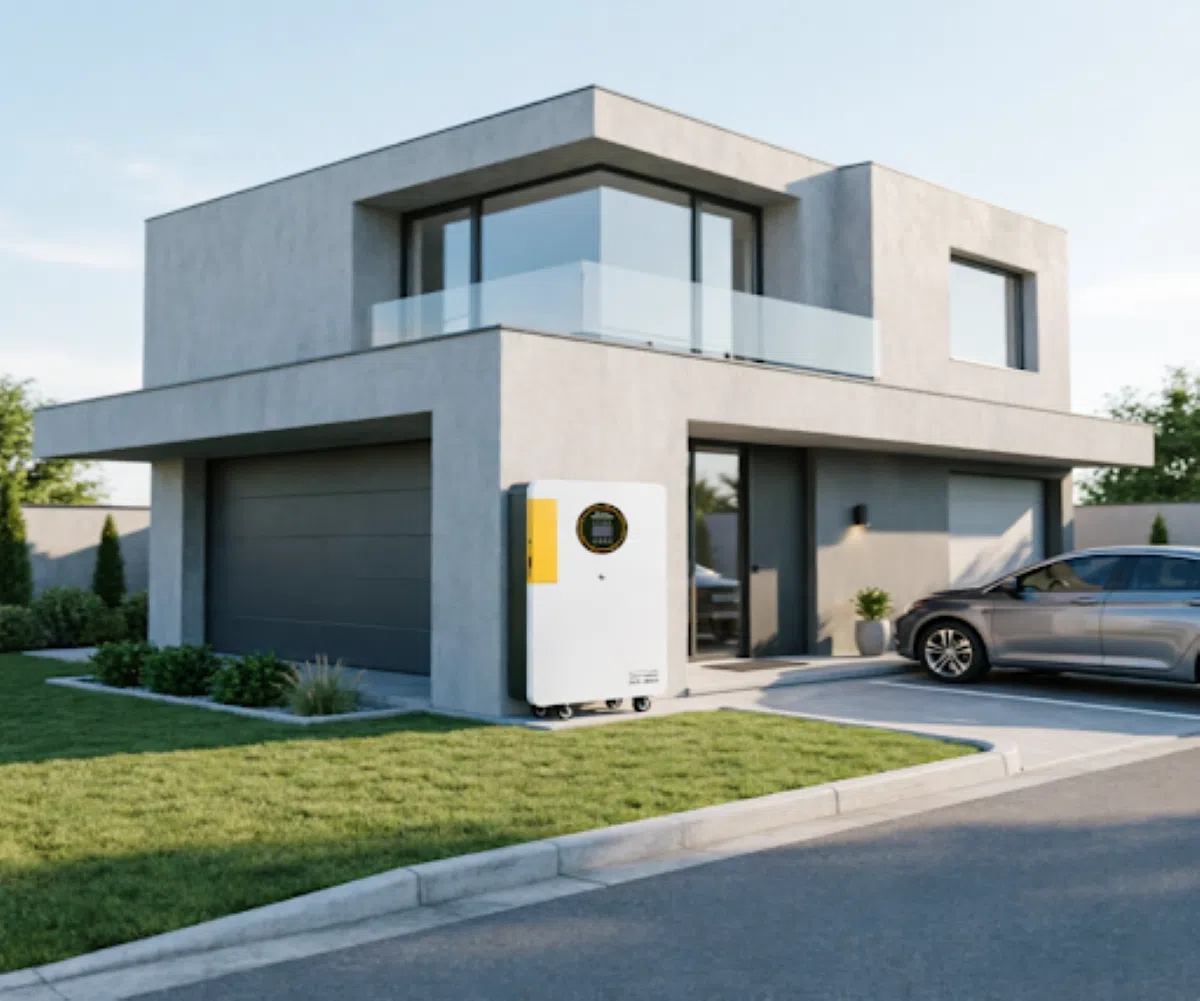
PIFORZ 10,000W Inverter:
Applicable Scenario: Large homes or homes with many appliances. It can drive high-energy-consuming devices like air conditioners, ovens, and electric water heaters, achieving full-house power coverage.
Advantages:
- Super strong load capacity—a single unit can support simultaneous operation of major appliances in the whole home.
- Supports 12V battery input, compatible with various energy storage systems.
- Smart APP monitoring—view power status and fault warnings in real time.
- Modular design—supports parallel connection of multiple units for capacity expansion and flexible system upgrades.
If your electricity demand is relatively low, I would recommend the PIFORZ 5,000W inverter, which can also meet your core needs.
PIFORZ 5,000W Battery Inverter:
Applicable Scenario: Small to medium-sized homes, supporting basic household appliances (such as refrigerators, TVs, lighting, routers) and some high-power devices (such as washing machines) for continuous operation.
Advantages:
- Pure sine wave output, compatible with all household devices, preventing appliance damage.
- High efficiency conversion rate (>92%), saving battery energy consumption.
- Smart battery management system to extend battery life.
- Overload/short circuit/over-temperature protection to ensure safe use.
Of course, you might also ask, can 10,000W really power the entire home?
I can tell you responsibly, of course it can. But, buddy, there are some issues here. The average daily electricity consumption for a typical single-family home in the U.S. is 30 kWh, and peak demand may reach 12–15 kW (when running AC, oven, and dryer at the same time). So 10 kW might not be enough. So, buddy, you need to bring a notebook, walk around your house, and write down the power ratings of the devices you need to supply. Then calculate them.
For example: A list of appliances that a typical household needs to power
| Appliance | Running Power | Starting/Surge Power |
| Refrigerator | 150–800 W | 500–2,200 W |
| LED Bulbs (10 pieces) | 100 W | 0 |
| Wireless Router + Modem | 30 W | 0 |
| Television | 100–400 W | 0 |
| Laptop Charger | 50–100 W | 0 |
| Ceiling Fan | 50–75 W | 0 |
| Microwave Oven | 800–1,500 W | 0 |
| Sump Pump | 800–1,500 W | 2,000–3,500 W |
| Window Air Conditioner (1 HP) | 1,000–1,500 W | 2,200–3,500 W |
| Water Pump (1 HP) | 750–1,500 W | 1,500–3,000 W |
| Electric Water Heater | 3,000–4,500 W | 0 |
| Well Pump | 1,000–1,500 W | 2,000–3,000 W |
Of course, many blogs or articles nowadays may tell you that you need to buy a 12V device, a separate charge controller, a battery bank, and a transfer switch. Buddy, let me tell you, that is no longer necessary. Today’s products are modular and integrated. For example, the PIFORZ integrated energy storage system has a built-in high-performance hybrid inverter in an all-in-one system.
What Are the Disadvantages of Using a Whole-Home Inverter?
First, let me tell you, traditional inverters come with relatively high upfront costs. You need to consider whether your wallet can cover the one-time payment. Second, the batteries require regular maintenance. At the same time, the system also needs to be installed by a professional electrician. That is another expense.
Many homeowners feel that the cost is too high and worry they may not be able to afford it. Don’t worry, buddy—with the development of modern technology, these pain points have already been resolved.
Can I Power My House with a Home 12V Power Inverter?
While 12V power inverters are great for cars, RVs, and small off-grid cabins, they are not an ideal choice for our residential homes. This is because high-wattage loads at 12V generate huge currents, which leads to excessive heat and requires very thick and costly cables.
PIFORZ’s Solution
- First, we offer an integrated design (inverter + battery combo).
- The battery comes with up to a 5-year warranty, reducing maintenance costs.
- A certified installation network ensures worry-free installation for you.
Why Choose PIFORZ?
- Reliable Quality: Passed international certifications like UL/CQC, products tested under extreme environmental conditions.
- Smart Ecosystem: Supports solar and wind power input to create a green hybrid energy system.
- Customer Service: 7×24-hour online support, 3-year free warranty, rapid fault response.
- Battery capacity must match the inverter (consulting a PIFORZ advisor is recommended).
- Use thick-gauge cables to reduce line loss and ensure adequate heat dissipation space.
- Test the system regularly (once a month) to ensure emergency readiness.
- Must be operated by an electrician or a PIFORZ certified installation team to avoid safety hazards.
So whether you choose the 5,000W or 10,000W whole-home inverter, you can visit the official PIFORZ website.



