



After more than **eight years of work**, the **Thames Tideway Tunnel**, known as the “super tunnel,” began operating in **London**, marking a milestone in **urban sanitation management**. This **25-kilometer-long** infrastructure, built beneath the British capital, was designed to **capture and redirect wastewater** that for decades polluted the **River Thames**, affecting both **wildlife** and **public health**.
## Advanced Technology to Intercept Discharges and Protect the Ecosystem
The tunnel connects to the **Beckton sewage treatment plant** and provides decades of margin for new solutions.
The system intercepts discharges from the old combined sewer system, which collected both **wastewater and rainwater**.
During periods of heavy rainfall, the system would become oversaturated and discharge directly into the river, generating up to **60 annual discharges** with the presence of pathogens such as **E. coli**. Now, these waters are **redirected to the Beckton plant**, avoiding their entry into the Thames.
“This tunnel gives us between 50 and 70 years to develop new ways to manage rainwater,” explained **Andy Mitchell**, director of Bazalgette Tunnel Limited.
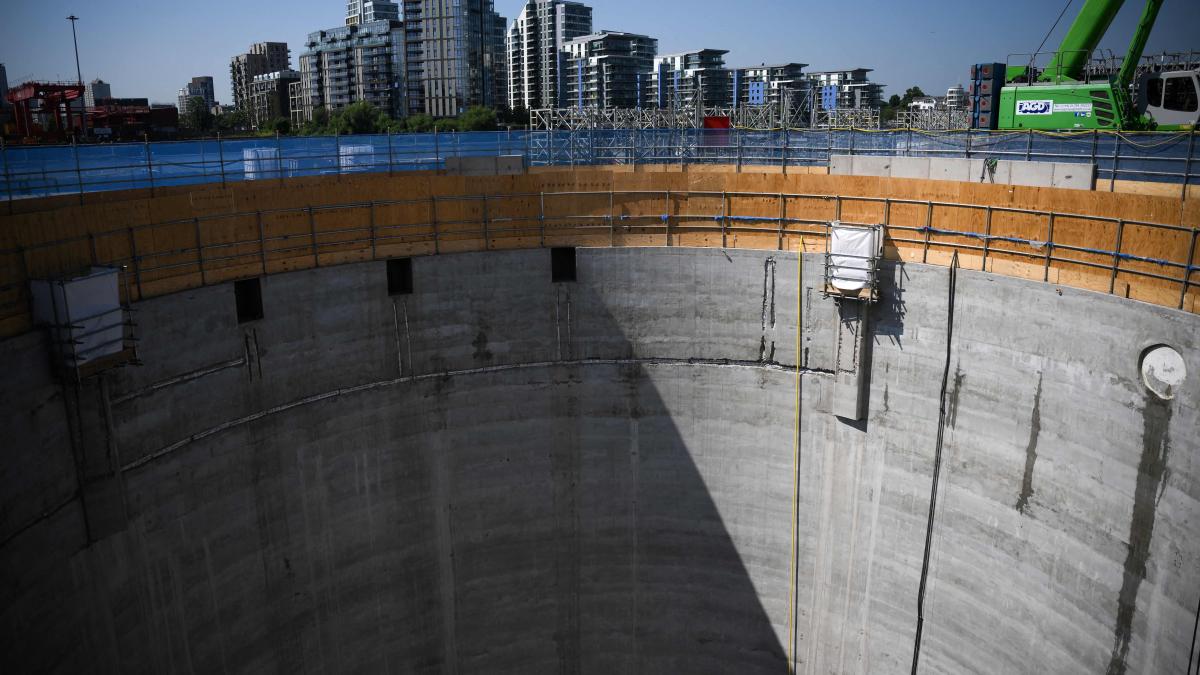
*The new tunnel in London aims to capture 95% of the wastewater polluting the River Thames.*
## Environmental Impact and Recovery of the River Landscape
A substantial improvement in **water quality** and urban biodiversity is expected.
The **UK Environment Agency** oversees the system through **environmental permits** and will continue monitoring **water quality and aquatic life**. Among the anticipated benefits is the **reduction of solid waste**, such as the so-called “flushable wipes islands,” which obstructed the channel and hindered navigation.
“This project marks a before and after in the ecological state of the river,” stated **Alan Lovell**, chairman of the organization.
## Institutional Support and Citizen Financing
The project was supported by the **British government** and funded by 16 million users.
The work is endorsed by the **UK Ministry of Water**, which aims to replicate this type of **structural transformation** in other regions. From the private sector, **Thames Water** highlighted the contribution of **millions of customers** who financed the project through their **water rates**.
## Monumental Engineering: Excavation, Shafts, and Connection to the Lee Tunnel
The construction involved the excavation of **over 20 access shafts**, with diameters comparable to the **dome of St. Paul’s Cathedral**, and the connection to the **Lee Tunnel**, **6.7 kilometers** long, completing a network capable of **intercepting and storing up to 1.6 million m³ of wastewater**.
## A Replicable Model for Resilient Cities
The super tunnel offers time to rethink **water-centric urban planning** in a sustainable way.
Although not a definitive solution, the tunnel **opens a temporary window** for London to explore **alternative approaches** such as **decentralized rainwater management**, **green infrastructure**, and **adaptive urbanism** in the face of climate change.



