



A team from the **Institute of Chemical Technology (ITQ)**—a joint center of the **CSIC** and the **Universitat Politècnica de València**—presented a **disruptive innovation** in the production of plastics.
The new process allows for the **epoxidation of alkenes** without the need for **metallic catalysts or toxic solvents**, using only **oxygen or air** as the oxidizing agent.
## Alkene epoxidation: a key reaction in industrial chemistry
**Alkene epoxidation** transforms simple organic molecules (composed of **carbon and hydrogen**) into **epoxides**, essential compounds for the manufacturing of:
– Plastics and epoxy resins
– Detergents and cleaning products
– Active pharmaceutical ingredients
– Fragrances and flavor additives
– Specialized lubricants
Traditionally, this reaction requires **metallic catalysts** such as **vanadium or titanium**, along with **hydrogen peroxide** and solvents, leading to the generation of **hazardous waste**, **high costs**, and **environmental risks**.
## A method without metals or waste: how the ITQ innovation works
The new system developed by the ITQ offers **three operational modalities**:
1. **Use of air at moderate pressures** (3–5 bars)
2. **Spontaneous reaction at room temperature**, in direct contact with the air
3. **Application of oxygen and heat**, between 100 and 200°C
This approach achieves a **selectivity of up to 90%**, favoring the formation of the desired epoxide over byproducts. Furthermore, it allows for **reducing production costs by over 50%** by eliminating costly reagents and purification steps.
## Industrial impact: efficiency, scalability, and compatibility with existing processes
The method can be easily integrated into **already operational chemical plants**, thanks to its **scalable design and compatibility with one-pot synthesis**. This makes it a strategic tool for sectors such as:
– Construction
– Automotive
– Information technology
– Cosmetics and personal care
Additionally, it allows for the use of **alkenes derived from biomass**, opening the door to **renewable raw materials** and more sustainable processes.
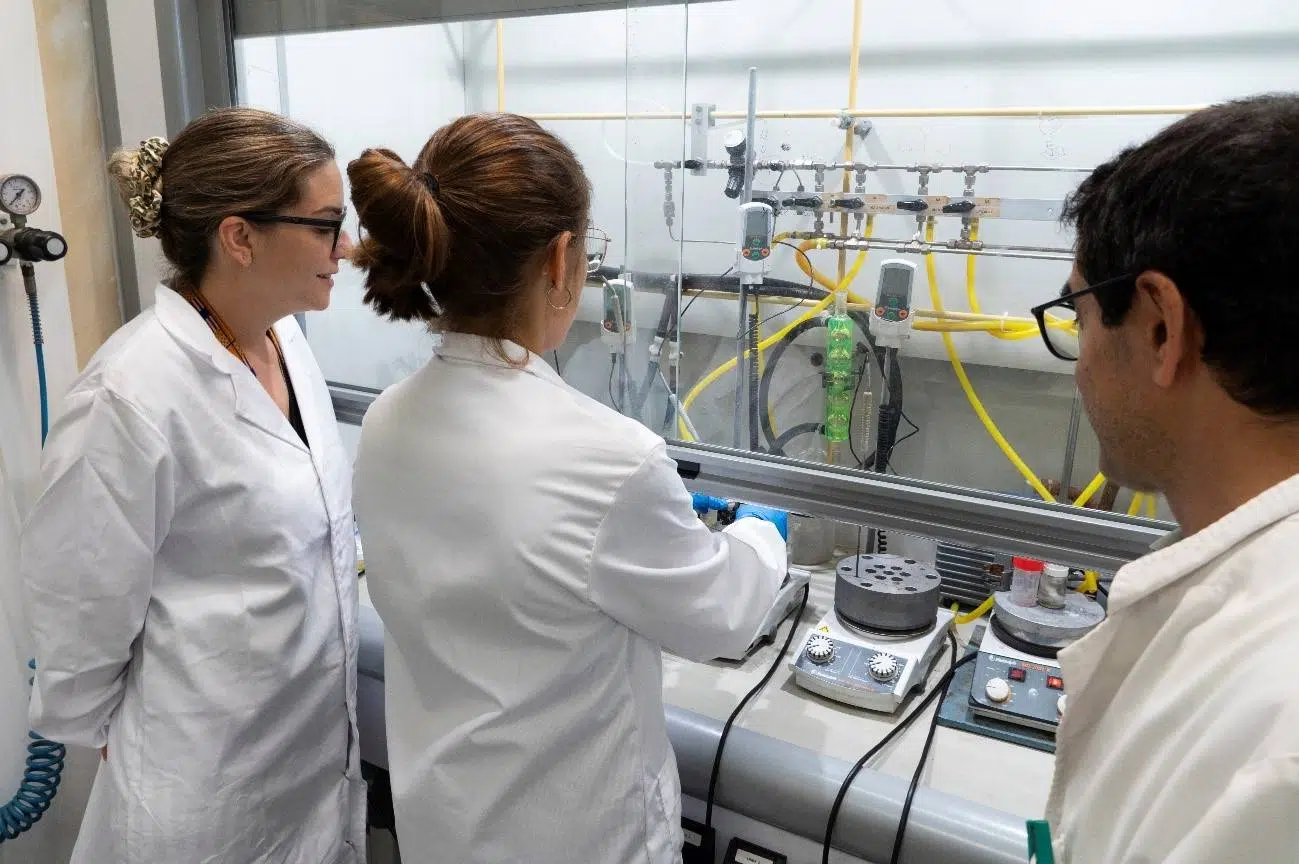 Spanish scientists develop an innovative method for manufacturing plastics[/caption>
## Prominent applications of epoxidation without catalysts
Among the most relevant uses of the new method are:
– Epoxy resins for coatings and adhesives
– Eco-friendly detergents
– Pharmaceuticals with cleaner synthesis
– Additives for fragrances and flavors
– High-performance lubricants
By eliminating **heavy metals** and **hazardous solvents**, the process facilitates compliance with **strict environmental regulations**, especially in the **European Union**.
## Applied science with real impact in plastic manufacturing
This advancement, published in *Nature Communications* under the title *Uncatalyzed aerobic epoxidation of liquid alkyl alkenes*, demonstrates how **scientific research** can generate **concrete solutions** for industry challenges.
By addressing **chemical viability**, **operating costs**, and **structural compatibility** simultaneously, the ITQ team offers a **clean, efficient, and replicable alternative** for the production of key materials.



