



Reforestation with drones is becoming one of the most promising tools for the conservation of native flora in Argentina.
In a joint initiative, Unitán and ReForest Latam launched the first assisted natural regeneration project in the provinces of Chaco (Pampa Almirón) and Formosa (Villa 213).
Precision technology to restore degraded forests
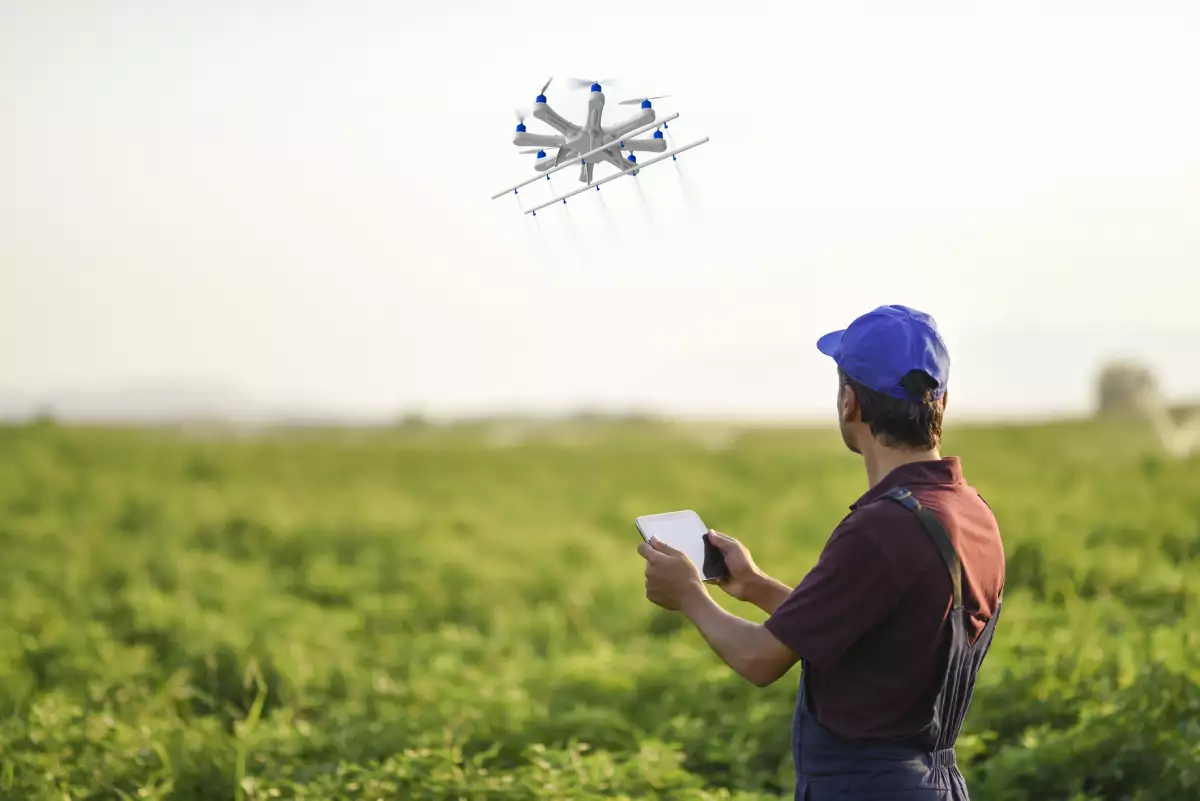
The project incorporates an innovative technology that combines high-precision seeding drones with biotechnological capsules designed to enhance germination and the development of species in adverse conditions.
This system accelerates execution times and allows intervention in remote areas, impossible to reach with conventional methods, making it an ideal tool to enrich and restore degraded forests.
“These developments can provide enormous potential to advance faster in afforestation processes,” said Gustavo Ferrer, legal advisor of Unitán, in an interview with AgroProfiles Radio.
Smart capsules and AI monitoring
The drones release capsules containing seeds, fertilizers, and all necessary elements to start the growth process.
The procedure includes periodic controls through artificial intelligence: every 90 days, the evolution of the seeding, adaptation to the environment, and substrate response are evaluated. This technology allows cost reduction, process scaling, and guarantees verifiable results.
The allied company Latam Forest has already tested this method on about 400 hectares of Pampa Almirón and Villa 213, with positive results that could make it a replicable model on a large scale.
Environmental impact and carbon certification
The Assisted Natural Regeneration model is scientifically validated and aims to generate a positive and lasting environmental impact.
Among its benefits are:
- Recovery of biodiversity and the emergence of new species.
- Strengthening of diversified ecosystems.
- Obtaining carbon credit certificates, key in the transition to sustainable productive practices.
“It’s not just about afforestation, it’s about demonstrating the positive impact on the environment and biodiversity,” Ferrer emphasized.
Public-private partnership to scale the model
Ferrer stressed that the private sector can take the initial steps in innovation, but the State is key to scaling it. Public policy would allow the widespread adoption of practices, reach more producers, and consolidate a provincial sustainable reforestation strategy.
He recalled successful collaboration precedents, such as the INTA’s work on cotton genetic improvement in Sáenz Peña, which demonstrate the potential of institutional collaboration to transform entire productive matrices.
Coexistence with other productive activities
The project proposes that forest cultivation can coexist with livestock and other economic activities, generating environmental and economic benefits.
In Corrientes, for example, almost 50% of forestations are integrated with livestock, a model that could be replicated in Chaco and Formosa.
Reforestation with drones opens a new era for afforestation in Argentina, combining technological innovation, positive environmental impact, and economic development opportunities.
If the private sector and the State manage to align efforts and long-term policies, the model can scale and transform the region, ensuring a more competitive and sustainable future for Chaco and Formosa.



