



Since 2021, a team of specialists has been developing a pioneering smart forestation proposal in the neighborhood Rincón Norte, in San José del Rincón (Santa Fe). The goal is to reduce flooding from rainfall through the implementation of Nature-Based Solutions (NbS).
The initiative focuses on the strategic forestation of a square located in a natural depression, which serves as a water accumulation area during heavy rainfall.
“The issue is that part of the space becomes unusable due to flooding, so we are opting for a plant intervention that accelerates drainage and regenerates the soil,” explained researcher Virginia Venturini (CONICET/UNL) in an interview with AIRE.
Smart Forestation in Urban Areas
The technical team planted native species adapted to wetland environments such as ceibos, willows, poplars, and aromitos, for their ability to absorb excess moisture through their deep roots and release it through evapotranspiration. These specimens play a vital role in improving surface runoff and the water balance in the urban environment.
Additionally, topographic studies and digital terrain modeling were conducted, along with the installation of a borehole for monitoring groundwater, allowing the evaluation of how plant growth influences water dynamics. “The results are not immediate, but the indicators already show progress,” highlighted Venturini.
Community Participation and Strengthening
In addition to the environmental dimension, the project has a strong social component. “We work together with the residents, provide workshops in homes, and discuss hydrological risk management. It is crucial to understand that not everything should depend on the government: there is a citizen role that can be empowered locally,” emphasized Venturini.
The model is in its final stage and aims to be replicated in other suburban neighborhoods affected by the same issue. The proposal demonstrates that it is possible to implement economical and effective alternatives based on planning, technical knowledge, and community participation. “It’s not just about planting for the sake of planting, but about thinking of functional forestation within the context,” concluded Venturini.
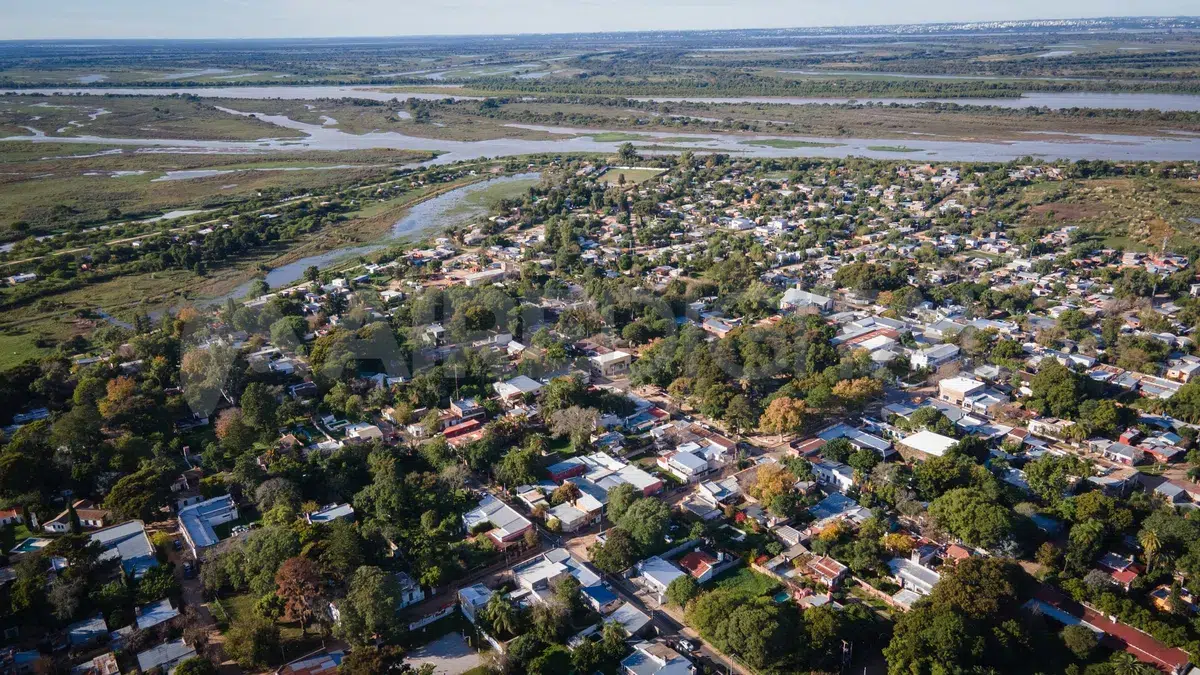
Why Does That Area in Santa Fe Flood?
The landscape of Santa Fe is composed of an extensive plain crossed by rivers, making it prone to flooding both from rising water levels and intense rainfall.
This situation is exacerbated by climate change and the advancement of urban developments, which often raise the ground level and eliminate natural vegetation, especially in coastal areas like Rincón.



