



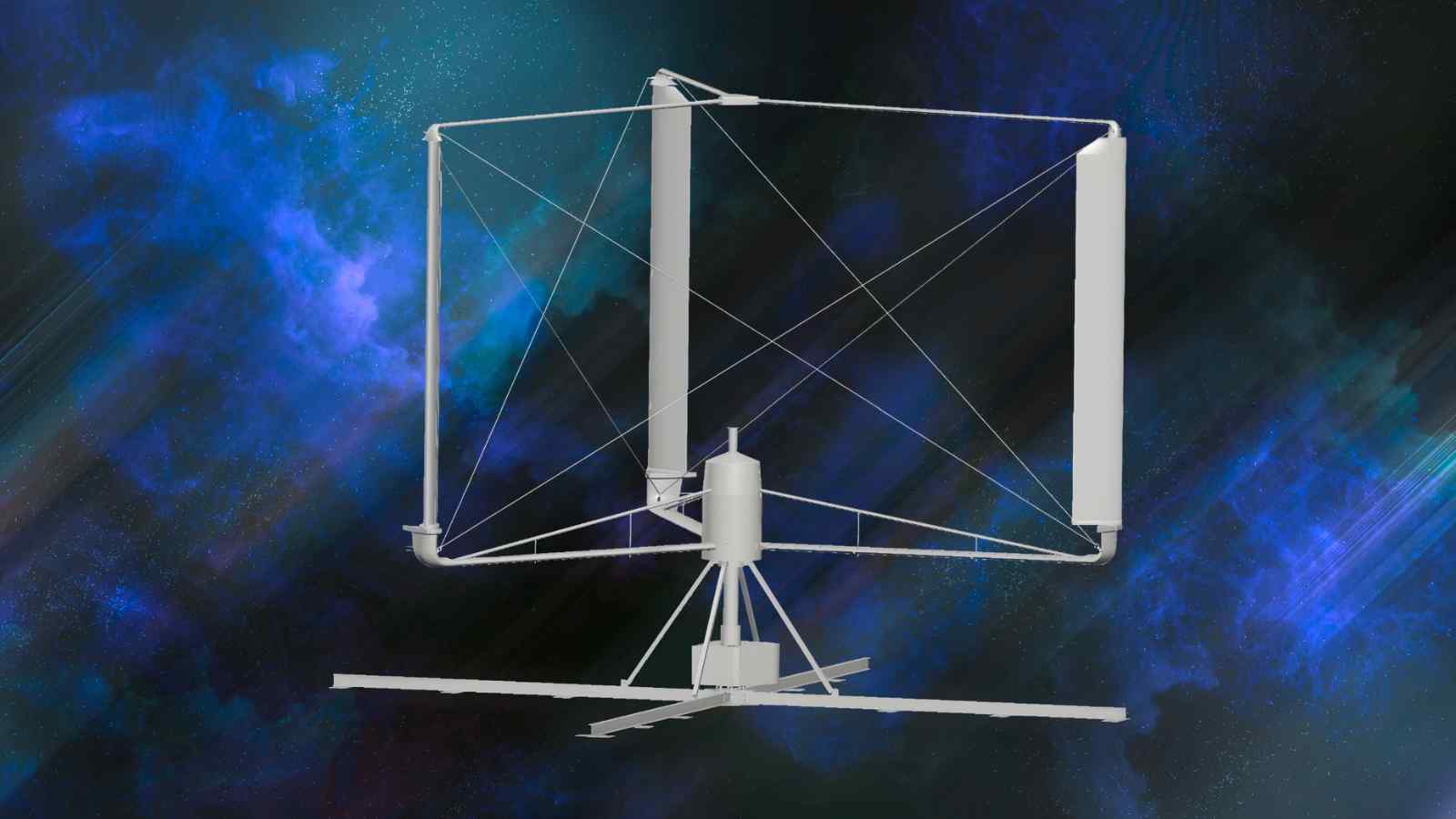
The Italian startup GEVI Wind, founded in 2022, has introduced a new model of intelligent vertical wind turbine. It is capable of optimizing its performance in real-time and increasing energy generation by up to 60% compared to conventional systems, without the need for large structures or acoustic impact.
Adaptive technology: efficiency without noise or heavy infrastructure
The core of the system is an AI-based control algorithm that adjusts the blades thousands of times per minute based on data such as direction, speed, turbulence, and aerodynamic behavior. This capability of constant self-regulation allows:
- Better utilization of each gust of wind
- Reduce mechanical stress by 80%, extending lifespan
- Minimize maintenance and stabilize performance
Compact and quiet design for urban environments
With a height of 3 meters and a rotor diameter of 5.4 meters, these turbines can be installed in:
- Residential rooftops
- Small industrial parks
- Rural or remote areas
Their generation capacity ranges between 3 and 5 kilowatts, ideal for homes, local communities, or micro-industries. Additionally, with a noise level below 38 decibels (equivalent to a whisper), they are compatible with inhabited areas without generating noise pollution.
Financing and strategic vision
GEVI Wind has raised 2.9 million euros in initial investment, backed by 360 Capital, CDP Venture Capital, and the MiSE Acceleration Fund.
Beyond capital, the project aims to democratize access to renewable energy through solutions:
- Modular and scalable
- Intelligent and adaptive
- Designed for distributed generation
Distributed production: energy autonomy and community resilience
This model proposes generating electricity close to the point of consumption, which allows:
- Reduce transportation losses
- Increase the energy autonomy of neighborhoods and buildings
- Offer flexibility in the face of outages or energy crises
International examples and model expansion
- Denmark: citizen cooperatives operate community microturbines
- Spain: pilot projects in Navarra and Galicia integrate compact turbines in local energy communities
This trend reflects a structural transformation towards decentralized, resilient, and participatory energy systems.
Positive impacts on multiple fronts
- Reduction of emissions by replacing fossil sources
- Citizen empowerment through local generation
- Harmonious integration into the urban landscape
- Promotion of green jobs in manufacturing and maintenance
A real tool for the energy transition
In a context of climate crisis and energy urgency, technologies like those of GEVI Wind are not just a promise: they are concrete, accessible, and sustainable solutions that allow rebuilding the energy model from the local level, with equity, efficiency, and respect for the planet’s limits.



