



The Union of Land Workers Patagonia and the cooperative COSERTEC are promoting an innovative project in the Andean Region: utilizing the wood accumulated after the forest fires and exotic plantations to manufacture OSB structural panels and laminates. The initiative aims to turn an environmental problem into a productive and social opportunity for the region.
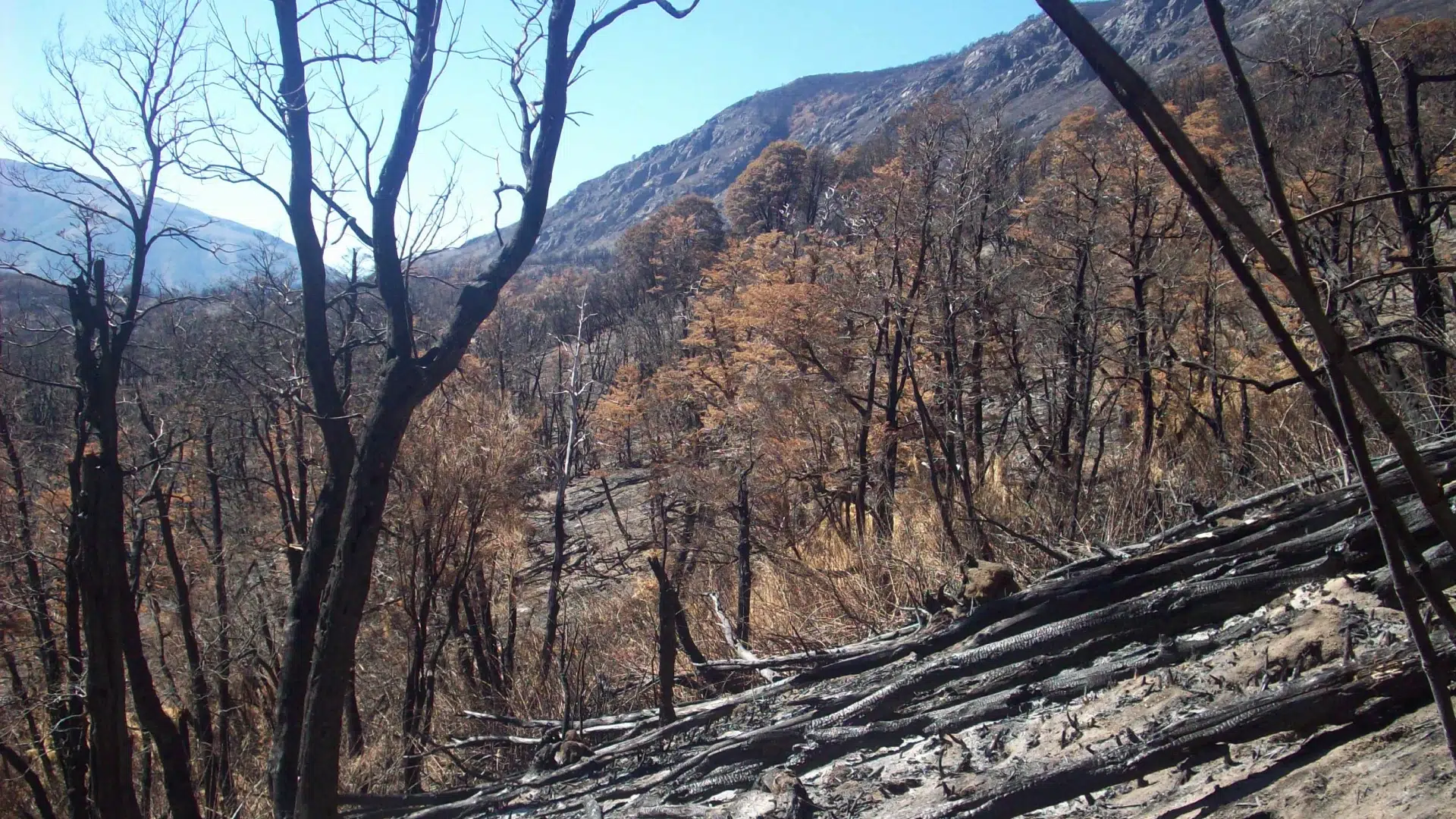
Currently, much of the forest biomass generated by fires in Chubut, Río Negro, and Neuquén remains scattered, increasing the risk of new incidents and hindering forest recovery. The project proposes to add value to this raw material through industrial processes that supply the construction sector.
Local Production and Employment
The manufacturing of structural panels would not only open a new alternative for the Patagonian forest chain but also generate employment in the Andean Region.
The plan includes coordinating work with local cooperatives, social organizations, and universities, creating an economic circuit linked to forest utilization and the production of materials for housing and infrastructure.
Environmental Restoration and Circular Economy
Another objective is to support the restoration of affected areas. The removal of exotic species, such as pines planted decades ago, will allow for the incorporation of native trees.
Additionally, the project incorporates a circular economy approach: the panels store carbon throughout their useful life, reducing environmental impact and extending the value of biomass.
Uses of the Panels
The panels produced could be used in:
- Social housing.
- Public buildings.
- Regional infrastructure.
In this way, the proposal combines industrial production with sustainable utilization of the resources available in Patagonia.
Environmental and Safety Benefits
- Reduction of fire risk: removing dry biomass decreases the available fuel load.
- Control of exotic species: allows for the removal of invasive pines that displace native forests.
- Protection of fragile soil: planned extraction prevents erosion and maintains microclimates necessary for natural regeneration.
Local Socioeconomic Impact
- Housing inputs: UTT Patagonia and COSERTEC aim to process forest remnants to manufacture OSB panels and laminates for social housing.
- Job creation: promotes joint work with local cooperatives for the transportation, treatment, and revaluation of wood.
- Regional bioeconomy: fosters a productive model that integrates sustainability, social inclusion, and economic development.
Giving a second life to the wood burned in the Patagonia fires is a strategy that combines environmental restoration, forest safety, and economic development.
The initiative by UTT Patagonia and COSERTEC seeks to transform an environmental liability into a social resource, reduce the accumulation of flammable material, and promote the regional bioeconomy through the production of inputs for housing and infrastructure.



