



Chinese scientists are working on soil restoration and developing biotechnological plates capable of stabilizing arid lands and generating biological crusts in record time.
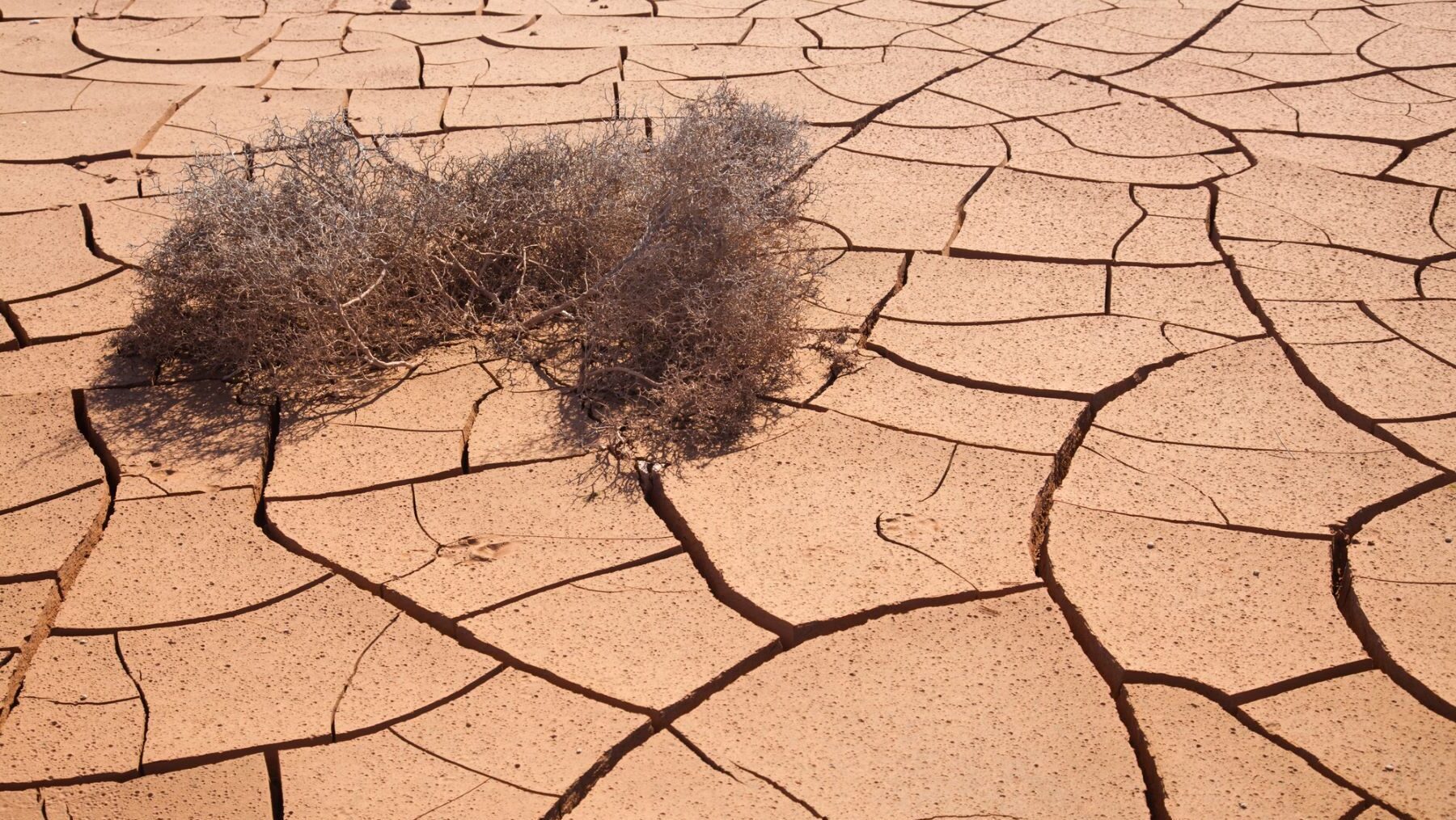
The advance of degradation of arid lands has found a new and powerful technological adversary.
A team of researchers from the Chinese Academy of Sciences has designed a method of soil restoration with cyanobacteria blocks, a kind of prefabricated “ecological skin” that allows transforming sand dunes into stable and biologically active lands in just twelve months, a process that, under natural conditions, would take decades to complete.
The science behind artificial biological crusts
The core of this innovation, led by the Northwest Institute of Ecology and Resources, lies in the biological soil crusts (BSC). These are organic communities composed of cyanobacteria, algae, mosses, and lichens that act as a protective shield in arid areas.
Unlike traditional sand fixation methods —such as straw barriers or chemical stabilizers—, these blocks use the intrinsic ability of cyanobacteria to secrete extracellular polymeric substances (EPS).
These substances function as a natural glue that binds loose sand particles, creating a consolidated structure that resists wind erosion and improves moisture retention.
A paradigm shift: From natural waiting to technical installation
Historically, the formation of these natural crusts is an extremely slow process and vulnerable to climatic conditions.
The Chinese technique breaks this limitation by creating biotechnological algae plates cultivated under controlled conditions. These blocks are installed on the ground as if they were tiles or a protective “skin“, eliminating the initial phase of vulnerability of traditional spray sowings.
Field test results have shown that this soil restoration with cyanobacteria blocks achieves coverage and stability equivalent to that of a mature natural crust in just one year.
In addition to stopping the movement of dunes, these blocks initiate a virtuous cycle: they increase the fixation of nitrogen and carbon in the soil, facilitating other plant species to colonize the area in the medium term.
Ecological impact and future viability
This system not only stands out for its speed but also for its resilience. The structure created by scientists from the Key Laboratory of Desert Environment Rehabilitation allows the artificial ecosystem to withstand extreme aridity conditions while recovering critical ecosystem functions.
By acting as a physical and biological barrier, it drastically reduces nutrient loss and promotes the microbiological biodiversity of the subsoil.
The implementation of this “ecological skin” represents a milestone in environmental engineering, offering a scalable and sustainable solution for countries facing the threat of desertification, a phenomenon that affects global food security and climate.



