



Sweden has marked a milestone in sustainable architecture with the inauguration of the Niels Bohr parking lot in the city of Lund, recognized as the first building in Europe partially constructed with decommissioned wind turbine blades.
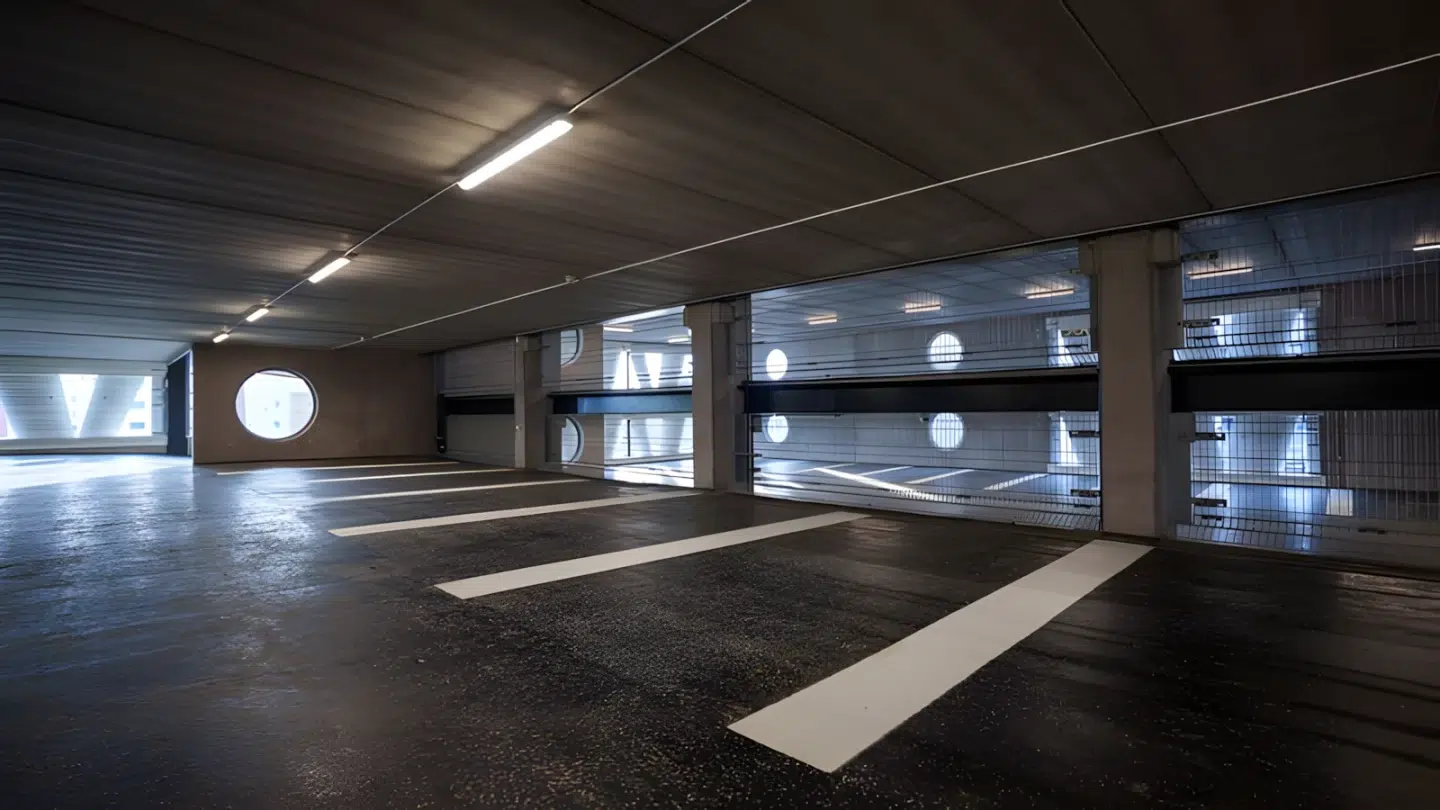
Bright, spacious, and with an unusual aesthetic for a parking lot, this project turns a complex waste into everyday infrastructure, demonstrating that circular economy can be functional, safe, and attractive.
Wind blades turned into urban facade
The building incorporates in its facade 57 blades from the Nørre Økse Sø wind farm, owned by Vattenfall and now dismantled. Elements that for decades captured wind in the North Sea now function as architectural skin in an urban environment.
It’s not just about reuse: it’s a change in cultural narrative. “It’s a very smart idea and, moreover, a really beautiful building,” said Anne Mette Traberg, head of Vattenfall in Denmark.
Features of the parking lot
The parking lot belongs to Lunds kommunala parkeringsbolag (LKP) and is located in the new district of Brunnshög, an expanding area on the outskirts of Lund. Its features include:
- 365 spaces distributed over five floors.
- 40 charging points for electric vehicles.
- A battery storage system that allows cars to be charged at night with energy generated during the day.
The blades are used as curtain walls, non-structural elements that protect, provide shade, filter light, and tell a story of transformation.
An idea born from an environmental problem
Architect Jonas Lloyd conceived the project after reading about the growing problem of decommissioned wind blades in the United States, many of which end up buried. Made of fiberglass and carbon fiber, they are extremely durable and difficult to recycle.
“I thought they could have a second life. It’s not just an environmental problem, it’s also pure waste,” explained Lloyd.
The result was a manifesto of sustainable architecture, which besides the reused blades includes:
- Pollinator-friendly plants on the facade.
- Photovoltaic solar roof.
- Direct integration with electric mobility.
Circular economy applied to wind energy
With more than 1,400 wind turbines in Europe, Vattenfall is one of the largest wind promoters on the continent. For the company, the circular economy applied to wind energy is a operational necessity.
The company is already working on multiple reuse lines:
- Blades converted into structures for solar panels.
- Insulating material.
- Sports equipment like skis.
Additionally, Vattenfall has established a internal ban on sending blades to landfill and has set the goal that 100% of blades and main components be reused or recycled by 2030.
“It is a visible and concrete proof that sustainability can meet deadlines, costs, and safety requirements,” said Traberg.
Local pride and replicable future
For LKP, which manages 28,000 parking spaces in Lund, the project is a source of pride. Its general manager, Paul Myllenberg, acknowledged that the result “has exceeded expectations,” although initially not everyone trusted the idea of a parking lot made with wind blades.
The experience has opened the door to similar future projects. LKP even launched a citizen competition to propose new uses for the remaining blades.
Beyond the material: a cultural change
The reuse of wind blades in architecture opens up a huge field for public infrastructures: canopies, walkways, industrial or agricultural buildings. It is an especially interesting solution for municipalities near wind farms undergoing renovation.
The true value lies in the cultural change: showing that the circular economy can be functional, safe, and aesthetically attractive helps to normalize it. And when it is normalized, it scales.
The Niels Bohr parking lot in Lund is more than a building: it is a symbol of innovation and sustainability. By transforming waste into architecture, Sweden demonstrates that the circular economy can be integrated into urban life and become a benchmark for other countries.



