



The CONICET is making progress in a key development for sustainability: the creation of biodegradable bags from cassava starch.
The project is being carried out in Misiones, through an agreement with the company Plastimi SRL.
The goal is to replace conventional plastics with locally produced materials.

A regional alternative to imported plastics
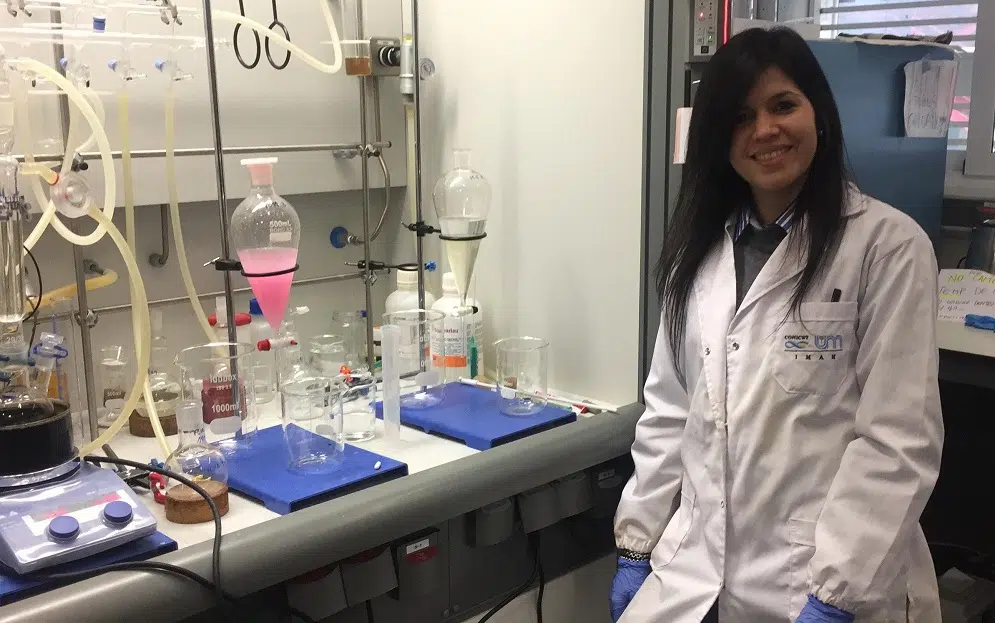
The biodegradable bags project is led by researchers Cristina Area and Pamela Cuenca from the Instituto de Materiales de Misiones (IMAM, CONICET-UNAM).
The development represents a significant scientific advancement, as Argentina currently does not manufacture any material of this type.
Until now, Plastimi SRL had to import from Europe a resin obtained from corn starch to meet the demand for biodegradable bags and products in general.
With this project, CONICET and the company from Misiones aim to produce bags and flexible films with raw materials from the region.
The initiative involves the Grupo de Preservación y Envases (GPE) and the Programa de Celulosa y Papel (PROCYP).
The goal is to develop an efficient technology to produce pellets, small pearls that serve as raw material for the plastic industry.
Circular economy with forest residues
The project incorporates a circular economy approach by using additives obtained from the lignocellulosic industry residues. Among these materials are:
- Micro and nanocellulose
- Rosin derivatives (pine resin)
- By-products of the regional forest industry
These additives improve the properties of the materials and help mitigate the environmental impact of the forest industry itself.
Cassava was chosen as the raw material due to its relevance to the economy of Misiones.
“We seek to generate a regional development that adds value to the raw material of our own province,” said Cuenca.
Commercial materials of this type, used for biodegradable bags, are usually made with potato or corn starch in other countries, but CONICET opted for cassava.
The investment and technology transfer between CONICET and the private sector for biodegradable bags
The agreement between CONICET and Plastimi was signed in May 2025, managed by the Oficina de Vinculación Tecnológica (OVT) of the Northeast.
The relationship between both institutions began approximately a decade ago.
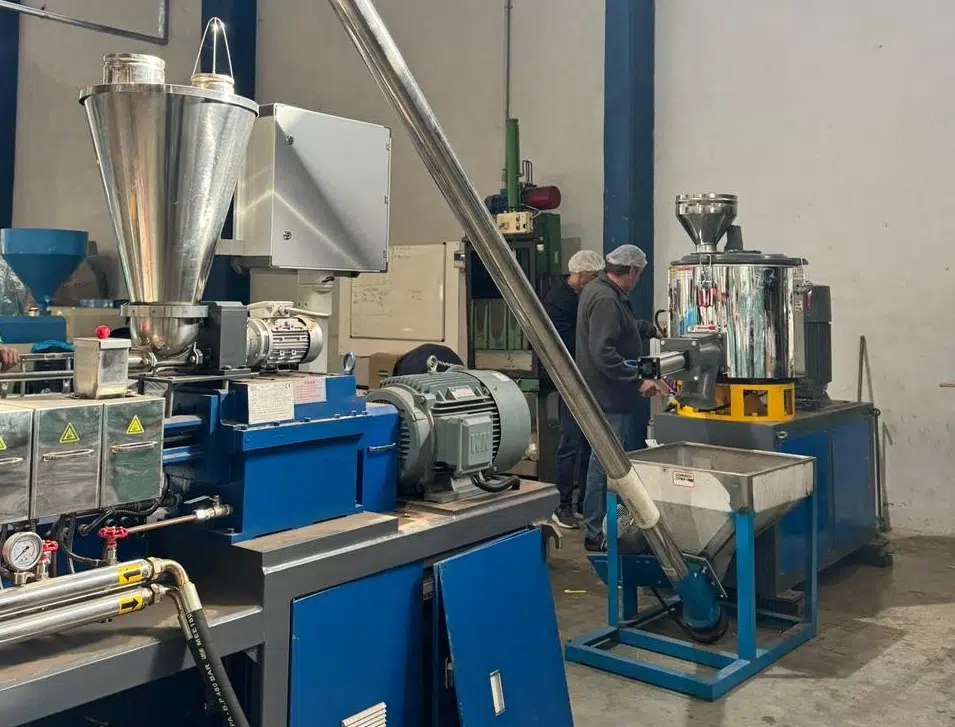
In 2021, a Proyecto de Investigación Científica y Tecnológica Aplicados (PICTA) allowed the acquisition of a specific pilot pelletizing extruder to process bioplastics.
The equipment is installed at the Plastimi plant, located in the Industrial Park of Posadas.
The machinery has a production capacity of five to thirty-five kilos per hour.
This allows the research team to work on an industrial pilot scale, skipping the laboratory scaling step.
“From our company, we highlight the valuable contribution of CONICET and the Universidad Nacional de Misiones in this development,” says Nicolás Guelman, owner of Plastimi SRL.
And he emphasizes: “This work constitutes a relevant example of scientific innovation applied to building a sustainable future.”
It should be noted that the development is not limited only to packaging such as biodegradable bags.
The team is also working on materials for agricultural inputs, such as mulching films for tomato and medicinal Cannabis Sativa crops.
These products are also not currently manufactured in Argentina.
The initiative reduces import costs and the environmental impact generated by petroleum-derived plastics, while adding value to local raw materials.



