



In the frozen heart of Alaska, where winters are relentless and thawing threatens entire communities, innovation has become a matter of survival, as is the case with the mushroom-based insulation.
In this context, a group of scientists developed an eco-friendly insulation made from mycelium, the underground network of fungi, capable of withstanding extreme temperatures without resorting to petroleum derivatives.
The project was born as a response to rising temperatures and the deterioration of infrastructure in rural regions. These communities rely on synthetic materials to retain heat, which generates plastic waste and moisture problems.
The new insulation aims to replace these materials with a natural, local, and compostable option that improves energy efficiency and contributes to the environmental and social well-being of Arctic communities.
The challenge of insulation in the Arctic
In Alaska, temperatures can drop to −61°C and exceed 37°C, subjecting homes to extreme conditions. Traditional constructions fail to retain heat or withstand abrupt changes, increasing energy consumption and structural vulnerability.
The melting of permafrost, forest fires, and erosion caused by climate change exacerbate the problem. Many families opt to wrap their houses with plastic or rigid foam, materials that prevent ventilation and promote mold growth.
In response to this situation, researchers proposed a regenerative approach: using local natural resources to create smart and sustainable materials, capable of protecting homes without harming the environment.
How mycelium insulation is made
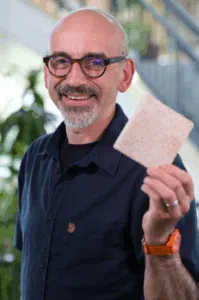
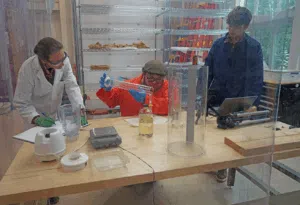
The process combines local wood pulp and mycelium in a mixture that is left to incubate until the fungus grows and binds the particles, forming a solid and porous structure. It is then subjected to controlled heat to harden it and ensure its durability.
The wood used comes from trees killed by pests, an abundant source in Alaska. Its use reduces the risk of fires and gives new life to an underutilized resource.
The result is lightweight, water-resistant, and fully compostable panels, with an insulation capacity comparable to expanded polystyrene, but without the negative impacts associated with plastics.
A step towards the bioarchitecture of the future
This invention not only represents a technical advance but also a paradigm shift in construction. The mycelium insulation combines thermal efficiency, low environmental impact, and circular economy, while promoting green jobs in rural communities.
Tests have shown that the material is mold-resistant and stable over time, even in humid conditions. Its production generates a carbon footprint much lower than conventional synthetic materials and can be scaled for various applications.
Additionally, scientists are experimenting with its use in eco-friendly packaging, as a substitute for polystyrene boxes used to preserve fish, expanding the commercial possibilities of mycelium as a biomaterial of the future.
Benefits of eco-friendly inventions and their global impact
Innovations based on natural resources offer multiple environmental and social benefits. They reduce the extraction of non-renewable raw materials, minimize waste, and promote the regeneration of degraded ecosystems.
These developments also boost the energy and economic self-sufficiency of communities by promoting the local production of sustainable materials and reducing transportation and import costs.
Environmentally, each substitution of plastic or petrochemical products with biocomposites helps reduce air and water pollution, while also helping to mitigate the effects of climate change.

An innovation with global projection
The mycelium insulation developed in Alaska is emerging as a symbol of resilience in the face of the climate crisis. Its potential goes beyond the Arctic: it could be applied in sustainable housing worldwide, from mountainous regions to expanding urban areas.
Its success demonstrates that nature can offer efficient technological solutions when combined with science and human creativity. On a planet increasingly affected by climate extremes, betting on living and regenerative materials is a concrete path towards a more habitable and balanced future.


